


Quick Answer
Qualify a large-capacity lotion pump bottle as a complete filled pack. Check standing stability and neck support during actuation at full, middle and near-empty fill states, then evaluate pump wear, restart, closure retention and packed transport. Agree the method, sample scope and acceptance limits with the filler before testing; no single cycle count or certificate proves durability for every lotion.
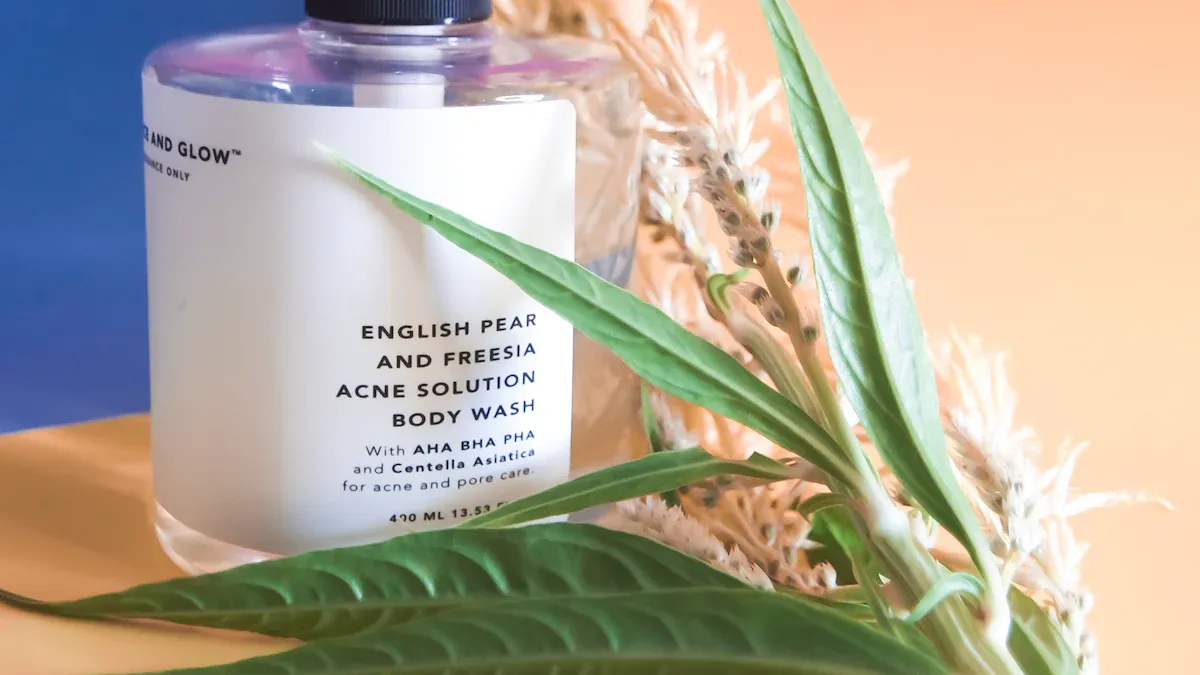
A large body-lotion pack may spend weeks on a bathroom counter while its contents and weight steadily decrease. A pump that feels comfortable on a full bottle can require a second hand near the end of use. A rigid actuator can also load a flexible shoulder or loosen a closure. These are complete-pack questions, not properties that can be approved from the pump catalog alone.
This guide focuses on repeated-use qualification of larger packs. For initial component selection, use the lotion pump bulk-order checklist. Keep that purchasing screen separate from the endurance report on your final bottle, pump and formula combination.
Define the use case before choosing test limits
Describe where the bottle will stand, whether the user presses it with one hand, how the actuator faces and whether the pack is intended for travel. Record the net fill, formula code, bottle drawing revision, pump reference, closure and dip-tube configuration. A capacity label does not describe base width, shoulder rigidity or the force needed to dispense the intended lotion.
Estimate the expected number of actuations from the intended fill and application pattern, with the product and testing teams deciding the qualification margin. Do not borrow an arbitrary thousand-cycle requirement from another pack. If the trial uses a powered fixture, document its stroke, return travel and pauses; an accelerated sequence may heat or load parts differently from normal use.
Separate a disposable pack from a proposed refillable system. A refill claim introduces additional cleaning, reassembly, reuse and formula-compatibility questions. A successful single-fill endurance trial cannot establish that an assembly is suitable for repeated refills.
Challenge stability as the bottle becomes lighter
Prepare identified units at defined full, intermediate and near-empty conditions. State how each condition is reached and whether it includes actual pumping history. Removing lotion manually creates a lighter bottle, but it does not reproduce wear in a pump that has already delivered most of its contents. Both can be useful comparisons if they are labelled honestly.
On the intended surface, observe whether the pack rocks, slides or tips during an agreed actuation. Include the planned nozzle orientation and realistic hand position. A laboratory clamping fixture is useful for measuring the mechanism, but it can hide the need for the consumer to hold the bottle. Report free-standing use and restrained measurements separately.
Check the base for distortion and the shoulder for movement while pressing. Note any neck deflection, actuator contact with a collar, or rotation of the pump relative to the artwork. Do not solve an unstable bottle by silently changing the test to two-handed operation unless that is the intended user experience and is approved.
| Condition | Observation to retain | Decision it supports |
|---|---|---|
| Full pack | Standing behaviour, shoulder movement and first operation | Initial handling and assembly suitability |
| Intermediate fill | Wear history, return and closure movement | Repeated-use reliability |
| Near-empty pack | Sliding, tipping, usable dispensing and residual location | End-of-use practicality |
| After a defined pause | Restart strokes, nozzle deposits and leakage | Intermittent-use behaviour |
Track changes rather than recording only the final cycle
Measure or assess actuation force using the agreed equipment and method. Preserve the measurement position and stroke rate when comparing early and later results. A hand-feel description can supplement instrument readings, but it should not be reported as a calibrated force measurement.
At planned checkpoints, record actuator return, incomplete strokes, squeaking, sticking, output interruption and visible damage. Identify each unit so a pump that failed early remains in the results. Replacing a failed component and continuing under the original sample identity would conceal the failure and make the endurance conclusion misleading.
Record output with units and the actual formula. Stable average output does not prove that every stroke worked or that the bottle remained stable. Conversely, a lower near-empty output may involve product access rather than mechanical wear. Keep the observations separate until the investigation identifies the cause.
Include pauses representative of the planned evaluation. Restart after storage can reveal a problem not seen during uninterrupted cycling. Record the initial unsuccessful strokes and any nozzle residue without making untested microbial or shelf-life claims.
Inspect closure and neck support independently
Confirm the matched neck and pump drawings before assembly. Document the filler application setup, closure seating and the pump lock state. Marking the relative orientation can help reveal movement during a trial, provided the mark does not interfere with the contact surfaces or decoration.
After defined use intervals, inspect the neck, thread, shoulder, gasket contact and collar. Observe leakage at its actual location rather than calling every wet area a pump failure. Product at the outlet after dispensing and leakage through the bottle-to-closure interface require different investigations.
Use an agreed removal or retention assessment where relevant. Any torque or force limit must belong to the selected parts and method. Increasing tightening until leakage disappears is not a general correction: excessive application can deform components or create a pack the consumer cannot operate as intended.
Use test standards only within their actual scope
Ask the responsible laboratory which current method applies to each question. ASTM D4336 addresses pump dispenser output; it is not a universal approval of standing stability, formula preservation or transport resistance. The official ASTM D4336 listing is a starting point for discussing scope, not a substitute for the complete procedure or project acceptance criteria.
A supplier quality-management certificate does not replace filled-pack test data. Request the test edition, departures from the method, sample identities, conditions and raw results. Do not claim standards compliance from a summary checklist or a test performed on another bottle size.
Set temperature and storage conditions from the actual filling, distribution and intended-use brief with the qualified team. Do not expose a cosmetic bottle to boiling conditions simply because a different industrial pump has a high-temperature rating. Screening conditions must be justified and applied safely.
Combine use durability with the actual transport pack
Evaluate the pump in its shipping configuration, including the lock, clip, overcap and any protective divider. Test the proposed packed product through an agreed distribution protocol rather than dropping an unboxed sample from a height chosen without context. Inspect the pack afterward and repeat relevant operation and leak checks.
Separate empty-component transport from finished, filled-product transport. A carton that protects empty bottles does not automatically protect a heavier filled assembly. Record any changed insert, count per carton, pallet arrangement or shipping route before carrying forward a previous conclusion.
Turn the results into a release decision
Retain a report tying every observation to the formula batch, component revision, fill state, assembly method and sample identity. List deviations and unresolved failures. Define who approves corrective changes and which sections must be repeated after a pump, resin, base geometry or filling setup changes.
Use the approved sample approval checklist to connect the report with retained reference packs. For lotion bottle pump options, send Oulete the capacity, use case, formula trial requirements and intended filler setup. Request a matched sampling proposal rather than a general promise that a bottle is durable.
FAQ
Is a fixed number of pump cycles enough?
No. The cycle requirement needs a defined use case, assembly, formula, stroke method and acceptance criteria. Include checkpoints and relevant fill states so the test captures changes rather than just a final count.
Can one bottle size approve an entire range?
Not automatically. Base geometry, neck support, fill weight and dip-tube configuration may differ. The testing team should justify any shared evidence and identify which size-specific checks remain necessary.
Does airless construction prove freshness or hygiene?
No. Reduced air exposure is a design feature, not proof of microbial safety, shelf life or complete evacuation. Those conclusions require appropriate evidence for the actual formula and complete pack.