


Mascara tube design is a system decision: the reservoir, brush, stem, wiper and closure have to work together with the formula. An attractive tube and an appealing brush are not enough if withdrawal leaves an overloaded tip, the stem drags through the neck, or the closure fails to reseal consistently.
Quick Answer
Evaluate mascara tube design using the complete filled pack. Compare brush loading and lash application, withdrawal effort, wiper retention, stem clearance and closure fit with the actual formula. Repeat tests after storage and use cycles. Freeze the approved brush, wiper, reservoir and cap combination together; changing one component can change dispensing and sealing.
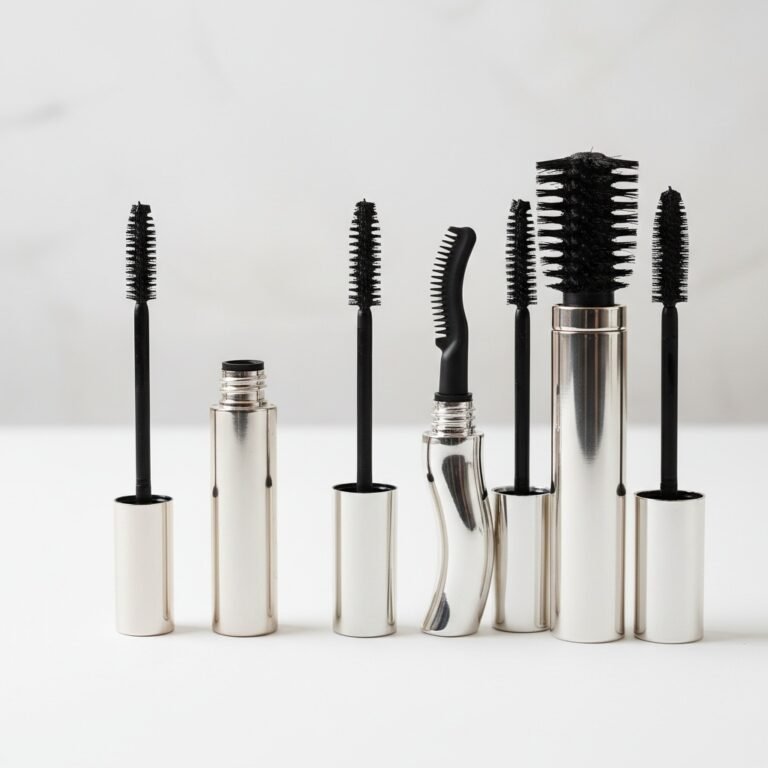
Write an application brief before choosing a brush
Start with the intended lash result and application routine. A development brief can ask for separation, controlled buildup or access to shorter lashes, but a brush photograph does not prove any of those outcomes. Compare candidate brushes with the same formula and test conditions so that observations are meaningful.
Record brush shape, working length, bristle or molded-fin construction, stem dimensions and attachment details. Evaluate the amount and distribution of product after withdrawal, including buildup at the tip and along the stem. Then assess application through the brand’s appropriate product-testing process.
Review withdrawal as a distinct test
The user experiences the brush and stem moving through the wiper every time the pack is opened. An excessively tight combination may feel abrupt or pull the wiper from its seat; an overly loose combination may leave too much product on the applicator. Neither issue is resolved by selecting a wiper from nominal diameter alone.
- Observe resistance through the complete withdrawal stroke.
- Check that the wiper stays seated and is not visibly damaged.
- Inspect product on the stem, brush shoulder and tip.
- Compare repeated withdrawals using a consistent routine.
- Review neck cleanliness after reinsertion and closure.
Keep the reservoir, fill level and formula batch comparable during development trials. A different starting fill can affect observations and make two brush systems harder to compare fairly.
Check clearances inside the reservoir
Confirm stem length and the brush’s position when the cap is fully closed. The brush should fit the intended reservoir without unwanted bottom contact or bending. Review the neck opening and interior geometry rather than assuming two packs of similar height share the same clearances.
During repeated use, inspect whether product remains accessible to the brush and whether removal becomes messy as the fill level falls. Document residue observations without promising a universal evacuation percentage. The formula and usage routine affect what remains in the pack.
Evaluate the closure after use, not only when new
Ask the supplier to identify the closure’s sealing surfaces and intended application conditions. Check cross-threading, incomplete engagement and ease of reopening on assembled samples. Product collected around the neck may affect handling, so include resealing after realistic withdrawal and reinsertion.
Monitor filled-pack weight changes, visible drying and closure condition under the development team’s agreed storage protocol. These observations help identify packaging concerns, but they do not establish product shelf life or microbiological safety. Avoid calling a screw-cap pack airless or sterile.
Separate material selection from decorative finish
Request a component-level material list covering the product-contact reservoir, wiper, stem, brush and any sealing element. Compatibility assessment should use the actual formulation. A metallic-looking exterior does not identify the material that contacts the mascara.
Test print adhesion and surface wear separately from dispensing. Keep decoration away from threads and functional interfaces unless it is part of the approved design. Recycled-content and recycling claims need evidence for the complete construction and intended collection system, not just one exterior component.
Freeze a reference system for production
Label approved samples with component versions, formula batch, fill level and assembly method. Agree acceptance criteria for closure fit, wiper retention, visible defects and decoration. If the supplier proposes a replacement brush or material, treat it as a change requiring review rather than a purely cosmetic substitution.
Use the cosmetic packaging sample approval checklist to document the sign-off. For model availability and component matching, contact Oulete with your mascara development brief.
FAQ
Can a lip gloss wiper be reused for mascara?
Do not assume it can. A mascara brush has different geometry and application requirements from a lip gloss applicator. Validate the exact brush, wiper and formula combination.
Does a wider brush automatically provide more volume?
No. Brush shape, loading and formula behavior need to be evaluated together through application testing.
When should decoration be approved?
After the functional system is selected, using production-representative decorated samples that preserve the approved interfaces.