



Quick Answer
Approve magnetic cosmetic caps as identified lid-and-body combinations, not as loose lids that happen to attract. Record each component revision, the intended orientation and whether parts from different lots may be mixed. Keep the magnetic outer cap separate from the product sealing decision, and hold unexpected pairings for review before assembly.
A brand may approve a display sample and later receive caps and bodies in separate cartons. The filler then needs to know which combinations were actually checked. This guide addresses that receiving and assembly handoff. It does not specify a universal magnet strength, certify a closure or claim that a magnetic cap prevents leakage.
Identify the pair that the sample represents
Give the cap and the mating component separate references. Include the finished revision, decoration variant, supplier lot and supplied assembly state. Ask the supplier whether the attraction is between two magnetic components or between a magnet and another specified part. Do not infer the internal construction from the exterior appearance.
The reference sample should carry both identities. A lid marked only with the brand logo is not an adequate matching instruction when several visually similar sizes or revisions are stocked together. Keep an identified assembled reference with the written component list.
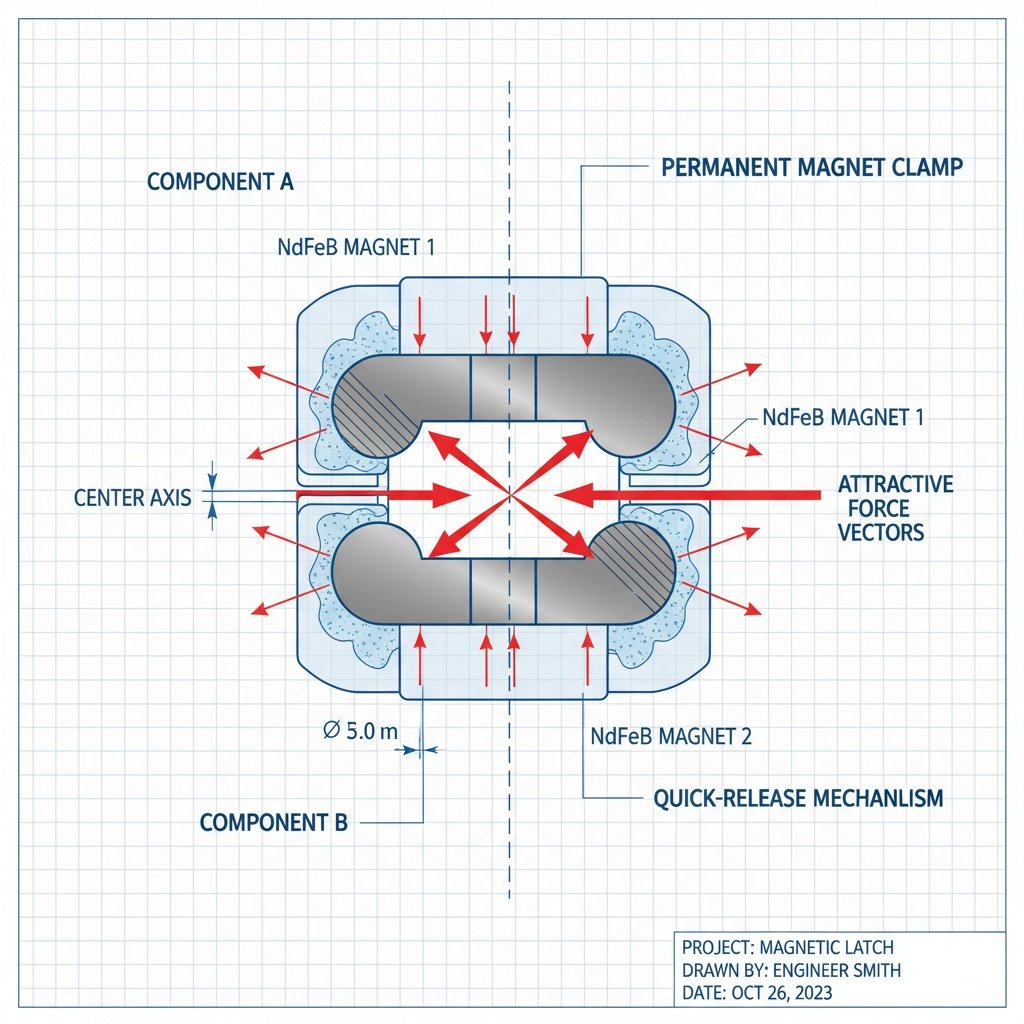
Separate orientation from attraction
A cap can attract without reaching the intended position. Review seating, logo direction and visible gaps on the actual finished components. Record whether the design permits several closed orientations or requires one. If there is a locating feature, identify it on the drawing and in the operator instruction.
Ask reviewers to close the sample using the intended gesture rather than carefully arranging it for a photograph. Record a tilted, offset or partly seated condition as an observation. Do not convert a preferred tactile feel into an invented opening-force limit. Any measured requirement needs a defined method and acceptance criteria agreed for that project.
Write the allowed combination matrix
Before a filling or assembly trial, list the combinations that may be used. If the supplier has not established interchangeability across lots or revisions, mark that relationship as unresolved. A single successful sample does not establish that every cap can be paired with every body in the warehouse.
| Pairing field | Required record |
|---|---|
| Cap identity | Part, finished revision, variant and lot |
| Mating component | Matching part, revision and lot |
| Closed arrangement | Orientation, seating reference and applicable drawing |
| Mixing decision | Allowed, prohibited or awaiting evidence |
| Release evidence | Trial reference, decision owner and limitations |
Use the matrix to distinguish an approved within-lot pair from a proposed cross-lot pair. Record what was actually checked and the scope of the decision. A blank cell should not silently mean permission to substitute.
Plan a mixed-lot trial deliberately
If operations need interchangeable stock, ask the responsible technical team to define a representative trial using the intended combinations. Identify which cap and body lots enter each group. Keep the sample selection, closing procedure, observations and any handling conditions attached to that group.
Compare the proposed combinations with the accepted reference. Depending on the construction, the review may include seating, orientation, opening behavior and visible finish contact. The technical team should select relevant checks and decide how many samples are needed; this article does not supply a universal sampling plan.
Keep unsuccessful combinations in the record. A replacement cap that closes better does not erase the original mismatch. Preserve the rejected samples and their identities so the supplier can investigate without relying on a recollection of which carton they came from.
Keep product sealing under its own approval
Identify the part that actually closes the product compartment. It may be separate from a decorative magnetic outer cap. Confirm the inner closure and its assembly sequence with the supplier and filler. An outer lid resting neatly in place is not evidence of formula compatibility or leak resistance.
Link the pairing record to the complete-pack sample approval checklist, but keep the decisions distinct. Appearance, cap pairing and filled-pack performance can have different owners and evidence. Release only the scope supported by the applicable checks.
Show operators what to do with an exception
For an illustrative example, a filler opens a second cap carton and notices that the logo stops in a different direction. The immediate record should identify both component lots and the observed difference. Separate affected parts while the responsible team reviews the pairing; do not instruct operators to force the cap or modify a retained component.
The disposition might require further inspection, a controlled replacement or another documented action. Name the owner of that decision. Record which stock is held and which previously approved combinations remain usable. Avoid describing the issue as magnet failure until its cause has been investigated.
Pass the decision to procurement and distribution
Procurement should quote the complete supplied arrangement: cap, mating parts, decoration, assembly state and packing identity. A distributor should preserve the matching references in its stock records instead of selling visually similar caps as universal replacements. A repeat order should state whether the same pairing or a revised combination is being supplied.
For a custom cosmetic packaging project, ask which interfaces are fixed by existing components and which require development. Confirm availability and commercial scope rather than assuming that a magnetic feature is offered on every container. Send the cap-and-body references with your enquiry so the discussion starts with an identifiable assembly.
FAQ
Does attraction prove that a cap belongs to a body?
No. Identity, seating and intended orientation still need confirmation against the approved combination.
Can different production lots be mixed?
Only within the scope of an established pairing decision. Record unresolved combinations rather than assuming interchangeability.
Does this replace sealing approval?
No. The product closure and filled-pack performance remain separate technical decisions.