


Quick Answer
Specify a cosmetic serum vial through its actual dimensions, closure and intended use sequence, not the word vial alone. For a small topical-serum pack, approve opening, holding, dispensing and disposal or reclosure with the real formula. Give the filler a complete component list and supplied-state record, and verify usable delivery separately from nominal capacity. A pharmaceutical-looking closure does not establish sterile, injectable or medical suitability.
A small serum container can support a discovery kit, a travel product or a defined application format. The smaller pack, however, leaves less room for fingers, labels and filling equipment. A closure that works on a larger retail bottle may feel awkward when scaled down. Build the pack brief around what the consumer and filler must actually do.
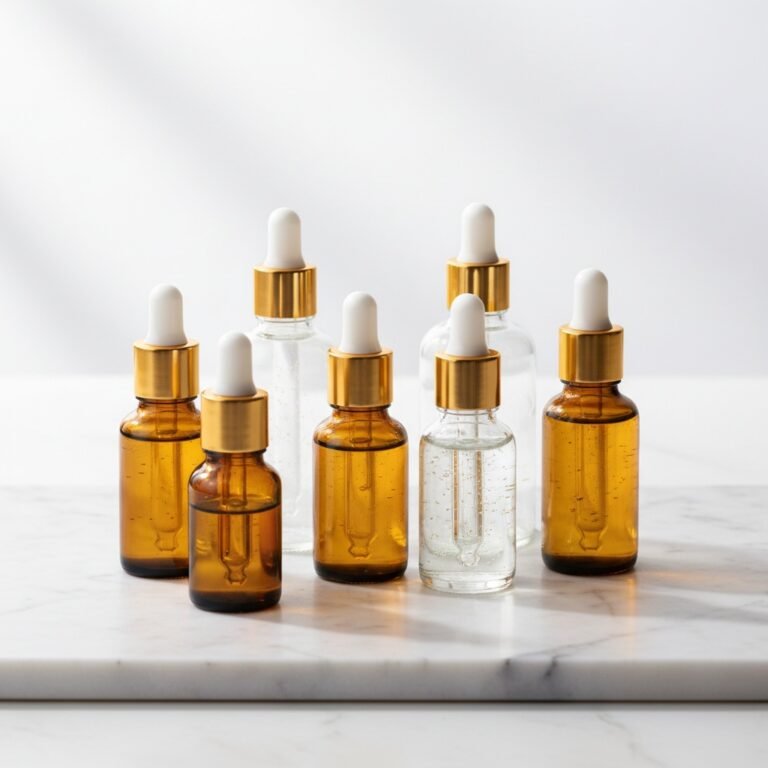
This guide concerns topical cosmetic use and the small-pack handover. For the broader bottle, dropper, pump and decoration decision, read the custom serum packaging guide. Do not use this article to specify injection equipment or instructions for breaking glass.
Turn the format name into a controlled specification
Vial is used differently by suppliers. It may describe a small screw-cap bottle, a dispenser pack or a specialised sealed format. Request the actual drawing, component references, neck interface and opening mechanism before comparing offers. A shared name or advertised volume does not establish interchangeability.
Define whether the product is used once after opening, over several applications or as a trial version of a larger retail SKU. Name the intended dispensing gesture: pour, squeeze, draw or pump. A small capacity does not by itself make a product single-dose; that claim needs a justified fill, usable delivery and application instruction.
State the intended user context. A consumer at a bathroom counter has different handling needs from a trained operator using a dedicated fixture. Keep the product within its agreed topical use. Avoid a closure or presentation that could be mistaken for an injectable product without the brand’s appropriate review.
Evaluate the complete opening sequence
Test how a user removes the pack from its outer packaging, identifies the opening feature, holds the body and opens the closure. Record grip, rotation and the tendency for a small body to slip. If opening force is measured, specify the equipment and method instead of converting a subjective difficult-to-open note into an unsupported numerical result.
Observe first access to the formula. Note product on the cap, neck or outer surface, unexpected release and whether the user can keep the container upright. An opening that appears straightforward when the container is empty can behave differently after filling, transport and storage.
For a tamper-indicating feature, define the intended visible change and check it separately from leak resistance. A broken band does not establish that the seal passed a leak test, and a tight closure does not necessarily provide tamper evidence. The brand should approve any claims and instructions for its actual market.
If a supplier proposes a specialised crimped or sealed format, ask for the opening and dispensing accessory as part of the complete configuration. Do not assume that tools, stoppers or removal instructions used for laboratory packaging are appropriate for a consumer cosmetic product. Reject an unresolved opening route before investing in decoration.
Distinguish fill volume, pickup and delivered product
Record the intended net fill and the available capacity from the actual pack. The closure or dispenser can occupy internal space, and assembly may change the visible level. A container marked with a nominal volume is not evidence of the amount consumers can obtain using the planned gesture.
Test delivered product at the relevant use stages. For a reusable small pack, include initial and low-fill operation. For a one-opening format, evaluate the full intended application sequence and its endpoint. Keep initial fill, collected delivery, spills and retained product as separate records.
Where measurements are in grams, retain the mass result directly. If a volume conclusion is needed, obtain actual formula density at the stated condition and identify any calculation. A drop count or number of squeezes is not a known dose without measured delivery under the same formula, geometry and operation.
| Record | What it answers | What it does not prove |
|---|---|---|
| Nominal capacity | Which container option is being discussed | Actual net fill or usable delivered amount |
| Prepared net fill | How much product entered the identified sample | How much is delivered in normal use |
| Collected output | Delivery under the defined gesture and conditions | Every consumer’s application amount |
| Remaining product | Residual after the defined endpoint | A general zero-waste claim |
Choose closure behaviour around the use pattern
A screw-cap pack requires review of holding, removal and reclosure. A dropper requires matched fit and actual-formula draw and delivery. A pump requires priming, operation and restart checks. No mechanism is universally best for every serum; the complete pack and formula decide which evidence is needed.
Keep air exposure, light protection and microbial preservation questions separate from the convenience trial. Airless construction may reduce air exposure during dispensing, but it does not eliminate all exposure or establish shelf life. Clear, amber and coated bodies require the appropriate evidence if the brand intends to claim light protection.
Identify every contacting part, including any liner, bulb, pipette, insert, gasket or pump component. A glass body does not identify the other materials. Ask the formulation team and supplier to agree the compatibility assessment for the actual blend and assembled pack.
Make the filler handover specific to the small pack
Provide the drawing, complete bill of materials, component revisions and packing arrangement. State whether bodies and closures arrive separately, preassembled or with a temporary protective component. Clarify which preparation and closing steps belong to the filler instead of assuming a supplier delivers ready-to-fill units.
Review the filler tooling for the small body and closure. Include locating, holding, nozzle access, closure feeding and the space needed for a batch code. A format may fit the final retail carton but still require different fixtures from the brand’s larger bottle.
Run a production-intent trial using the agreed formula and setup. Observe fill presentation, assembly, leakage location and subsequent opening. Retain raw observations alongside the line settings. A hand-filled laboratory sample can support selected checks, but it cannot establish commercial-line capability.
Ask which cleaning or handling instructions apply to the supplied components. Do not assume sterility from the visual style of a vial, a clean outer bag or a supplier quality certificate. Any special cleanliness requirement must be specified and supported through the responsible manufacturing and product-assessment teams.
Keep small-pack artwork and packing usable
Check artwork at actual size on the intended surface. Reserve the required coding area and review mandatory information with the brand’s relevant specialists. Where an outer carton or leaflet carries information, keep it linked to the correct SKU and version. Small dimensions are not a reason to omit required product information.
Trial the proposed divider or tray so small units do not rub, mix or disappear into packing voids. Count complete sets, not only bodies. A missing closure, insert or accessory can make a visually intact vial unusable. Define component identification and the pack-out inspection record.
For multi-pack kits, assess removal and return to the tray with the actual filled units. Keep any sequence or application numbering legible and consistent. Decorative similarity must not create confusion between different formulas or use instructions.
Release a documented complete pack
Use the sample approval checklist to separate appearance, component fit, formula assessment, user operation and filler approval. List open issues and the person responsible for each decision. Changes to the closure, supplied state or formula need a review of the evidence that remains applicable.
Start an enquiry from an identified serum bottle option, then request the relevant small-format dimensions and matched closure. Send Oulete the intended use sequence and filler brief so the quotation covers the complete pack. Minimum quantities, preparation, samples and any specialised accessory should be confirmed for the actual offer.
FAQ
Is every small vial a single-dose pack?
No. Capacity alone does not establish an application dose or a one-use instruction. Define the intended use sequence and evaluate fill, usable delivery and residual product with the actual serum.
Does a crimped vial mean the serum is sterile?
No. Closure appearance does not establish sterile status or injectable suitability. This guide concerns topical cosmetics; any special manufacturing or product requirement needs separate qualified assessment.
Can a trial-size version use the larger bottle’s test report?
Only where the responsible team justifies shared evidence. Different geometry, components, opening and filler tooling can introduce additional questions. Identify the small-pack checks before carrying forward an earlier conclusion.