


Body oil often reaches the outside of its bottle during dispensing. That makes label approval more specific than choosing a material described as waterproof. The face stock, adhesive, ink, coating and bottle surface form a system, and a change in one part may change the result.
Quick Answer
Approve body oil bottle labels on the final decorated bottle with the actual oil and application process. Inspect edge lift, sliding, staining, ink transfer and readability after defined contact and wiping trials. Distinguish face-stock resistance from adhesive performance. Do not assume that a film name or waterproof claim proves oil resistance for the finished label.
Describe the complete label construction
Ask the label supplier to identify face stock, adhesive, printing system, protective finish and liner. Request the exact product references that will be supplied. A quotation for a PP label may describe the face stock without defining the adhesive or ink, leaving important variables unresolved.
Identify the bottle material and final surface treatment. A label applied to bare glass is not automatically representative of the same bottle after frosting, coating or another decoration. Include the selected bottle revision in the label approval record.
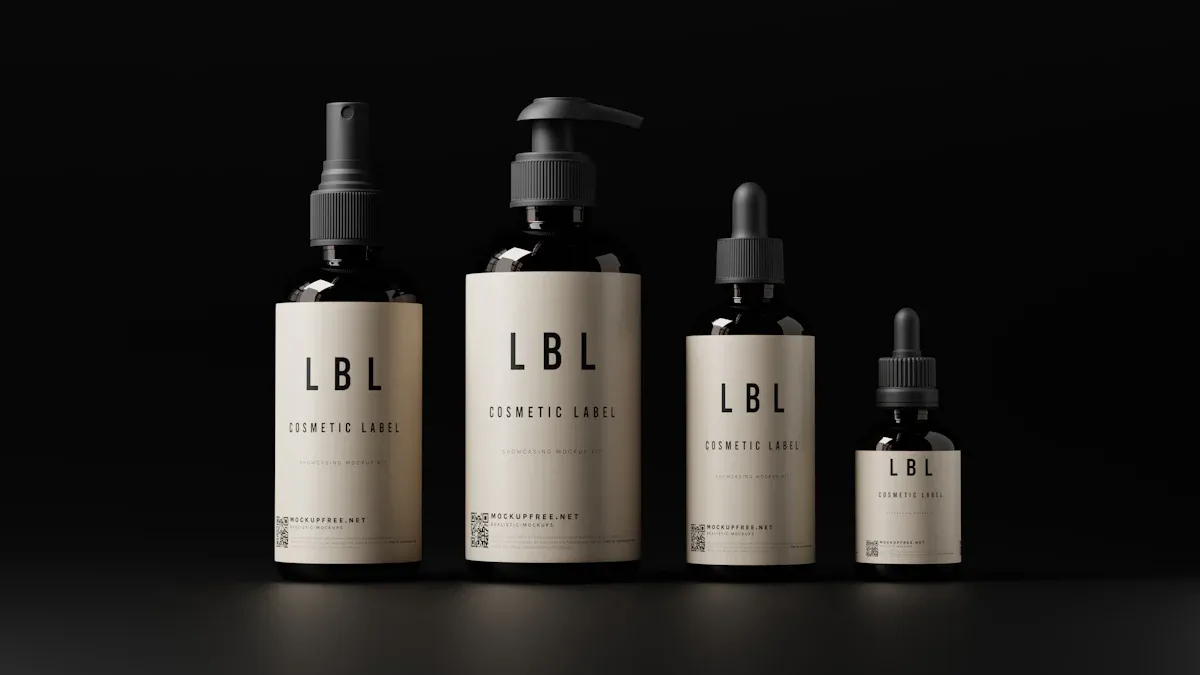
Separate application defects from contact damage
Inspect samples immediately after the agreed application process and again after the adhesive’s specified development period. Record alignment, wrinkles, bubbles and edge placement before exposing the label to oil. This baseline helps distinguish an application problem from a later contact effect.
Ask the supplier how the bottle surface should be prepared. Do not substitute a cleaning solvent without reviewing surface and label compatibility. Check application temperature, pressure, label roll direction and line speed where relevant. Hand-applied samples may not reveal all problems on the production labeler.
Use actual oil for a repeatable contact trial
Agree the amount, location, contact duration and conditioning with the label supplier and product team. Include plausible spill paths from the closure or dispenser. Test relevant formula versions rather than treating every body oil as interchangeable. Record whether oil contacts an edge, printed face or overlap seam.
Keep unexposed controls. After contact, inspect staining, swelling, softening, movement and visible changes. Describe what happened instead of reporting a single pass or fail without an observation. A label can remain attached while losing readable text, so adhesion and print appearance need separate decisions.
Include wiping and handling
- Specify the wiping material and method.
- Compare dry handling with the agreed oil-contact condition.
- Inspect print transfer onto the wipe and surrounding surface.
- Check edges and seams after repeated handling.
- Review whether the bottle is squeezed or gripped across the label.
Set project-specific acceptance criteria before the trial. Avoid using a generic waterproof lifespan as evidence of suitability. If a film, adhesive or protective finish changes, review which contact and application checks need repeating.
Keep information approval separate
Physical durability is not a determination that the wording meets a market’s labeling requirements. The brand’s responsible team should review required content, claims and legibility for the intended product and jurisdiction. Give that team the actual printed size and curved-bottle sample, not just a large artwork PDF.
Retain the final artwork revision, bottle surface reference, label construction and trial results. Connect them to the sample approval checklist. Contact Oulete to confirm the selected bottle’s label panel and decoration scope.
Build a label-contact comparison sheet
Label each sample with the bottle surface, label construction, artwork and formula references. Inspect the application baseline before contact begins. Keep an unexposed control prepared by the same method so an existing wrinkle or edge issue is not mistaken for oil damage.
| Trial stage | Observe | Record separately |
|---|---|---|
| Application baseline | Position, bubbles and edges | Application defects |
| Oil contact | Staining, movement and edge change | Face and edge exposure |
| Agreed wiping | Residue removal and print transfer | Cleaning and permanent damage |
| Later handling | Attachment and readability | Sample history and repeated contact |
State the observation location and trial conditions. A label that remains attached may still fail the agreed appearance or readability requirement. Equally, a removable oil film should not automatically be recorded as permanent ink damage without checking the approved wiping result.
Investigate edge lift along a spill path
For example, one edge may lift after contact while the printed face remains unchanged. This illustrative result calls for review of the edge location, application baseline and complete adhesive system. It does not establish that the face stock itself is the only cause.
Retain the affected sample and ask the label supplier which revision is proposed. If the bottle surface, adhesive or edge placement changes, identify the new candidate and repeat the affected application and contact checks. Avoid changing several variables without recording them.
Handover an approved label system
Keep the selected label roll reference and orientation with the bottle and artwork specifications. State which production application conditions were represented by the approval and which remain to be trialled on the actual line. Hand-applied approval alone should not silently cover an unreviewed production setup.
Include accepted and rejected examples where useful, with their viewing conditions. A later substitute should be compared against the complete label system, not accepted solely because it uses the same face-stock name or a similar waterproof description.
FAQ
Does waterproof mean oil-resistant?
No. Test the actual oil against the complete label construction.
Can I approve a label on an undecorated bottle?
Use it for early trials, but final approval should match the supplied surface.
Does strong adhesion prove readable printing?
No. Assess attachment and printed information separately.