



Quick Answer
For a lightweight serum pump, observe what happens after actuation as well as what comes out during it. Record delayed drips, residue at the outlet, transfer to the overcap and the next restart using the actual formula and identified assembly. Keep post-stroke observations separate from measured dose, static leakage and formula stability; one successful stroke cannot approve all four.
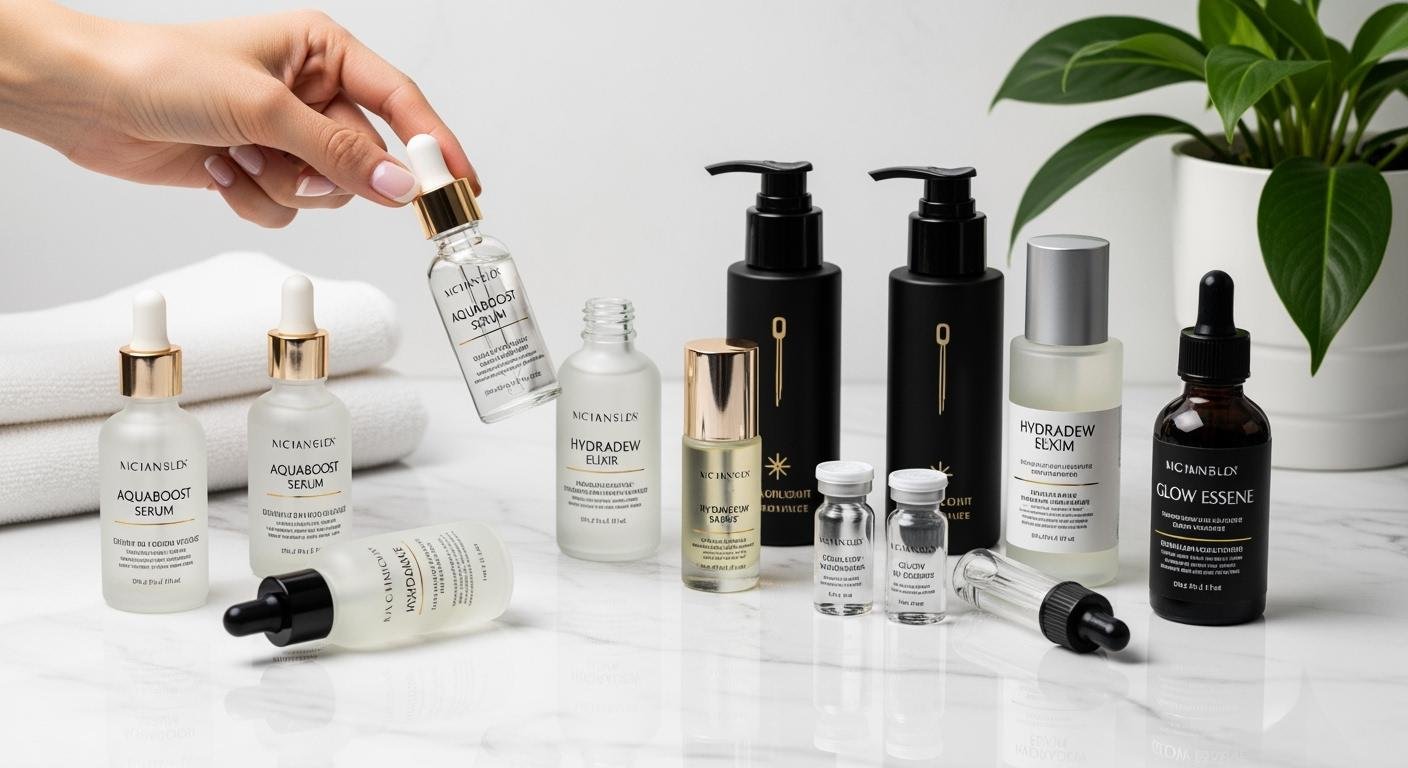
A lightweight hydrating serum can reach the user’s hand as intended while leaving a droplet hanging from the nozzle. That droplet may remain, fall later or touch the cap when the bottle is closed. The useful purchasing question is how the selected assembly behaves during the complete intended sequence, not whether all thin serums need the same bottle material.
Define the observation boundary
Identify the pump, actuator, outlet, bottle, closure and any overcap before comparing candidates. State the formula reference and preparation approved by its owner. Describe the intended full stroke and where the dispensed product should land. Do not substitute a water demonstration for a formula trial without labelling its limited purpose.
The pump selection discussion introduces the broader assembly review. This article narrows the decision to the end of the stroke and subsequent handling. The words serum or airless do not supply a universal nozzle behaviour or a guaranteed clean cutoff.
Keep dose collection and delayed drips distinct
Agree when dose collection starts and ends with the responsible team. Record any product delivered after the intended actuation separately enough that the observation can be understood. If everything is collected in one container without noting the timing, the measured amount may hide a delayed drip that matters to the user.
Use the same sequence across compared samples and preserve the measuring units. An output result stated in mass is not automatically a volume result. The test record should name the method actually used rather than inventing a dose range from the formula category. Do not publish a project result until its sample and conditions are identified.
Observe the outlet without changing it first
Check the outlet immediately after the defined stroke and after the agreed observation period. Record whether a droplet, string or film remains and where it appears. Use photographs tied to sample identifiers if helpful. Avoid wiping every outlet before the observation: that can remove the condition the trial is meant to investigate.
Keep any cleaning step in the sequence explicit. A sample evaluated after a wipe is a different observation from one left untouched. The product team should decide which handling reflects its intended instructions. This guide does not prescribe an unqualified cleaning method for a finished cosmetic or claim that residue automatically creates a microbiological failure.
| Trial point | Observation | Context to preserve |
|---|---|---|
| End of stroke | Droplet, film, string or clean cutoff | Actuation and sample identity |
| After pause | Delayed fall or unchanged residue | Agreed observation interval |
| Cap replacement | Outlet contact or product transfer | Cap reference and placement action |
| Next use | Restart pattern and new residue | Storage and intervening handling |
| Lower fill | Whether the same symptom changes | Remaining contents and orientation |
Review cap contact as a separate interface
An overcap can conceal residue without solving dispensing. Examine whether the cap interior contacts the nozzle or accumulated product when fitted. Record the actual assembly and cap position. Do not infer clearance from a body-only drawing or a photograph of an unfilled bottle.
Compare the outside and inside of the cap after the defined handling sequence. Product transfer can affect appearance and the next use, but its significance belongs to the brand’s agreed review. Keep protective-cap fit, actuator interference and static filled-pack sealing as distinct questions rather than calling every mark a pump leak.
Repeat the intended use sequence
Include consecutive uses and the pauses relevant to the project. The team should agree whether the bottle is upright or held at an intended application angle, and whether the cap is replaced between observations. A favourable result under one orientation should remain labelled with that condition rather than become a claim for every use.
For a lower-fill observation, identify the remaining fill and assembly history. Do not change the formula, pump and handling sequence at the same time. If an alternative actuator is proposed, give it a separate sample reference. Its exterior similarity does not prove the internal pathway or nozzle is unchanged.
Investigate a symptom without guessing its cause
Suppose a hypothetical sample leaves a hanging droplet after the first stroke but not after a repeated stroke. Preserve both observations and ask the component supplier to review the identified assembly. This is an illustrative investigation, not evidence of a particular Oulete model or a universal explanation.
Do not immediately classify the formula as too thin or request a larger pump. Check the sample construction and the actual conditions with the supplier and formulation team. If a replacement part is offered, record what changed and repeat the relevant sequence. An improved appearance alone does not establish why the first candidate behaved differently.
Keep the approval scopes separate
Post-stroke cleanliness, repeatable delivery, closed-pack leakage and formula compatibility should have their own findings while sharing the same sample identity. A clean nozzle does not prove shelf life, and a static seal does not prove a clean cutoff. The material and formula assessment belongs to the responsible product team.
Retain accepted samples and observations with the sample approval record. For glass dropper alternatives, start from the dropper bottle selection and build a separate withdrawal-and-release sequence; do not use a pump result to qualify a different applicator.
Send a useful serum packaging brief
Use the packaging enquiry page to describe the intended amount, user action, formula category, candidate assembly and symptom to evaluate. Share confidential technical details through an appropriate agreed exchange, not a public form by default. Oulete’s MOQ is 10,000 pieces for glass packaging and cosmetic tubes, and 5,000 pieces for plastic airless and plastic lotion bottles; other proposed formats require confirmation.
Frequently Asked Questions
Is delayed dripping the same as a failed bottle-neck seal?
No. Record the location and action. Outlet behaviour after actuation and the closed attachment interface are different review scopes.
Does wiping the nozzle prove a clean dispensing result?
No. It changes the observation. Record the untouched condition and any later cleaning separately.
Can an airless format guarantee no residue?
No. Evaluate the actual dispenser, outlet and formula rather than assigning that result to the format name.