


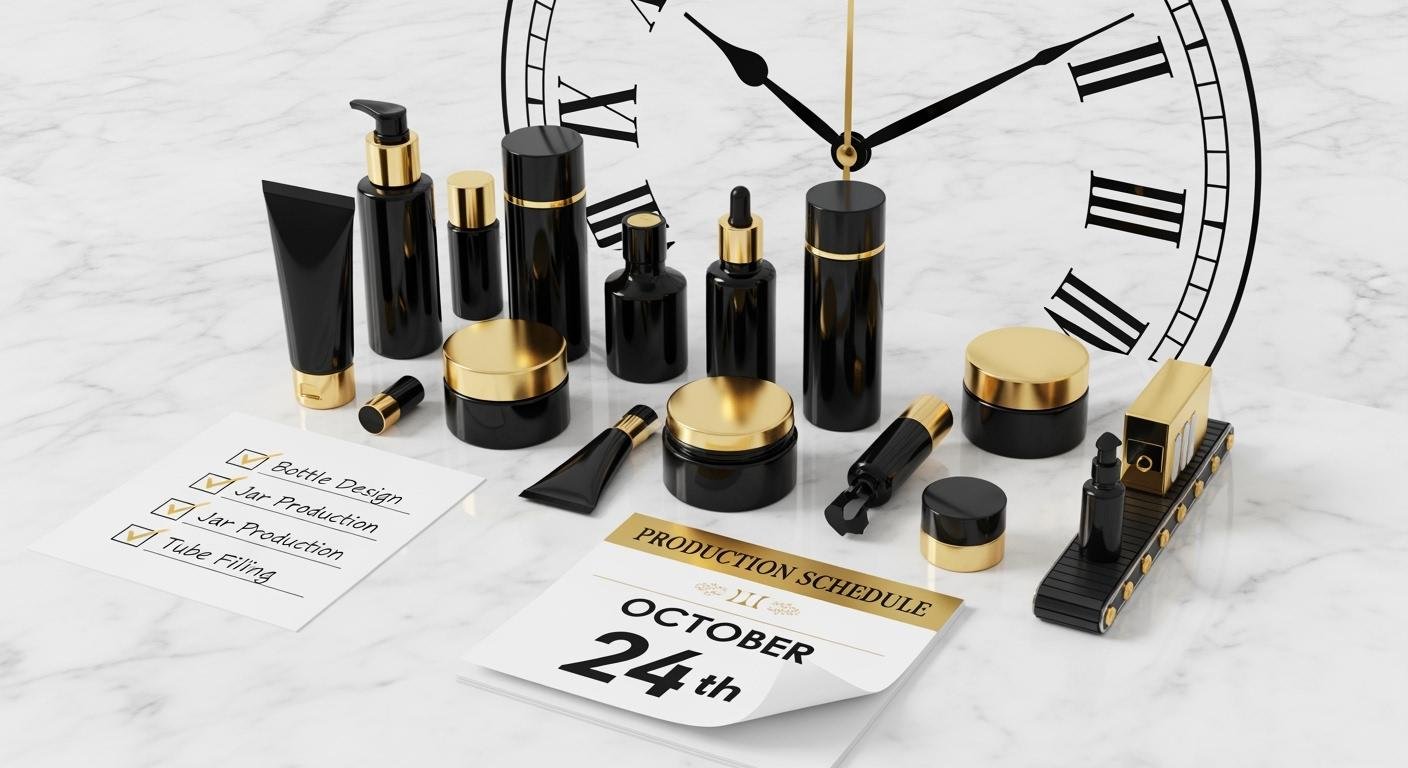
Cosmetic packaging lead time is the time needed to turn an approved specification into packaging ready for your filling operation. A useful schedule separates development, sample approval, production, inspection and delivery. Without that distinction, a quoted production time can be mistaken for the complete launch timeline.
Quick Answer
Cosmetic packaging lead time depends on component availability, custom tooling, material and color selection, decoration, sample approvals and production capacity. Shipping and customs add separate time after manufacturing. Ask your supplier for a project-specific schedule that identifies each approval milestone and when production starts. Standard components and timely artwork approval can simplify planning, but do not assume a general lead-time range applies to every order.
Define What the Quoted Lead Time Includes
Ask when the clock starts and ends. Does it begin at purchase order acceptance, payment, artwork approval or final sample approval? Does the end point mean production complete, shipment dispatched or goods delivered? Put those definitions in writing before confirming your filling date.
Stock components, decorated stock designs and newly tooled packages follow different paths. Even a stock bottle may need a separately sourced cap or pump. Confirm availability for the full assembly, not just the container body.
Build a Milestone Schedule
| Stage | Required input | Completion evidence |
|---|---|---|
| Specification | Capacity, material, closure and intended use | Approved drawing and component list |
| Sampling | Formula and functional requirements | Reviewed functional samples and test plan |
| Decoration approval | Final artwork, colors and finishes | Approved decorated master sample |
| Production | Order release and agreed approvals | Completed batch with traceable records |
| Inspection and packing | Acceptance criteria and carton requirements | Inspection results and release decision |
| Delivery | Transport booking and documents | Arrival and incoming checks |
Each stage should have an owner, an estimated duration and dependencies. Some activities can overlap, but do not schedule production before essential compatibility or functional questions are resolved.
Material and Component Availability
Resin, glass, pigments, liners and dispensing components may have different replenishment times. A standard bottle combined with a special actuator can be delayed by the actuator rather than the bottle. Ask the supplier to identify the longest-lead component and any approved alternatives.
For recycled-content projects, confirm the material source and documentation early. Review PCR airless bottle options before fixing your specifications, and allow time for material and appearance approval. Do not accept an unapproved material substitution to recover a schedule.
Customization Adds Approval Steps
A new mold requires design review, tooling, trials and possible corrections. Decoration adds artwork preparation, color matching, sample approval and the selected finishing process. Multiple colorways or finishes can create separate approval and production streams.
Discuss these dependencies with Oulete’s custom packaging services. Lock the artwork revision and define who can authorize changes. A small late change can restart sampling or create a mismatch between the approved sample and bulk production.
Order Quantity and Factory Scheduling
Quantity affects run time, but a smaller order is not automatically faster. Setup requirements, minimum production batches and the factory’s existing schedule also matter. Confirm the planned production slot and whether component availability has been checked before relying on the completion date.
For a multi-SKU launch, ask whether the supplier can make components together and decorate them separately. Agree whether partial delivery is acceptable and how it affects inspection, packing and freight costs.
Keep Testing and Inspection in the Plan
Compatibility assessment, leak testing and dispensing checks need time. The duration should be set by your development team for the product and storage conditions; a brief sample review is not a substitute for stability evaluation. Record which approvals are required before production release.
Reserve time for pre-shipment inspection and possible correction. If goods do not meet the specification, agree the disposition and a revised delivery plan rather than dropping the acceptance criteria to meet a deadline.
Separate Freight From Production
Transport time depends on origin, destination, shipment size, mode, available services and customs processing. Obtain a route-specific estimate from your logistics partner. Include pickup, consolidation, documentation and arrival handling, not just the main transit segment.
A faster transport mode may help with an urgent order, but compare the total cost and available capacity. Confirm delivery terms and responsibility for customs documents before dispatch.
Reduce Delays With a Clear Brief
- Provide capacity, materials, quantities per SKU and the complete closure specification.
- Use one controlled drawing and artwork revision.
- Name the people responsible for technical and visual approvals.
- Request progress against milestones, including unresolved dependencies.
- Build a contingency allowance suited to your project’s risk.
- Coordinate the packaging schedule with filling and launch plans.
To establish a project-specific schedule, request a packaging quote and timeline with your specification, quantities and required arrival date. Use the response as a planning input, then confirm the agreed milestones before placing the order.
FAQ
What is the typical cosmetic packaging lead time?
There is no single reliable duration for all packages. Stock availability, tooling, decoration, component supply and delivery route determine the project schedule.
Does the production quote include sampling?
Not necessarily. Ask whether sampling, approval, inspection and transport are included, and identify the event that starts the quoted production period.
Can a rush order skip sample approval?
Skipping approval can create costly quality and filling problems. Discuss stock options or simpler decoration while retaining the necessary checks.
How should I handle a design change?
Issue a controlled revision, confirm its impact on cost and timing, and obtain approval before the supplier proceeds.