


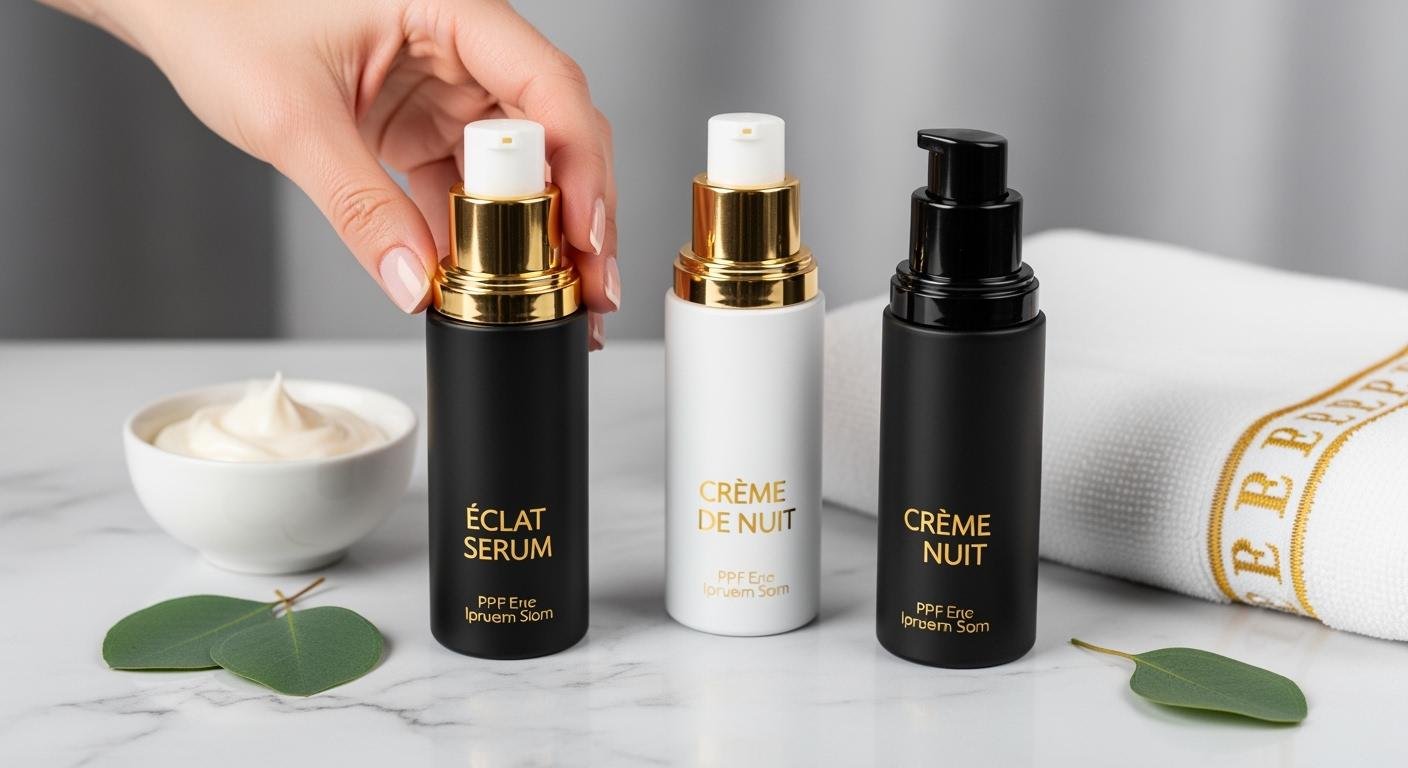
PP airless bottles are worth evaluating when a skincare brand needs controlled dispensing in a lightweight package. Polypropylene can be used in the bottle body and selected components, while an airless mechanism limits the replacement air entering the product chamber during use. The final result still depends on the complete assembly and the formula.
Quick Answer
PP airless bottles can suit skincare serums, lotions and creams when the formula works with the selected pump and product-contact components. Airless dispensing can reduce repeated air exposure during use, but it does not guarantee shelf life or eliminate the need for preservatives. Confirm pump output, priming, leakage and product evacuation with your actual formula. Assess recyclability using the complete assembly and the collection systems in your target market.
How a Piston Airless Bottle Works
In a common piston design, the pump draws product from a chamber above a movable piston. As product is dispensed, the piston rises to reduce the chamber volume. A vent below the piston allows movement; it is separate from the product chamber. Unlike a conventional dip-tube bottle, the system does not rely on replacing the dispensed product with air inside that chamber.
Not every airless package uses a piston. Confirm the mechanism and filling method for the selected model. Airless operation does not mean that the material is an absolute oxygen barrier, or that contamination and oxidation are impossible.
Where PP Airless Bottles Can Fit
Serums, lotions and creams may suit airless dispensing when their flow behavior matches the pump and chamber. A very thick, stringy or particle-containing formula can behave differently from a simple viscosity reading. Test your actual formulation rather than approving the package using water alone.
Compare Oulete’s PP airless bottle options for a project brief covering capacity, output, formula texture and decoration. Where a wider dispensing surface is needed, an airless jar may also be worth testing.
Protection Benefits and Their Limits
Reducing repeated air exposure and direct finger contact can support a product protection strategy. However, packaging alone cannot establish ingredient stability, microbial safety or a longer shelf life. Those claims require testing on the finished formula in the intended package.
Do not remove or reduce preservatives solely because the bottle is airless. Formulation and preservation decisions belong in the product’s validated development plan. Likewise, an opaque bottle may provide a different light barrier from a translucent one; assess the actual design.
Specify Pump Performance Before Ordering
| Check | What to record |
|---|---|
| Priming | Number of actuations needed to deliver the first usable dose |
| Output | Dose consistency at the beginning, middle and end of use |
| Actuation | Ease of use, return action and unintended dispensing |
| Leakage | Performance after storage and transport simulation |
| Evacuation | Product remaining after normal use with the actual formula |
Residual product depends on the formulation and package geometry. Avoid a guaranteed complete-dispensing claim unless the measured result supports it. Agree test conditions and acceptance limits with the supplier and keep the results with the approved sample.
Review the Entire Component List
A package described as a PP bottle may still contain other plastics, a metal spring, a gasket or a different product-contact liner. Ask for the bill of materials and identify every part that contacts the formula. Resin grade and component changes should require approval.
Confirm the filling access, usable volume, piston position and head assembly instructions with your filling partner. Excess entrained air or an unsuitable filling process can affect dispensing. Record the filling and assembly process used for your test samples so the production process can match it.
Sustainability: Check the Assembly, Not Just the Resin
PP is collected for recycling in some markets, but a small, mixed-material pump package may not be accepted or recoverable in the same way as a simple container. Check local collection guidance and the complete design before using a recyclable claim. Ask whether a mono-material option or easier component separation is available.
If recycled content is a requirement, review PCR airless bottle options and request documentation for the actual material and percentage. PCR content does not remove the need for compatibility and performance testing.
Customization and Launch Planning
Color matching, labels, printing and selected finishes can distinguish a standard bottle family. Confirm the method on the chosen resin and request decorated samples. Oulete’s packaging customization services can help frame the artwork and finish discussion.
Agree MOQ per model, color and decoration, as well as the timeline for samples, approval and bulk production. Include freight and filling preparation in your launch schedule. Request a quote and functional samples with your formula and quantity requirements.
FAQ
Are PP airless bottles suitable for all creams?
No. Pump operation must be checked with the actual cream, including its flow behavior after storage and across relevant temperatures.
Do airless bottles guarantee a longer shelf life?
No. They can limit repeated air exposure during use, but shelf life must be established by testing the finished product.
Can every PP airless bottle be refilled?
No. Choose a design intended for refilling and validate its replacement cartridge or refill procedure. Do not assume a single-use bottle is safe to reuse.
What should I approve before ordering?
Approve the complete component specification, filled-sample performance, decoration, inspection criteria, MOQ and delivery schedule.