


Quick Answer
Review where users place their fingers, how they support the jar and how they collect the dispensed cream on the actual proposed assembly. Keep the first action, any coaching and the resulting product location in the record. A press-plate format does not automatically prove touch-free use, correct dosage or a microbiologically qualified product.
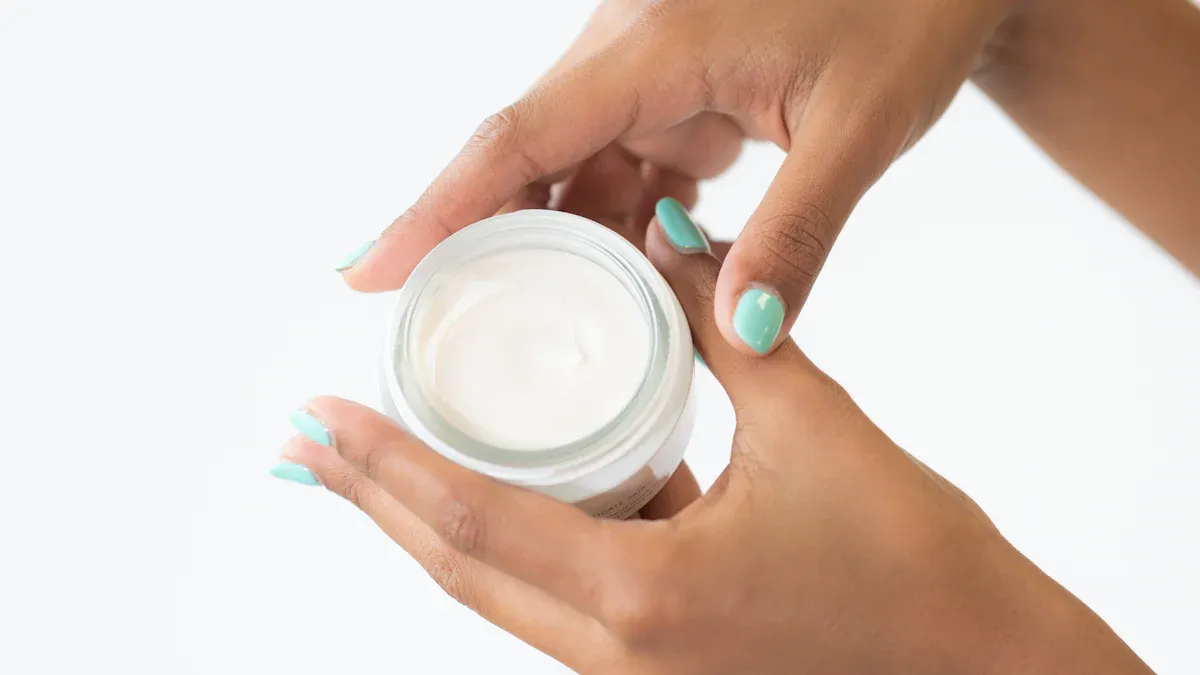
A brand likes the ritual of a jar but wants a dispensing action rather than direct access to a cream reservoir. The proposed sample has a press surface and an outlet. In the review, some people press near the centre, others use an edge, and some collect the cream while still pressing. Those differences are useful design evidence when they are recorded, not smoothed into a general easy-to-use claim.
Identify the intended dispensing arrangement
Ask the supplier to identify the actual mechanism, moving surface, outlet and supported user action. Do not assume every jar-shaped pack uses the same architecture. List the body, dispenser, plate, lid and other relevant components with their references. Keep a decorative showroom sample separate from a functioning proposal.
Confirm what the user is intended to touch and what remains outside the normal interaction. A broad plate can be an operating surface without proving the entire presentation is touch-free. Avoid making hygiene or preservation promises from a photograph or a mechanism name. The responsible product specialists need separate evidence for those questions.
Define the sample state
Use identified samples with the agreed actual formula or clearly labelled development material. Record fill, preparation and prior use. An empty mechanism can demonstrate movement but not the location or behaviour of the dispensed cream. A provisional sample should not silently release a changed production configuration.
State whether the lid, transport piece or another removable part is present at the start. Use the supplier’s intended instructions rather than inventing a gesture to make the demonstration work. If a sample cannot operate as proposed, preserve that observation and request clarification.
Observe the first attempt without rewriting it
Record the initial grip, support and contact location. Note whether the reviewer holds the jar in one hand or places it on an agreed surface. Describe where product appears and how the reviewer retrieves it. Keep the interaction sequence rather than reporting only that cream eventually reached a finger.
If the reviewer is coached to change contact location or sequence, identify that intervention. A coached success can inform instruction development, but it should not replace an uncoached difficulty in the record. Do not claim the format is intuitive for all users from a small internal demonstration.
Separate pressing from collection
The intended pressing action and the intended product-pickup action may be different steps. Ask the brand and supplier to define them clearly. Observe whether collecting product obstructs the outlet, changes the press or leaves the reviewer uncertain about the next action. These are interaction findings for review, not automatic defect classifications.
Do not use finger contact as a substitute for formula safety assessment. This article does not prescribe sanitisation, shared-user practices or preservation changes. The responsible product and safety teams should establish appropriate instructions and evidence for the finished product.
Keep output observations comparable
Where output is assessed, retain the agreed stroke or action and the measurement basis. A partial press and a full press may not answer the same question. Do not label the amount precise without an identified method, samples and acceptance criteria. Keep product pickup separate from the amount released by the dispenser.
If the user removes only part of the dispensed cream, record that distinction rather than treating it as reservoir waste or failed evacuation. The review should distinguish what left the outlet, what remained on the external surface and what was collected. Each observation supports a different question.
Turn findings into a bounded revision
For a hypothetical review, users may understand where to press but find the collection point awkward. The next proposal could change the outlet presentation, surface geometry or instructions. Identify the exact change and review the affected interaction. Changing several details together without a record makes the next result difficult to interpret.
Do not infer that a revised plate fits an existing mechanism because the jar diameter looks unchanged. Request the matched component proposal and relevant technical review. Retain the original findings so the final decision explains why the accepted configuration differs.
Close the approval scope
Use the sample approval record to identify the accepted user sequence and remaining functional questions. Keep material compatibility, stability, sealing and distribution reviews separate. A successful pickup demonstration does not approve a lower preservative level or establish shelf life.
Connect additional sample work to the milestone plan. Send the proposed format and interaction questions through the packaging enquiry page. Ask for the actual jar-system MOQ and scope; the confirmed 5,000 baseline for plastic airless and lotion bottles should not be assumed to cover every jar mechanism. Glass packaging and cosmetic tubes start at 10,000.
Does a press plate prove touch-free use?
No. Observe the intended contact and pickup sequence on the actual assembly.
Does easy pickup establish formula safety?
No. Interaction feedback and finished-product safety evidence are separate decisions.