


Quick Answer
Approve a cosmetic bottle label as a matched face stock, adhesive, print and container surface. Inspect edge lift, seams and positioning after the actual application and handling route. Compare direct printing separately; neither labels nor screen printing have universally better durability or cost for every order.
A label can look smooth when applied by hand yet lift at the edge after the filled bottle passes through guides or is packed tightly in a carton. A brand needs consistent appearance, the filler needs a repeatable application window, and a wholesaler needs labels that remain identifiable during storage and handling. Those decisions require more detail than calling stickers a temporary option for small brands.
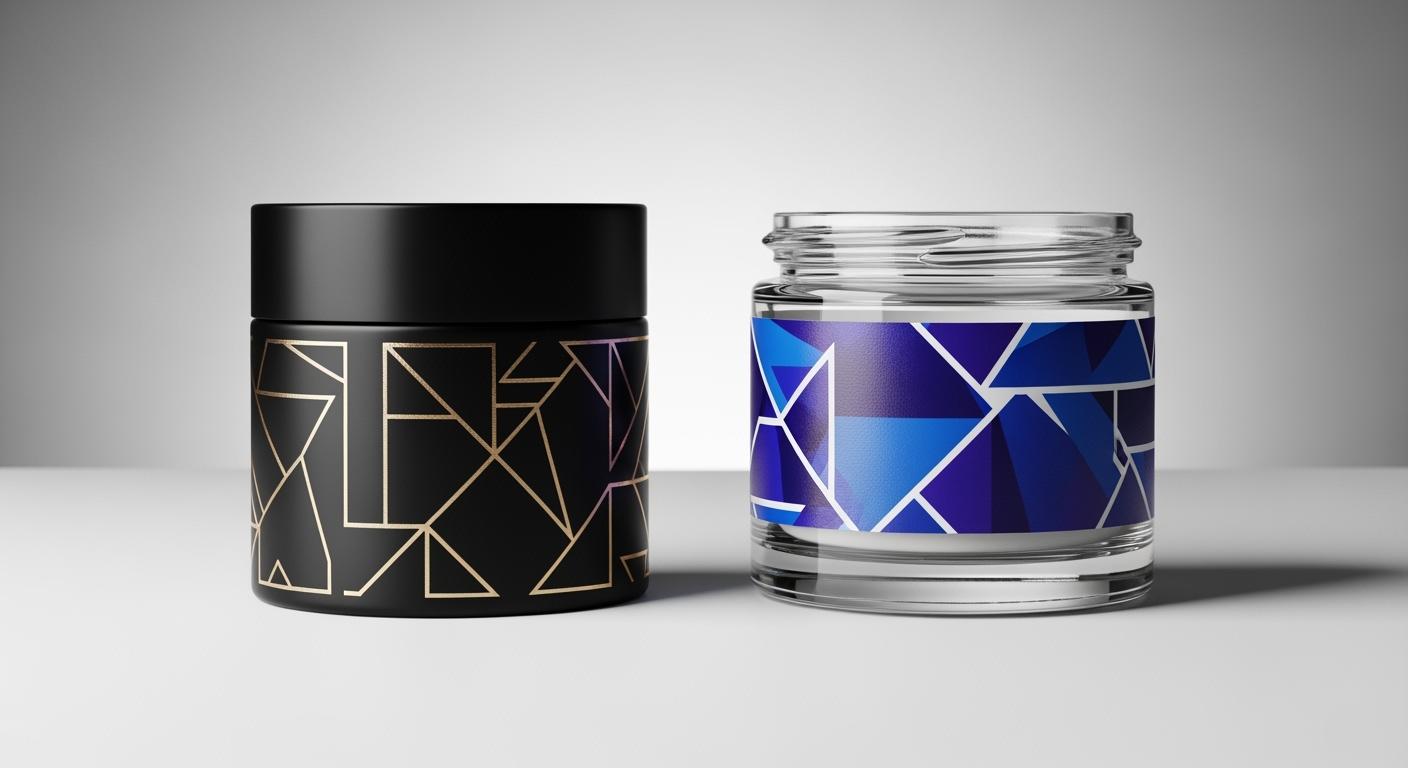
Identify the complete label construction
Specify the face stock, adhesive reference, protective finish, artwork revision and container material or coating. Clear film, paper and metallic-looking stocks can have different handling requirements. The label converter should identify the actual construction and application conditions rather than quote a generic waterproof label.
Record whether the label is supplied on a roll or as individual pieces, the unwind direction, web dimensions, spacing and liner arrangement needed by the applicator. An artwork PDF does not define those supply details. Ask the filling factory to review them before approval, especially when a new converter supplies labels for an existing machine.
Map the label panel on the real container
Identify the usable body panel, curvature changes, mould seams, shoulders and any existing decoration. A rectangular design may not lie flat across a tapered surface. Keep edges away from surfaces that have not been approved for the chosen label route. Use actual production-representative containers rather than scaling an artwork rectangle onto a catalogue photograph.
Define the front position relative to an observable bottle feature or assembly reference. Round bottles may have no obvious front until a pump is applied, while shaped bottles can require controlled orientation. Agree whether the label or closure orientation is set first. A correct label on a randomly oriented pump bottle may still fail the intended shelf presentation.
Evaluate edge lift and seam geometry
Inspect leading and trailing edges, corner behaviour and any overlap seam. Record the label dimensions and the resulting gap or overlap instead of using descriptions such as almost aligned. Check whether the seam sits in a grip area or in contact with neighbouring packs. A visually unobtrusive seam can still create a raised edge that is caught during handling.
For transparent labels, inspect air pockets and the appearance of the adhesive under the agreed lighting. For opaque labels, inspect bubbles, wrinkles and visible surface transitions. Define boundary examples for acceptable appearance with the brand. Photograph the same locations at baseline and subsequent checkpoints so a later defect is not confused with initial application quality.
Run the intended application route
Use the actual bottle, representative label roll and intended applicator settings. Record line speed, locating method, relevant pressure and container condition as agreed by the filler and converter. If only a manual trial has been completed, state that limitation. A neat hand-labelled sample should not be presented as evidence of automated line capability.
Record start-up, steady running and restart observations separately. Check feed, positioning, skew, wrinkles and whether a label is damaged before it reaches the bottle. Stop and preserve misapplied samples with their roll and machine settings. Increasing pressure or changing a guide is a trial change that should be logged, not an invisible correction.
Include filled-pack handling and storage
Define relevant conditions with the project team: filling sequence, surface cleanliness, expected formula contact, storage and distribution handling. Labels applied before filling may encounter different conditions from labels applied afterwards. Do not assume an adhesive approved on a clean dry sample will behave identically on a container carrying residue or another coating.
Allow the converter’s specified application and conditioning route before evaluating adhesion. Do not invent one dwell time for all adhesives. Inspect after relevant rubbing, contact or transport trials using agreed methods and limits. Keep a control and identify the tested construction. A failure caused by a changed coating must not be attributed automatically to every label using the same artwork.
Compare labels with direct printing on equivalent scope
Direct screen printing avoids a label edge but introduces its own ink, pretreatment, registration and curing decisions. Labels add a construction and application operation, but can support variable information and artwork changes. Neither method is automatically scratch-proof or always cheaper. Compare complete costs including conversion, application, rejects and unused artwork-specific stock.
The cosmetic decoration overview helps shortlist methods. This label trial then addresses edge and seam performance rather than repeating general printing-versus-stamping advice. Use the production schedule guide to include converter and filling-line handoffs in the launch plan.
Wholesaler stock and reorder controls
Identify the container and label construction separately in the stock system. An undecorated bottle held for several customers should not be described as already approved for every adhesive or artwork. Keep label storage instructions with the roll stock, track revisions and agree how obsolete labels are isolated when branding changes.
On reorder, confirm the same material, coating and label construction before carrying forward the original result. A supplier substitution may look identical but change edge behaviour. Ask for the revised specification and decide the repeat trial scope before consuming old and new lots on the same line.
Approval record and MOQ
- Container reference, surface condition and decoration revision.
- Label stock, adhesive, finish and artwork identification.
- Panel position, dimensions, gap or overlap and boundary samples.
- Application equipment, roll supply details and settings.
- Conditioning, handling results and unresolved defects.
- Release owner and controls for later substitutions.
Oulete glass packaging and cosmetic tubes start at 10,000 pieces; plastic airless bottles and plastic lotion bottles start at 5,000 pieces. Confirm label supply and application scope separately. Attach the trial results to the sample approval checklist when you request a decorated packaging quotation.