


Quick Answer
A cosmetic packaging boundary sample shows an agreed edge between acceptable variation and rejection for a named appearance attribute. Identify its component, surface region and viewing conditions, record who approved it, and control replacement when the sample changes. It does not establish functional performance, defect rates or a universal tolerance for other products.
Cosmetic companies may reject a mark that a supplier regards as normal. Fillers and wholesalers can interpret the same photograph differently. A boundary reference can make that disagreement reviewable before shipment. This article focuses on aligning appearance judgement through physical references, rather than repeating a full incoming-inspection or statistical sampling procedure.
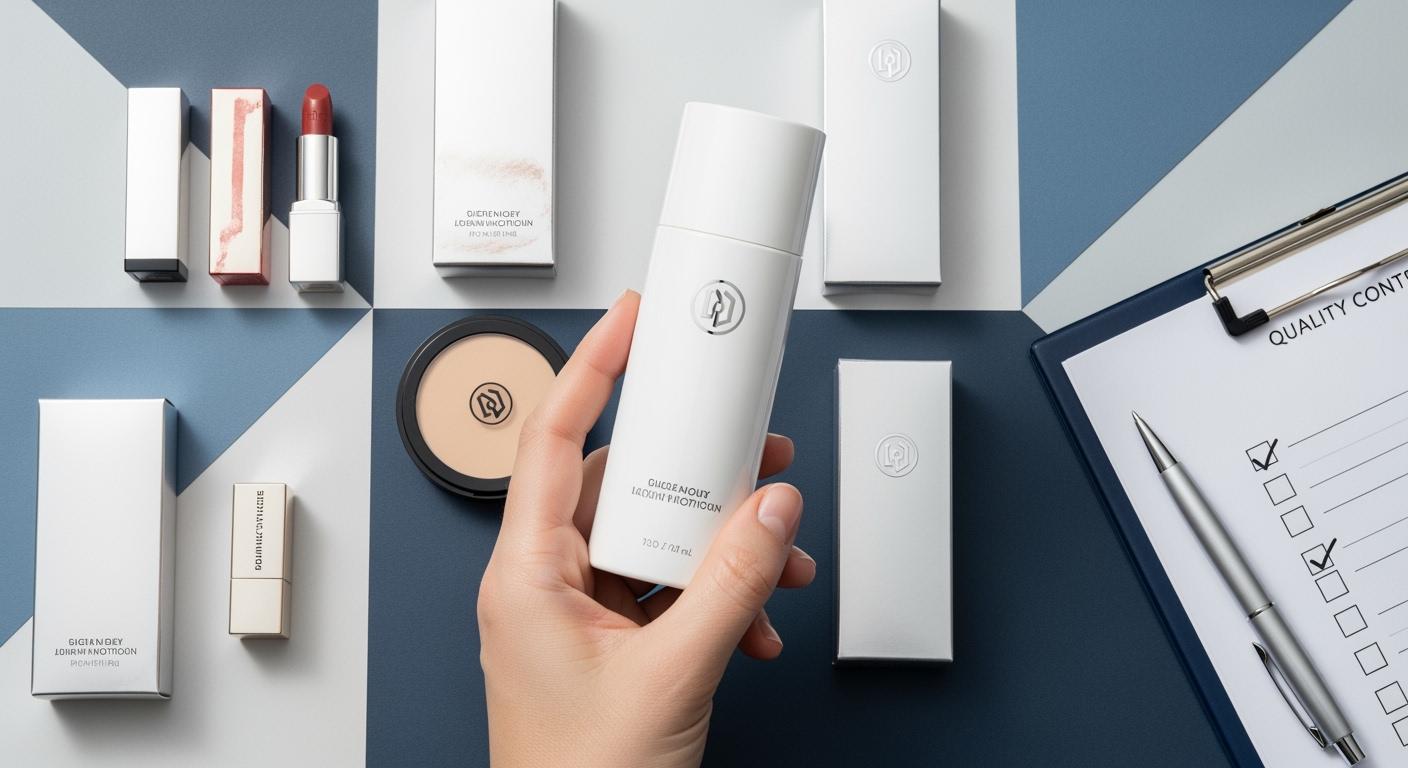
Choose the attribute before the example
Define the observation in ordinary, specific language: a surface mark in a named region, a local finish variation or an artwork-position concern. Avoid collecting a box of imperfect bottles and labelling all of them poor quality. Different attributes need different examples and can have different consequences.
Separate appearance from functional interfaces. A mark on a display panel and damage on a sealing surface should not share an appearance-only decision. Escalate safety-related or functional concerns to the responsible quality team. A visual boundary is not permission to accept an unassessed leak or damaged closure feature.
Identify the exact component and revision. A reference approved for one substrate, colour or finish may not transfer to another. A darker finish can reveal or conceal a mark differently. Keep the scope narrow enough that a receiving inspector can tell whether the example applies to the supplied part.
Map surface zones explicitly
Agree which regions customers normally see and which regions are handled or covered in the complete assembly. Use drawings and photographs with the lid, pump or other components fitted where relevant. Do not assume that the front panel is the only important region or that a hidden area has no functional significance.
Give each zone a clear reference. An instruction that says minor marks on the back are acceptable can fail when the bottle has no controlled front orientation. Identify the artwork datum, seam or another agreed feature used to locate the region. Include views that show the complete pack as well as the close-up.
If the part is rotated during use, review that exposure with the brand. The zone map should follow the actual appearance requirement rather than a supplier’s convenience in sorting. The responsible teams must decide the priorities; the article does not establish automatic zone severity rules.
Agree the viewing conditions
State the normal review lighting, viewing distance, orientation and whether a magnifier is part of the method. Those choices affect what an inspector sees. A highly magnified image used in investigation should not silently replace a routine view agreed by the parties.
Keep glossy and curved surfaces in a repeatable position for comparison. Inspect several relevant angles if the agreed attribute changes with reflections. Record the viewing method alongside the sample rather than relying on memory. The purpose is consistent judgement, not creating a convenient angle that hides a disputed mark.
Use digital photographs as supporting records, not automatic substitutes for physical colour or surface references. Screens, exposure and reflections can change the appearance. If remote review is necessary, document its limitation and agree how the physical reference will be confirmed.
Build accepted and rejected references
Where useful, retain a conforming master, a boundary example and a clearly rejected example. Label what each demonstrates. One imperfect bottle can contain several unrelated observations; reviewers should know which one they are assessing. Avoid using a reference with an unrecorded additional defect.
Have authorised representatives review the examples under the agreed method. Record acceptance, rejection and unresolved points separately. An email approving colour does not automatically approve scratches or print position on the same sample. Every boundary should state the named attribute covered by the decision.
Do not convert a physical example into an unexplained numerical tolerance. If measurement is appropriate, ask the responsible team to define the method and relevant limit. If the decision is visual, retain the actual reference and viewing instructions. A ruler in a photograph can add context without establishing a complete acceptance rule.
Check agreement between inspectors
Use a labelled development set to check whether the supplier, brand and receiving team reach consistent decisions. Present samples using the agreed viewing method, record each decision and investigate disagreements. Do not coach the desired answer while calling the exercise an independent comparison.
Disagreement may mean the example is ambiguous, the zone map is incomplete or inspectors used different conditions. Revise the reference description and repeat the affected comparison. Do not resolve it by quietly accepting every disputed example. Keep the approval owner’s decision and its scope explicit.
Protect references from changing
Store physical samples under the agreed protective conditions and avoid repeated handling that alters their appearance. Identify master and working copies where copies are used. A scuffed working reference should not become the new defect boundary without review.
Photograph and label the reference at approval so later condition can be compared. Record review or replacement events and preserve the superseded decision. If a new finish or substrate is proposed, assess whether a new boundary set is needed. Similar branding does not guarantee that the old reference remains applicable.
Keep boundaries separate from lot decisions
A boundary set defines what an observation means. It does not define how many parts to inspect, the statistical acceptance scheme or the shipment disposition. Those belong to the agreed quality procedure. Avoid importing generic defect percentages into a cosmetic bottle order.
- Component, finish and attribute scope.
- Surface-zone map and complete-pack views.
- Viewing conditions and permitted tools.
- Accepted, boundary and rejected reference identities.
- Authorised decisions and inspector alignment results.
- Storage, review and replacement ownership.
Keep this set with the sample approval file, the decoration specification and the release schedule.
Agree the scope before ordering
Oulete’s glass packaging and cosmetic tubes start at 10,000 pieces; plastic airless bottles and plastic lotion bottles start at 5,000 pieces. Confirm special tooling and decoration separately. Send the proposed boundary set when you request sample and inspection planning. A useful agreement lets teams recognise the same appearance issue without pretending that visual examples qualify every aspect of the finished product.