


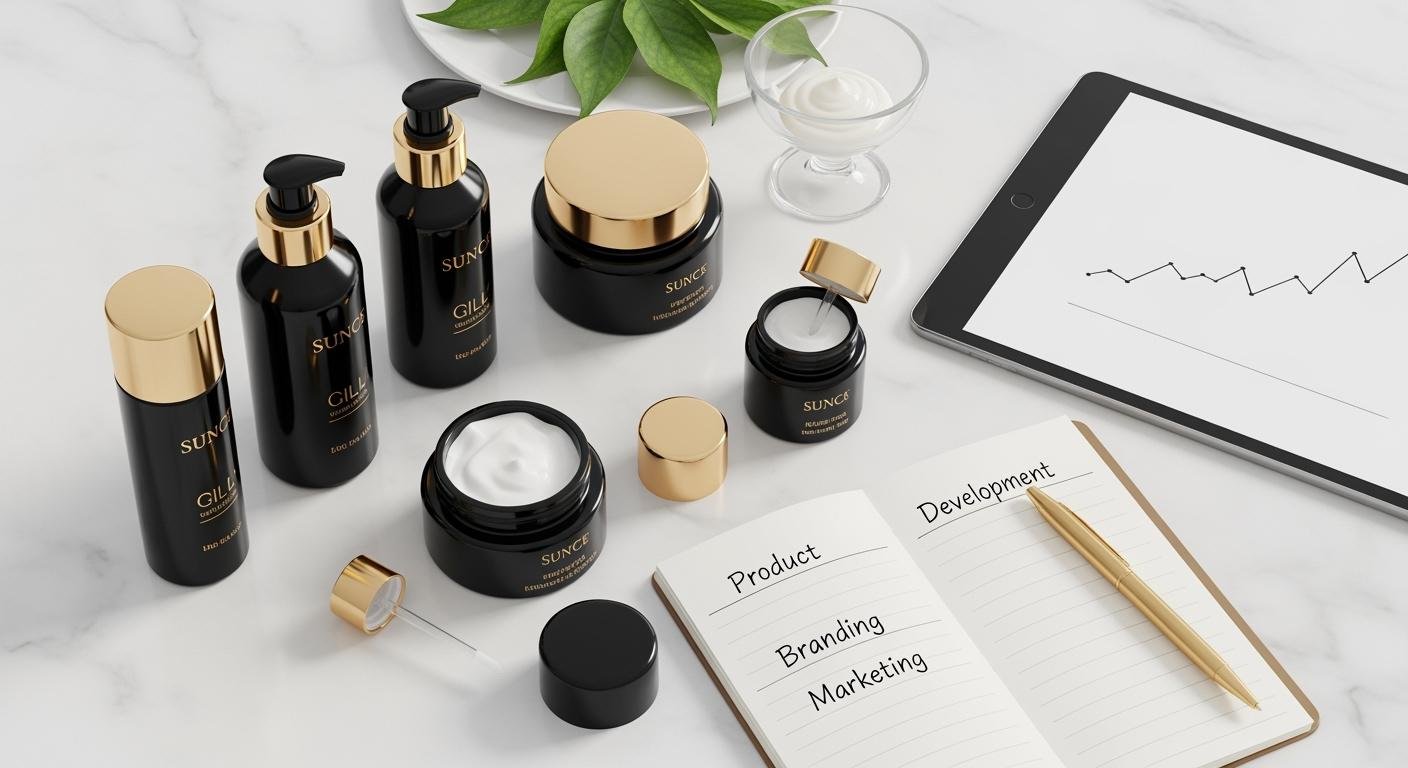
A plastic cosmetic packaging manufacturer should help a skincare startup turn a product brief into a repeatable bottle, jar or tube specification. The best fit is not simply the supplier with the lowest unit price. Your decision should connect formula compatibility, dispensing performance, artwork, minimum order quantity and delivery planning.
Quick Answer
For a skincare startup, choose a plastic cosmetic packaging manufacturer that can validate formula compatibility, provide production-representative samples, and define clear quality criteria. Stock bottles, jars or tubes with standard closures can simplify an initial launch. Compare total costs, MOQ per SKU, decoration requirements and delivery schedules rather than unit price alone. Approve the complete packaging system and a signed master sample before bulk production.
Start With the Formula and Filling Process
Share the product type, intended fill volume, viscosity, filling temperature and sales market before choosing a container. A thin toner and a rich cream may need different openings, closures and dispensing systems. Ask your filling partner to review the neck finish, filling access and assembly sequence as well as the external appearance.
For lotions or active serums, compare skincare airless bottles with conventional pump packaging. Airless operation can limit repeated air exposure during dispensing, but it does not replace formulation stability testing or preservation assessment.
Compare Plastic Materials by Application
| Material option | Useful characteristics | What to verify |
|---|---|---|
| PET | Lightweight bottles with clear or colored presentation | Formula interaction, filling temperature, closure fit and transport strength |
| HDPE | Opaque, squeezable bottle options | Required rigidity, barrier needs and decoration adhesion |
| PP | Common in jars, caps and airless components | Complete assembly performance, material grades and pump output |
| PETG | Clear, premium-looking bottle or jar designs | Ingredient compatibility and acceptance in the intended recycling stream |
| PCR content | Recycled-content versions of selected plastics | Resin source, percentage, traceability, appearance and performance consistency |
There is no universally compatible or universally recyclable plastic package. Review every product-contact component, including the liner, gasket, dip tube and pump, rather than approving only the bottle resin. Recyclability also depends on local collection systems, size, color and the assembled design.
Use Stock Components to Control Launch Risk
An existing bottle shape paired with a standard closure can simplify your first order. You can distinguish the product through labels, color matching or printing without committing immediately to a new mold. Check whether the same bottle family can serve several SKUs, while keeping each formula’s tests separate.
A custom mold is more appropriate when a stock design cannot meet a genuine functional requirement or a sufficiently supported brand plan. Before committing, agree who owns the tooling, what changes are included, how tooling is maintained and what happens if you change suppliers.
Ask for an Itemized Quote
- Specify bottle capacity, material, color, neck finish and closure.
- State quantity per SKU and per decoration or color variation.
- Request separate costs for tooling, sampling, decoration and assembly.
- Confirm carton packing, inspection scope, delivery terms and freight assumptions.
- Ask whether repeat orders use the same approved material and component specifications.
MOQ and production time vary with the selected mold, resin, component supply and decoration. Do not treat a general website range as a project commitment. Ask for a written quotation and a schedule that begins after the agreed approvals are complete.
Approve Samples Before Bulk Production
Review both undecorated functional samples and production-representative decorated samples. Fill them with your actual formula and assess leakage, appearance changes, dispensing, closure performance and storage behavior using a test plan agreed with your development team.
Check artwork placement, color, legibility and resistance to handling or product contact. Keep a signed master sample and the matching drawing revision. This gives the supplier and your incoming inspection team a common reference.
Evaluate the Manufacturer’s Quality Controls
Request the applicable material documentation, component specifications and inspection records. If a supplier presents a quality-system certificate, verify its scope, issuing body and validity. A certificate alone does not prove that your filled product and package are compatible or that every market requirement has been met.
Agree acceptance criteria for dimensions, visible defects, leakage, closure fit and pump function. Define how nonconforming items will be reported and handled. Traceability should connect the approved specification to the production batch and supplied components.
Build Branding Around a Validated Package
Choose decoration after the functional package has been shortlisted. Review Oulete’s custom cosmetic packaging services when comparing printing, finishes and artwork requirements. A technically achievable finish should still be tested on the intended resin and shape.
Prepare your formula summary, capacity, estimated quantity and design files before you request a packaging quote and samples. This makes the supplier’s response more useful than a price based on an incomplete brief.
FAQ
Which plastic is best for a skincare startup?
The answer depends on the formula, dispensing method, filling process and presentation. Compare several material and closure combinations through samples rather than choosing by resin name alone.
Can I start with a small order?
Ask about stock components and simple decoration first. Confirm MOQ separately for the bottle, closure, color and artwork variation; a custom mold may require a different commitment.
Does airless packaging guarantee shelf life?
No. Shelf life must be supported by tests on the final formula and package. Airless dispensing is one part of product protection, not a substitute for validation.
What should I approve before production?
Approve the drawing, complete component list, decoration proof, functional test results, master sample, inspection criteria and delivery schedule.