


Quick Answer
Before issuing a cosmetic packaging purchase order, record every supplier deviation from the request, assign a decision owner, and obtain the revised offer that reflects accepted changes. An unanswered field is not agreement, and a cheaper alternative is not the requested pack until its technical and commercial scope is reviewed. Preserve rejected and pending alternatives separately from the authorised configuration.
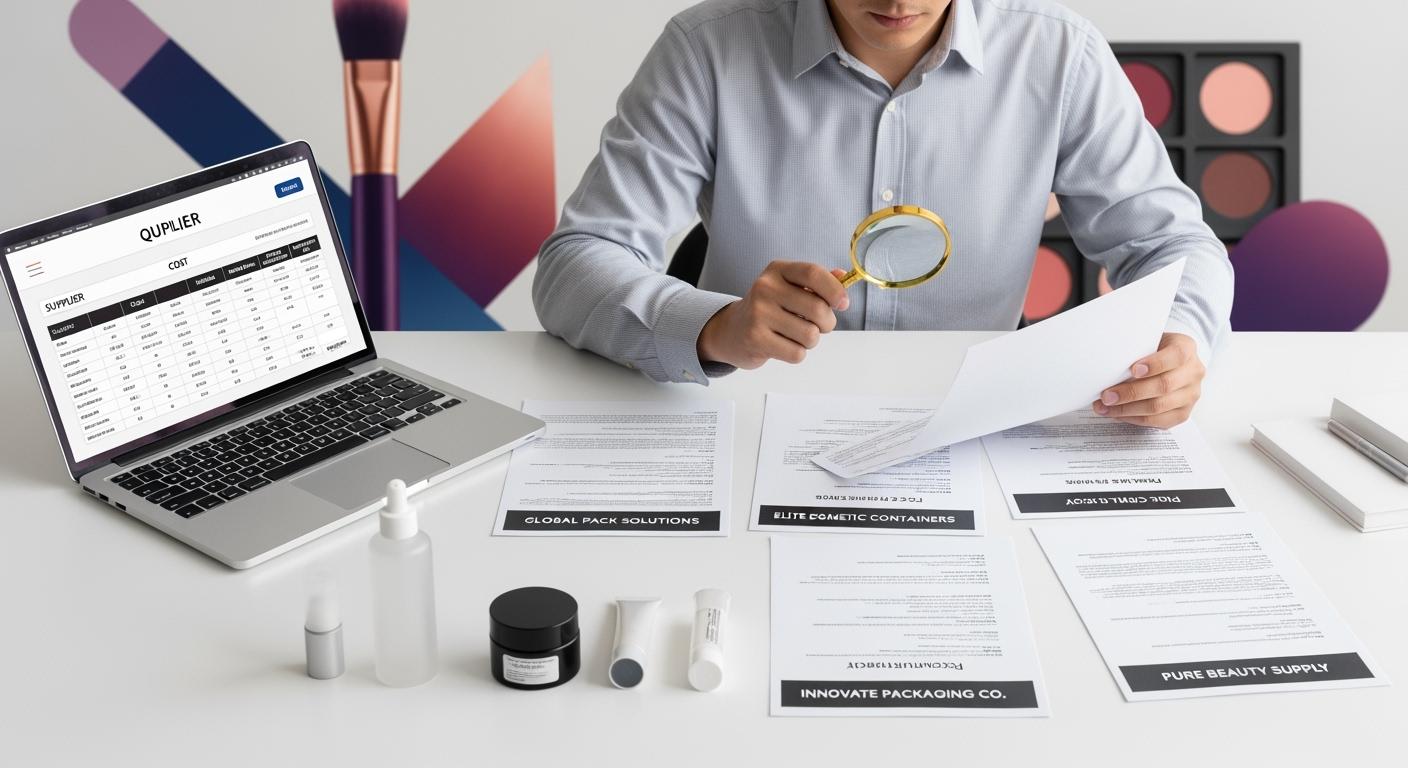
A purchasing team may send a detailed brief and receive an attractive offer that answers only part of it. The risk is not simply comparing the wrong price. It is allowing a proposed change, exclusion or unanswered question to become part of the order without anyone making that decision. This guide focuses on closing those exceptions rather than repeating a unit-cost comparison worksheet.
Freeze the request being answered
Give the quotation request a reference and revision. Include the component list, supplied state, artwork, quantity conditions, intended delivery boundary and sample-review needs. If you revise the request during discussion, record which version the supplier is responding to. Otherwise a seemingly missing answer may belong to a requirement added after the offer was prepared.
Retain the original response with its date. A salesperson’s later explanation can clarify it but should not replace the offered document without a trace. Cosmetic companies, filling factories and distributors each need to know which configuration and exclusions purchasing intends to accept. Use one controlled request to connect their separate reviews.
Identify exceptions without assigning blame
Read each response against the request. Mark a different pump, material proposal, decoration process, packing state or quantity basis as a deviation. Mark an absent response as unresolved. An explicitly excluded service belongs on the list even if purchasing expected it to be included. Do not infer acceptance from an empty quotation cell.
A supplier may offer a sensible alternative because the requested part is unavailable or unsuitable. Keep that explanation beside the alternative’s exact reference. The log should make a decision possible, not treat every difference as a failure. It should also prevent a helpful option from silently becoming the production specification.
| Exception field | What to preserve | Decision needed |
|---|---|---|
| Requested scope | Request reference and exact requirement | Does it still apply? |
| Supplier response | Offered reference or explicit exclusion | Clarify, accept, reject or keep open |
| Technical effect | Affected fit, formula or process review | Responsible reviewer and evidence |
| Commercial effect | Revised charge, quantity or timing scope | Written acceptance of the offer |
| Closure evidence | Accepted document and decision date | Update the order basis |
Separate technical acceptance from price acceptance
A buyer can approve a revised charge without having approved a different gasket, pump or bottle finish. Give those decisions different owners where needed. The technical team should identify evidence for the proposed component and the checks affected by the change. Purchasing should obtain the corresponding itemised offer.
Keep samples connected to the proposal they represent. A stock pump on a display bottle does not release another pump offered for production. The sample approval guide supports retaining configuration and review scope. Do not close a technical exception simply because a similar-looking sample has already been accepted.
Show exclusions at the point of decision
List services and parts that remain outside the offer, including assembly, decoration preparation, protective packout, trial samples or buyer-supplied components where relevant. State the party expected to provide them. An exclusion accepted by purchasing may still create a task for the filler or distributor before the packs can be used.
Distinguish not offered from not yet confirmed. If an operation is pending supplier review, identify the missing response and its consequence for purchase release. Do not turn uncertainty into a zero charge or a promise that the work will be included later. The chosen quote must state the actual boundary clearly enough for receiving and invoicing review.
Keep timing exceptions tied to dependencies
A proposed date may assume approved artwork, confirmed components or receipt of an agreed instruction. Record the assumptions rather than carrying the date alone into a launch plan. If an exception changes sample work or component sourcing, ask for the affected milestone review. The production lead-time discussion helps frame those dependencies.
This article does not provide universal lead times or contract advice. The parties should agree their applicable commercial terms and responsible reviewers. A quote exception log is a practical way to preserve what remains undecided; it cannot make an unresolved delivery assumption reliable by itself.
Use a controlled closure sequence
For each exception, record the responsible answer, evidence reviewed, decision and applicable revision. If an accepted alternative changes the drawing or component list, update those records before marking the item closed. Obtain a revised supplier quotation or clear written amendment that matches the accepted scope rather than relying on an internal note alone.
For example, an illustrative offer might exclude fitting a supplied overcap while showing it in the product image. Clarify whether the customer buys loose overcaps, who fits them, and what packing and line checks follow. Close the item only when the offered and ordered supply states agree. This is a hypothetical scope mismatch, not an Oulete case study.
Release the purchase order against the closed record
Keep the accepted quotation, specification revision and resolved exception list together. Identify any deliberately open issue and who is authorised to make its later decision. Where an unresolved item affects the intended configuration, do not label the complete pack approved without stating that limitation. A purchase release and a formula or line approval are different decisions.
For wholesalers, retain a customer-specific configuration record instead of rewriting a catalog family for every proposed change. For fillers, pass the accepted delivered-state and outstanding process questions to the line team. For brands, ensure the appearance and formula reviews refer to the same parts that purchasing orders.
Prepare the next enquiry
Send the selected format, component brief and unresolved quotation questions through the packaging enquiry page. Oulete’s confirmed MOQ is 10,000 pieces for glass packaging and cosmetic tubes, and 5,000 pieces for plastic airless and plastic lotion bottles. Confirm the exact configuration and decoration conditions rather than treating these baselines as approval of any mixed order.
Frequently Asked Questions
Is a blank supplier answer an accepted requirement?
No. Mark it unresolved and obtain a response attached to the request revision.
Can purchasing accept a cheaper part before testing?
Keep the commercial proposal separate from its technical approval. State the evidence and decision still required.
What proves an exception is closed?
A documented decision connected to the accepted supplier scope and affected specification revisions, not an unexplained tick in a comparison table.