


Quick Answer
For every packaging sample round, record the earlier reference, proposed change, question being tested, actual new sample and decision. Keep unresolved questions visible. A revised sample that looks better does not automatically close a dispensing or line problem, and several simultaneous changes cannot establish which one caused an improvement.
Cosmetic companies can lose time when feedback arrives as scattered messages rather than a controlled decision. Fillers may test an older pump while the designer approves a newer bottle finish. Wholesalers may quote a prototype that has not been released. A change-and-decision log connects each discussion to the actual sample and prevents those versions from becoming interchangeable.
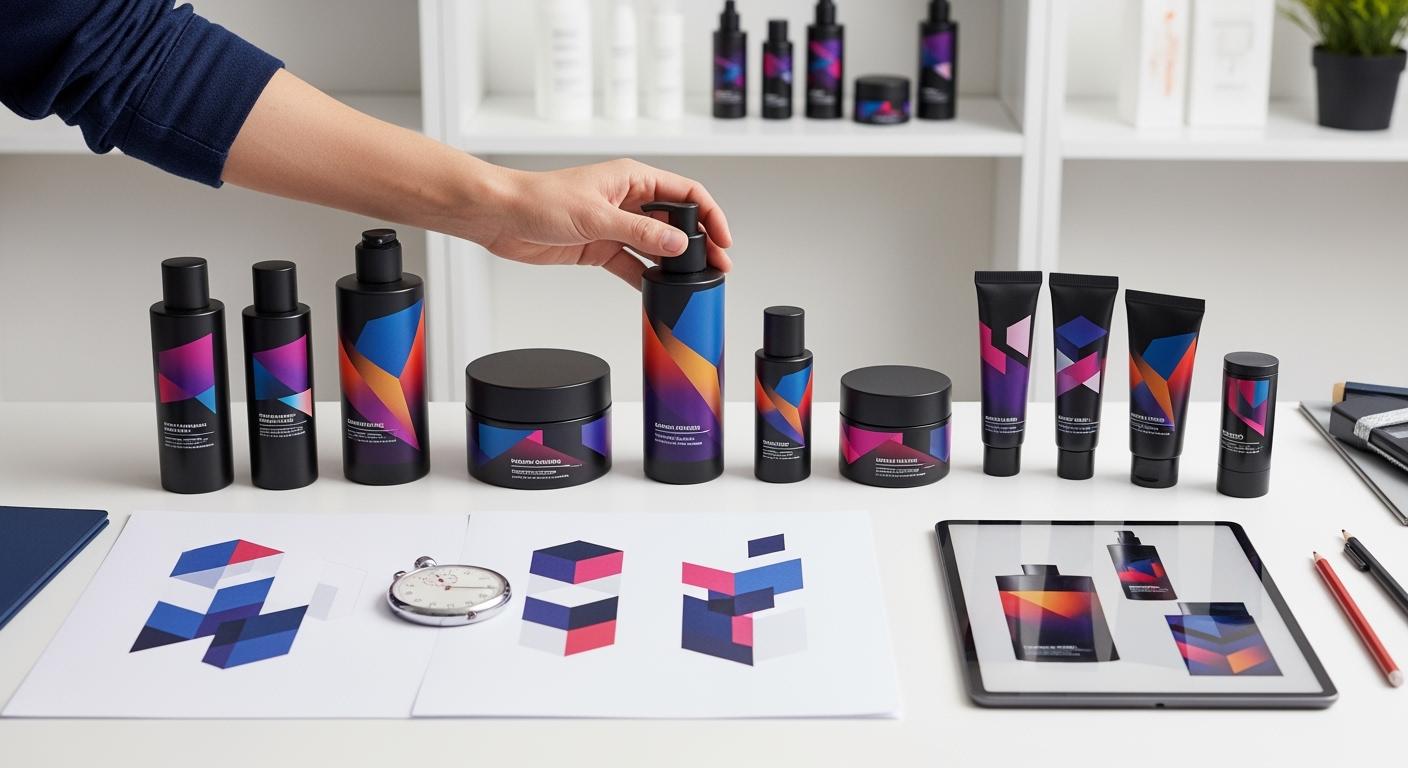
Start with a question, not another sample request
Write the observation that triggered the revision. A nozzle directs product onto the shoulder, a cap does not seat under the defined line operation, or artwork falls outside the agreed visible area are different questions. Avoid asking the supplier to make it better without identifying the condition and intended result.
Attach the sample identity, formula or appearance reference, method and photographs relevant to the observation. A photograph without a component revision may be impossible to connect to the supplier’s work. State whether the issue was seen during a tabletop review, a filled trial or line handling.
Separate an observed condition from an assumed explanation. The team may propose that a longer outlet will help, but that is a hypothesis until the appropriate comparison is completed. Keep the proposed change and the reason for it together so a later reviewer can understand what the new sample is intended to answer.
Identify all changes in the new round
Ask the supplier to list every difference from the previous reference, including changes that were not the main request. A different gasket, resin, pump variant or process can affect the interpretation. Same appearance does not establish identical components. Record unchanged items as well where they matter to the comparison.
Where practical, change one relevant factor at a time when investigating a cause. If a redesign changes several factors for commercial reasons, state that purpose openly. The result may identify a workable configuration without proving which individual change resolved the earlier observation.
Give the new sample its own revision and label. Do not reuse the previous approved reference number and rely on a message saying new version. The old sample remains evidence of the earlier condition, while the new sample represents a new question or proposed configuration.
Define the comparison before testing
Have the responsible brand, supplier and filler agree which checks need repeating and which earlier results remain applicable. A change to the outlet might require a new user handling and dispensing review. A new coating might change appearance, contact and coding questions without changing the internal pump identity.
Keep test conditions comparable where the purpose requires it. Record any differences in formula batch, fill condition, storage or equipment. A better result with a different formula history should not be attributed to the component change without review. Missing records are a limitation, not an invitation to assume conditions matched.
Agree what constitutes the decision: accepted for a named attribute, rejected for a recorded observation, or held for additional work. An informal preference is not the same as complete-pack release. The sample approval guide helps define those scopes.
Keep the decision owner visible
Assign who approves appearance, formula-related work, filling-line operation and commercial changes. One person may coordinate the project without having authority to approve every discipline. A marketing approval should not silently close a filler question about closure application.
Record the actual decision date, reviewer and reference. If feedback conflicts, preserve it and ask the authorised owner to resolve the named issue. Do not average contradictory comments into an ambiguous accepted result. The final decision should show which requirement applies to the next sample round or production release.
Give each open item an owner and next evidence step. For example, request a drawing clarification, repeat an affected trial or obtain a production-intent decorated sample. A due date is useful for coordination but does not create the missing evidence when it passes.
Distinguish proofs from production-intent samples
A digital rendering can answer layout questions without representing fitted geometry or material contact. A hand-decorated sample can answer a preliminary visual question without proving the proposed bulk process. Label these limitations rather than presenting every attractive example as the final master.
Ask what the supplier’s revised sample represents: actual components, final process, proposed assembly or an identified substitute. Review the remaining gap before production. The decoration brief should use the same artwork and finish references as the sample log.
Use a log that supports retrieval
- Round and sample identity, with the earlier reference.
- Observed issue and proposed explanation.
- Complete list of intended and incidental changes.
- Comparison method and relevant condition differences.
- Results, evidence attachments and attribute-specific decisions.
- Open items, owners and required next samples.
Keep photographs linked to the correct round and preserve superseded records. Do not rename an older file final to match the newest discussion. A supplier or filler joining later should be able to reconstruct why the team chose the current configuration without searching through private chat fragments.
Close the revision before booking production
Confirm the actual body, dispenser, closure, material and artwork references used in the released configuration. Record which checks have been accepted and which remain unresolved. Update the quotation and production brief where changes affect scope. A successful sample round does not automatically confirm material availability or a production slot.
Use the milestone schedule to show dependencies rather than promising a fixed development duration. Do not skip formula or functional work because a project needs a quicker launch.
Order scope and quantities
Oulete’s glass packaging and cosmetic tubes start at 10,000 pieces; plastic airless bottles and plastic lotion bottles start at 5,000 pieces. Confirm custom tooling and decoration separately. Send the current decision log when you request the next sample or production quotation. The goal is fewer ambiguous rounds, not an unsupported guarantee that development takes a particular number of weeks.