


Quick Answer
For a dark cosmetic bottle, approve the actual lot or date mark on the final finish using the filler’s proposed coding process. Check contrast, location, variable characters and visibility after agreed handling. A blank coding zone in artwork is not proof that a line can mark it, and a readable printed brand name is not proof that the variable code will also be readable.
Dark and matte presentations can suit a brand’s chosen visual identity without being restricted to one customer gender. The operational question is whether the bottle remains identifiable when a filler, cosmetic company or wholesaler needs to trace a unit. This article focuses on variable production marks, not on claiming that a dark bottle is automatically protective, more durable or more premium.
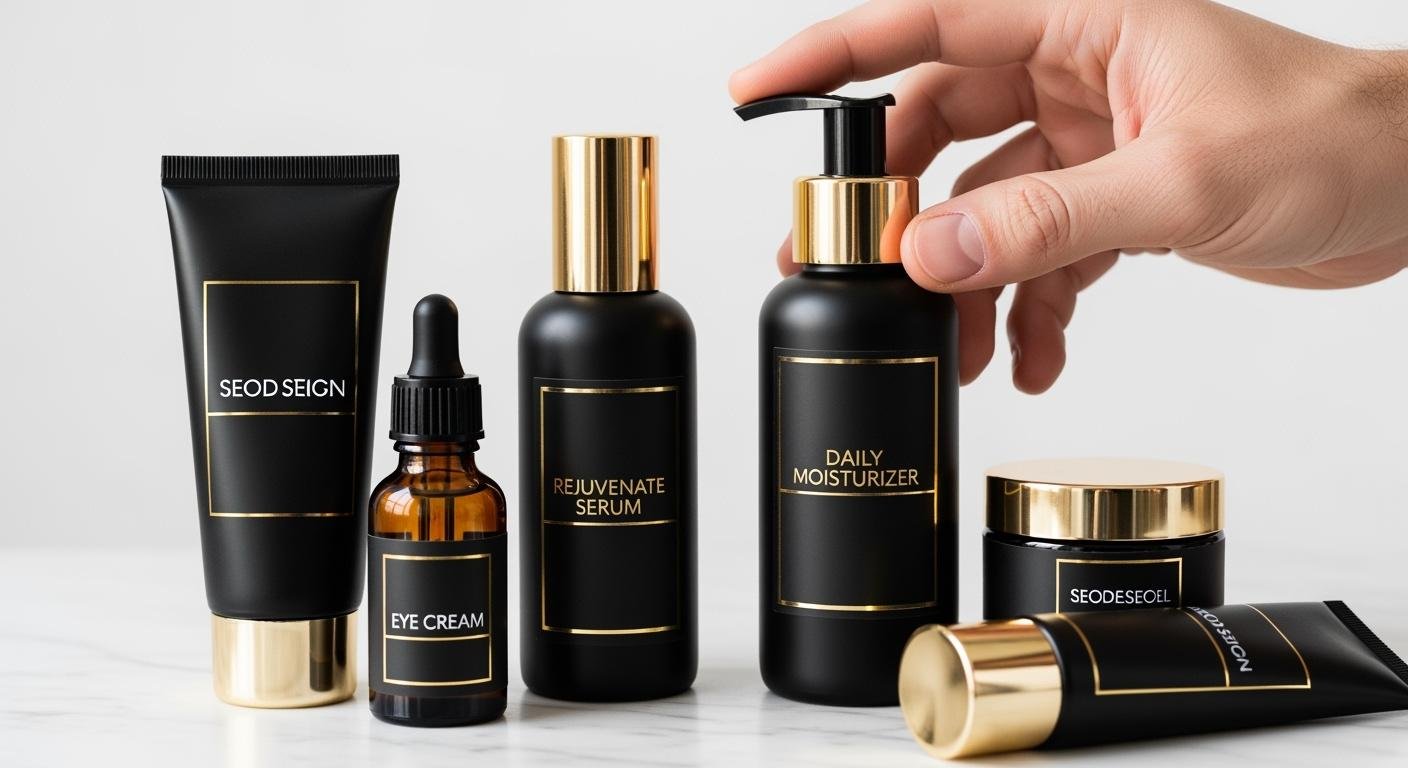
Define what the mark must identify
Ask the brand and filler to define the code structure and responsibility for assigning it. Identify which elements vary between production runs and which are fixed artwork. This article does not prescribe market-specific legal wording. The responsible brand team must confirm any required information and its permitted presentation for the destination market.
Give receiving staff an example of the intended structure with fictional development data clearly marked as a sample. A code can be visible but still ambiguous if teams do not know where one field ends and another starts. Record whether stock staff must read it manually, use a scanner or perform both operations. These tasks need different evidence.
Keep the bottle code connected to carton and filling records. Do not assume every unit, inner pack and outer carton uses the same string. Agree the relationship and who can look it up. A photograph of a readable bottle mark cannot create that traceability relationship on its own.
Reserve a location the line can reach
Ask the filler which surface its proposed equipment can mark on the assembled pack. Check whether the bottle sits in a puck, whether the closure is fitted and how orientation is controlled at that stage. A visually convenient base location may be inaccessible while the pack is supported, while a sidewall location may need an orientation reference.
Mark the zone on the actual decorated sample. Keep it clear of a molded feature, sharply curved transition or required artwork where those interfere with the proposed process. Have the filler confirm the usable area rather than inventing one universal zone size. Identify the body revision and decorated configuration used to establish it.
If the mark is on a removable component, review whether the traceability requirement still works after that component is separated. A code on an overcap is not the same record as a code retained on the bottle. The brand and filler should decide the appropriate location before decoration and packout are frozen.
Test the final finish, not an unrelated coupon
A black resin body, black coating and dark label are different proposed surfaces. Identify which one will receive the mark and provide representative samples. Ask the coding provider and filler which process is appropriate for that surface. Do not promise that a particular ink, laser or setting works on every dark cosmetic bottle.
Record the marking equipment, consumable reference where applicable, sample preparation and actual line arrangement. An early tabletop sample may help screen an option, but state what remains before the production line is approved. Do not transfer a result from an undecorated bottle to a matte-coated one without reviewing the changed surface.
Where a coding process changes the surface, inspect the affected region and seek the responsible team’s approval. The trial should not be described as successful solely because a mark becomes visible. The relevant appearance and package questions still need review, particularly when the proposed location is near an interface.
Review characters that reveal weak contrast
Use an agreed development string that exercises the expected character types and longest required field. Check thin strokes, closely spaced characters and characters that staff might confuse. A short sample containing only large numbers may not represent the actual variable data. Do not publish a universal minimum type size without an applicable project requirement.
View marks under the conditions where the responsible team will read them. Record lighting, angle and whether a tool is required. A glossy reflection can hide part of a mark in one position; a low-contrast matte mark can become difficult at another. Photograph the complete bottle and a close view so the location remains clear.
If scanning is required, test the actual data and intended scanner workflow. Visual readability alone does not qualify a machine-readable mark. Record unsuccessful attempts as well as successful ones. Let the qualified coding team define relevant acceptance criteria and any applicable verification method rather than turning a casual phone scan into a universal grade.
Connect line trials to receiving
Retain marked samples from identified points in the agreed line trial. Include the production-representative finish, proposed packout and relevant handling observations. Keep marking and wiping conditions explicit. Do not use an arbitrary solvent rub as proof that the code will survive every route or service environment.
Ask a receiving representative to locate and interpret the code using the intended instructions. Record mistakes or delays without silently correcting them. A good-looking mark still needs a clear lookup process. Wholesalers should receive the code location and relationship to carton records before the first shipment.
Release the coding decision
- Approved code structure and responsible data owner.
- Bottle, finish and marking-zone references.
- Equipment and actual trial arrangement.
- Manual-reading and any scanning acceptance decisions.
- Handled sample record and retained comparison.
- Change triggers for a new finish, location or coding method.
Attach the decision to the sample approval record. Coordinate the blank zone with the decoration brief and the production schedule before bulk decoration.
Quantities and sample requests
Oulete’s glass packaging and cosmetic tubes start at 10,000 pieces; plastic airless bottles and plastic lotion bottles start at 5,000 pieces. Confirm custom tooling and decoration separately. Send the coding location and filler’s trial requirements when you request decorated samples. Bottle appearance approval and coding-line approval should remain distinct decisions tied to the same final configuration.