


Deodorant stick packaging must do more than hold a solid balm. The container, elevator and cap need to work with the formula after filling, cooling, transport and repeated use. For a natural deodorant project, start with the actual formula and intended net weight rather than selecting a container from its exterior size.
Quick Answer
Choose deodorant stick packaging by confirming usable fill volume, formula density, top- or bottom-fill construction, and the dispensing mechanism. Test the actual formula for material compatibility, cooling shrinkage, elevator movement and cap clearance. Agree filling conditions with the filler and packaging supplier; a natural claim does not establish compatibility or recyclability.
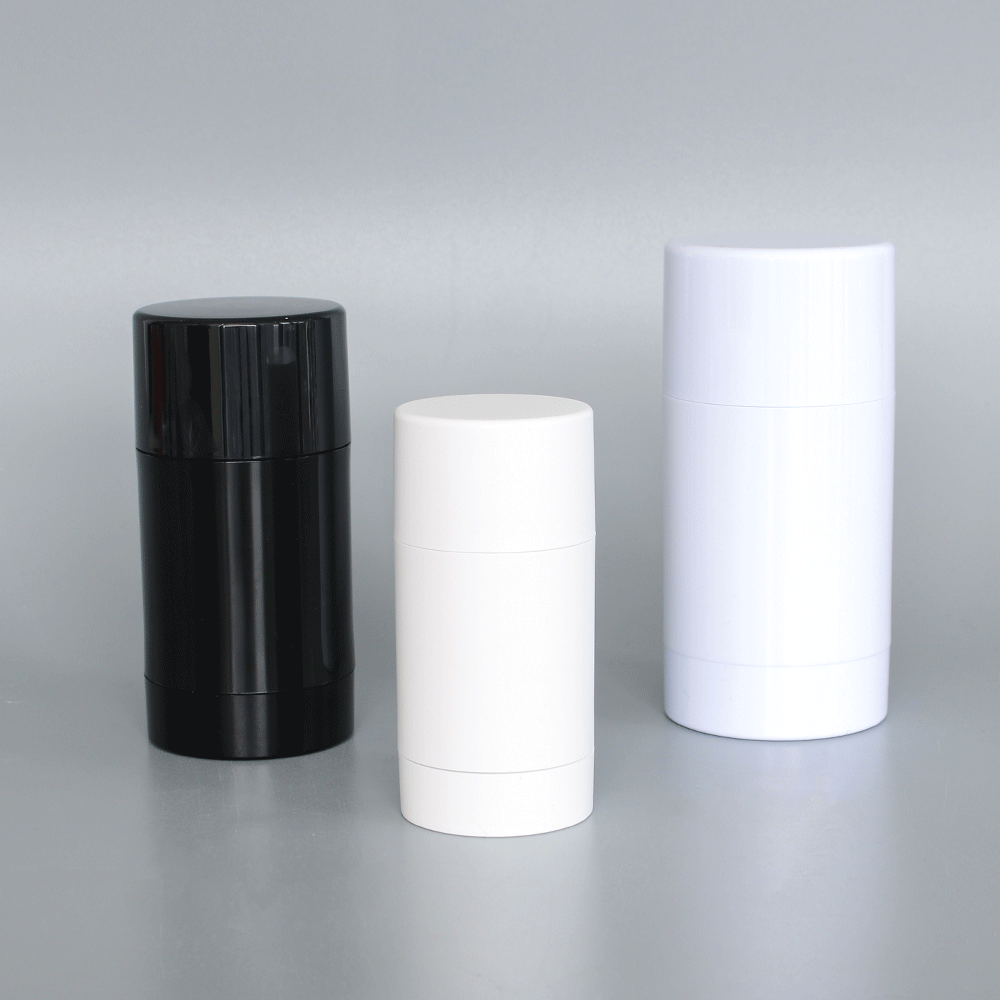
Separate container volume from declared fill weight
A container advertised in milliliters does not automatically hold the same number of grams. Formula density, the elevator position and required clearance beneath the cap all affect the usable fill. Ask for a drawing showing the recommended fill level and the space occupied by internal components.
Run a weighed filling trial after the formula has reached its intended finished condition. Record empty-pack weight, filled-pack weight and variation across samples. Do not set a net-weight declaration from nominal container capacity alone. A larger exterior can also hide a smaller working reservoir.
Match the mechanism to the finished stick
A twist-up stick uses a turning base to move an elevator. A push-up pack relies on a different user action and should not be evaluated as though it were a screw mechanism. Review the actual model with the supplier before developing filling fixtures or application instructions.
- Advance the product in small steps and check that the elevator moves without slipping or binding.
- Test retraction only if the specific mechanism is designed to retract.
- Check that the solidified stick remains supported instead of rotating independently of the elevator.
- Close the cap at the intended product height and check for contact or damage to the stick surface.
Repeat these checks on filled samples after conditioning, not just on empty components. A mechanism that feels smooth when empty can behave differently with a firm or sticky formula.
Confirm the filling route before ordering
Top-fill and bottom-fill packs need different assembly sequences. Confirm the orientation during filling, whether a shaping insert is used, how the base is secured, and which components arrive preassembled. Have the contract filler review drawings and physical samples before approving the package.
There is no universal hot-pour temperature for every natural deodorant. The formula’s processing requirements must be compatible with the approved heat exposure of the complete pack. Use the filler and supplier’s agreed process window rather than copying a temperature from another brand’s recipe.
During a pilot, inspect for seepage at the base, voids, sink marks and separation from the elevator. Compare the surface and mechanism immediately after cooling and after storage. Changing the cooling sequence can change the finished result even when the container remains the same.
Review every material in contact with the formula
Request a component-level material specification for the body, elevator, screw, cap and any insert. Oils, fragrance and other ingredients need compatibility testing with all relevant contact surfaces. A PP or HDPE material name is a starting point, not proof that every formula will be suitable.
For paper-based or refillable alternatives, examine the barrier layer, seams and dispensing structure. Do not describe a coated paper pack as plastic-free, compostable or universally recyclable without evidence for the complete construction and intended market. PCR content and recycling claims also need documented scope.
A focused pilot approval checklist
- Verify the agreed usable fill and weight range.
- Inspect leakage and distortion through the filling and cooling cycle.
- Check elevator travel, product support and cap retention after conditioning.
- Review decoration for rubbing, oil contact and obstruction of the turning base.
- Assess filled-pack transport performance with the intended outer packaging.
- Retain signed samples and document component and process revisions.
Packaging checks do not establish deodorant efficacy, product safety or formula shelf life. Those require the brand’s separate product-development and validation work.
Questions to send with a sample request
Specify the formula type, target net weight, intended application surface, filling route, decoration and sales market. Include the filler early so that container selection and production preparation stay aligned. Review Oulete’s deodorant stick packaging examples and request model-specific samples and a quote.
FAQ
Can one stick pack work for several natural formulas?
Possibly, but each formula needs its own filled-sample review. Differences in density, shrinkage and friction can change fill weight and dispensing.
Is an empty-pack mechanism test sufficient?
No. Repeat functional checks after filling, cooling and storage using the complete pack and actual formula.