


Quick Answer
Specify the metallic effect and its coverage before choosing a process: a foil detail and a metallized surface are different decoration builds. Ask for the substrate, layer sequence, masked areas and actual decorated sample. Full metallic coverage is not proof of a metal container, superior durability or environmental benefit.
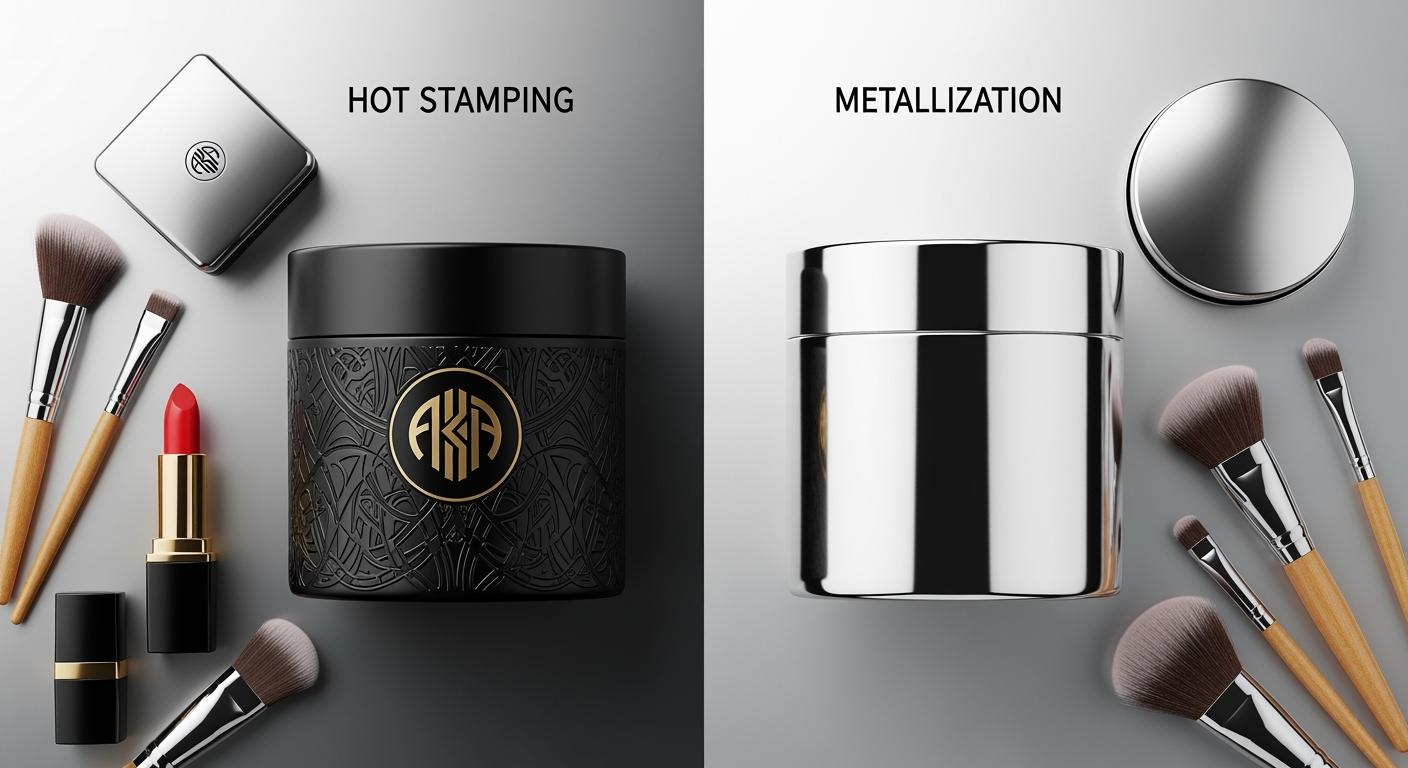
A brief that says gold packaging can mean a small reflective logo, a metallic cap or a broad metallic body. Those are different jobs. This guide focuses on the extent and construction of the metallic surface, rather than comparing screen printing with hot stamping for a logo.
Describe the effect before naming the process
Identify the required area on a drawing. Mark whether the effect belongs to lettering, a band, the outer body or a separate collar. Choose a physical appearance reference for colour and reflection rather than assuming all gold finishes are interchangeable.
Do not infer the process from a photograph. A broad foil effect and a metallized finish can both produce metallic-looking areas. Quadpack’s decoration guide lists full-cover hotfoil stamping and metallisation as separate routes. The selected supplier should explain the actual route proposed for the component.
Map the surface construction
Request the part reference, resin or glass specification and proposed layers. Identify preparation, colour or base layers, the metallic effect and any protective finish. State which supplier performs each operation and which sample represents the completed build.
A metallic plastic collar remains a constructed plastic component with a decorative surface; it should not be described simply as a solid metal collar. Keep material descriptions and appearance language separate in both purchasing and public copy.
Define coverage and masked areas
Ask where coverage stops: edges, underside, threads, snap features or other functional zones. Decoration should not be allowed to change a critical fit without review. Mark any areas that must remain free of the decorative process.
Inspect transitions and edges on physical samples. A bright front face may hide inconsistent coverage at the shoulder or an exposed edge. If several parts form one visible assembly, compare their boundaries and reflection together.
Approve the complete assembled appearance
A cap, collar and body can use different materials or processes. Even with one colour name, they may not present an identical metallic effect. Decide whether those differences are intentional and retain a signed assembled reference.
Check printing over the metallic surface if it is part of the design. Lettering can need a separate approval from the base effect. A successful metallic sample without the final artwork does not approve the completed decoration.
Review handling and fit after decoration
Compare the assembled fit before and after the proposed surface build. Assess relevant rub, scuff, wiping and product-splash exposure using methods agreed with the decorator and brand. Do not assign a universal durability ranking to foil or metallization.
Check packing contact at prominent metallic areas and edges. Protective packout can affect the delivered appearance, so include it in the approval scope. If the surface process or coating changes, review which observations need repeating.
Metallic-effect release checklist
- Coverage area and appearance reference are defined.
- Actual process and layer construction are identified.
- Material wording does not confuse appearance with composition.
- Masked functional zones and fit are checked.
- Final artwork and assembled colour relationship are approved.
- Handling and packing observations are documented.
Keep the final build with the approved production sample. Use the logo decoration guide for the separate artwork-process decision.
Compare routes against the intended design
Start with the decorated drawing and ask each supplier to explain how its proposed route achieves that design. A small foil logo and a fully metallic body should not be compared as if they were equivalent quotations. Keep the coverage, component material, artwork and required finished appearance constant when comparing alternative proposals.
| Design question | What to ask for | What to approve |
|---|---|---|
| Small metallic accent | Artwork limits and positioning method | Edge definition and registration on the part |
| Broad metallic area | Coverage route and layer sequence | Complete surface and coverage transitions |
| Matching cap and body | Separate constructions for each component | Assembled reflection and colour relationship |
| Artwork over the effect | Final printing sequence and proof | Legibility and completed decoration |
Ask the quotation to identify project-specific tooling and sample stages. Do not assume that one process always requires fewer steps or costs less. A proposal that excludes the protective finish or assembled proof is not directly comparable with one that includes them.
Resolve a metallic mismatch on the assembled pack
As an illustrative example, a brand approves a gold body from one sample and a gold cap from another, then finds that the assembled pack has noticeably different reflections. The first step is to compare both parts together under the agreed viewing conditions, not to approve a new colour name by email.
Review whether the intended design calls for a close match or a deliberate contrast. Ask the decorators which part or layer would change, and request a completed assembly representing that revision. Keep the earlier samples labelled so the new approval does not become confused with the superseded pair.
Control changes after the metallic sample is signed
The release record should identify the coverage drawing, masked areas, underlying part and final artwork. If the metallic effect stops near a functional edge, include a close view or marked drawing of that boundary. This gives inspection a defined reference rather than a vague instruction to check gold quality.
When a supplier proposes a process, coating or component change, ask which appearance and fit checks need repeating. Retain the finished reference with its protective packout. The aim is to reproduce the approved assembly, not merely to keep the same process label while the visible result changes.
Frequently Asked Questions
Does a full metallic finish mean the container is aluminum?
No. Confirm the underlying material and surface build.
Is metallization always cheaper than foil?
No. Compare the actual coverage, tooling, process steps, quantity and protective packing in the project quotation.
Share your requirements through the packaging enquiry page.