


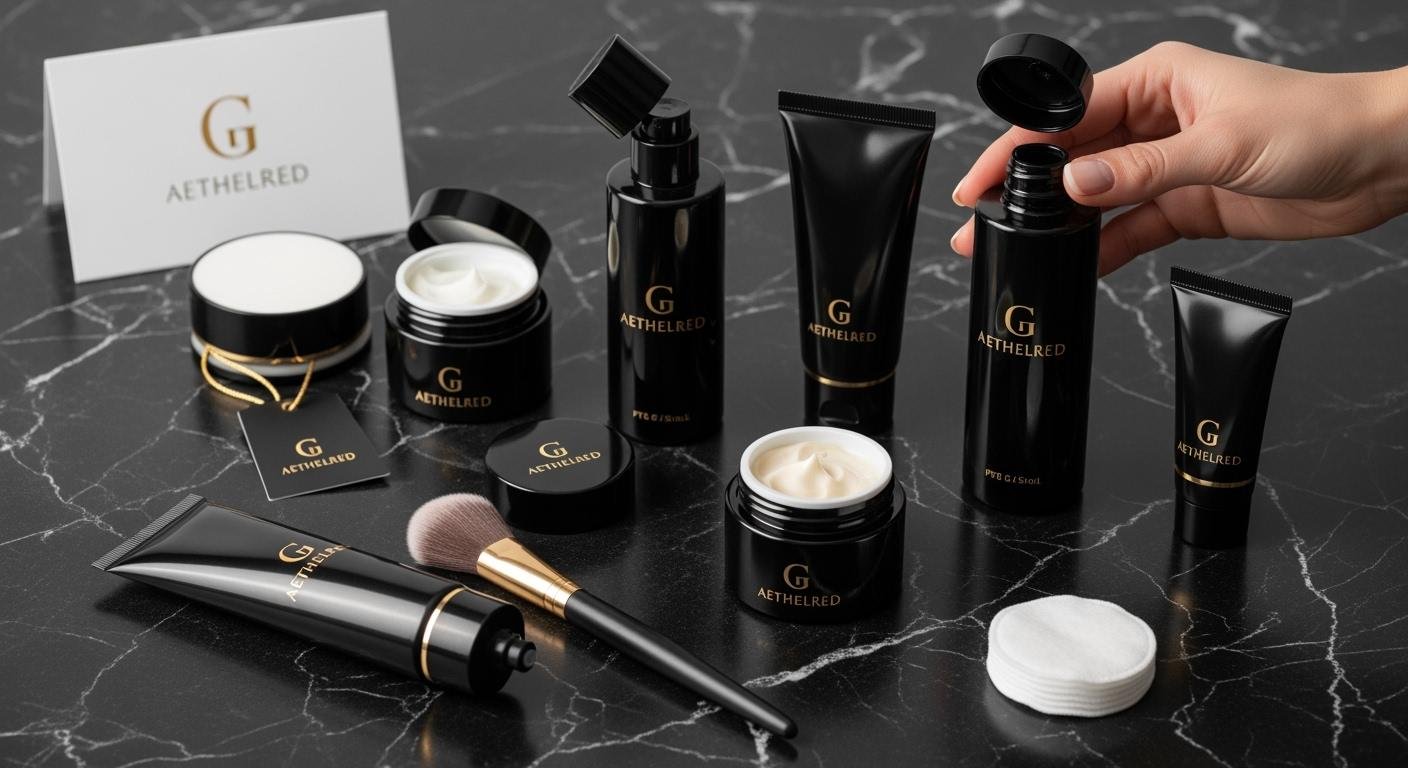
PETG cosmetic packaging can give skincare bottles and jars a clear, polished appearance without using glass. For a beauty brand, its value depends on more than shelf appeal: resin grade, wall design, closure fit, formula compatibility and the intended disposal route all need review before an order is approved.
Quick Answer
PETG cosmetic packaging is an option for brands seeking clear, rigid bottles or jars with a premium appearance. Select it only after checking the actual formula, filling conditions, closure system and decoration performance. Transparency does not provide light protection by itself, and recycling acceptance varies by market. Compare PETG with PET, PP or glass using production-representative samples before deciding which package best fits your product and brand positioning.
Why Brands Consider PETG
PETG is a glycol-modified polyester used in clear packaging designs. Its transparency can display a formula’s color and the remaining fill level. Shaped bottles and thicker-wall designs can support a premium presentation, while plastic construction can reduce weight compared with a similar glass package. Compare actual sample weights rather than assuming a fixed freight saving.
Clarity is not always a benefit for the formula. If ingredients are light-sensitive, ask whether an opaque color, sleeve or other protective design is needed. A frosted appearance alone does not establish a tested light barrier.
Match the Material to the Product
| Application | Packaging direction | Validation priority |
|---|---|---|
| Toner or cleanser | Bottle with spray, pump or dispensing cap | Leakage, output and interaction with the complete formula |
| Lotion | Pump bottle | Priming, output consistency and evacuation |
| Cream | Jar with compatible lid and liner | Seal performance, product contact and handling hygiene |
| Makeup | Container with a matched applicator | Wiper fit, solvent compatibility and dose control |
These are candidate formats, not a guarantee that every PETG grade works with every formula. Oils, solvents, fragrances and other ingredients can change the result. Evaluate the bottle, cap, liner and dispensing components together using your filled product.
PETG, PET and Glass Are Not Interchangeable
PET and PETG are related materials, but do not assume they share the same processing limits or recycling route. Ask for the exact resin specification and manufacturing process. Where a supplier proposes a substitution, require new approval rather than accepting an equivalent-sounding material name.
Glass offers a different feel, weight and material profile. PETG may be attractive when lower weight and clear presentation matter, but transport durability still depends on shape, wall thickness and packing. Review cosmetic glass bottle options alongside plastic samples when comparing the complete package.
Decoration and Brand Positioning
Clear, tinted, matte or printed finishes can help create a consistent product family. Match the surface treatment to the actual resin and geometry. Request decorated samples to check color, alignment, adhesion and resistance to abrasion or contact with the formula.
For artwork planning, review Oulete’s customization services. Keep the bottle shape, label area, closure color and artwork revision in one approved specification. This is particularly important when several SKUs share a container but use different decoration.
Check Compatibility Before Production
- Fill production-representative samples with the actual formula.
- Inspect for haze, staining, swelling, cracking or other changes.
- Check leakage, closure fit and dispensing after storage.
- Assess the intended filling temperature and transport conditions.
- Retain the approved material, drawing and master sample references.
A material document for a particular use does not automatically validate a finished cosmetic package. Request relevant documentation for the selected grade and review it with your product development or compliance team. Avoid describing all PETG as universally approved or compatible.
Make Sustainability Claims Specific
PETG should not automatically be described as accepted in ordinary PET recycling. Check local collection and sorting guidance for the intended market and for the complete package, including labels and closures. If PCR content is offered, obtain evidence of the resin source and percentage rather than assuming availability.
Refillability also requires a designed and tested system. A bottle that can physically be opened is not necessarily suitable for repeated cleaning and refilling. Compare material use, expected reuse cycles and refill distribution before making environmental claims.
Procurement Checklist
Confirm nominal capacity, usable fill volume, resin grade, color, neck finish, closure, decoration, MOQ and inspection criteria. Include sampling, approvals and freight in the schedule. To discuss a project, request a PETG packaging quote with your formula summary and quantity requirements.
FAQ
Is PETG a good alternative to glass?
It can be worth evaluating when clear presentation and package weight are priorities. Compare filled samples for compatibility, appearance, handling and transport performance.
Can PETG bottles be recycled locally?
Acceptance varies. Check the local recycling system rather than treating PETG as ordinary PET or using a blanket recyclable claim.
Can I use PETG for formulas containing essential oils?
Do not assume compatibility. Test the complete formula against the selected resin and closure assembly under relevant storage conditions.
Can I customize the color and logo?
Ask which colors and decoration methods are available for the selected model. Confirm MOQ and approve a decorated sample before production.