


Quick Answer
If a salon customer uses a bottle holder, approve the bottle and holder together. Check the support region, insertion and removal paths, dispenser clearance and identification of replacement bottles. A matching advertised diameter does not prove that a filled, decorated bottle fits. Holder availability and installation suitability must be confirmed separately; a bottle quotation does not imply that Oulete supplies the fixture.
Cosmetic companies and wholesalers sometimes deliver a professional-use range into an existing salon setup. The fixture may be a countertop holder, a rack or another separately sourced support. The purchasing task is to establish whether the selected bottle can be used and replaced without forcing it into that fixture. General bottle material choices do not answer this interface question.
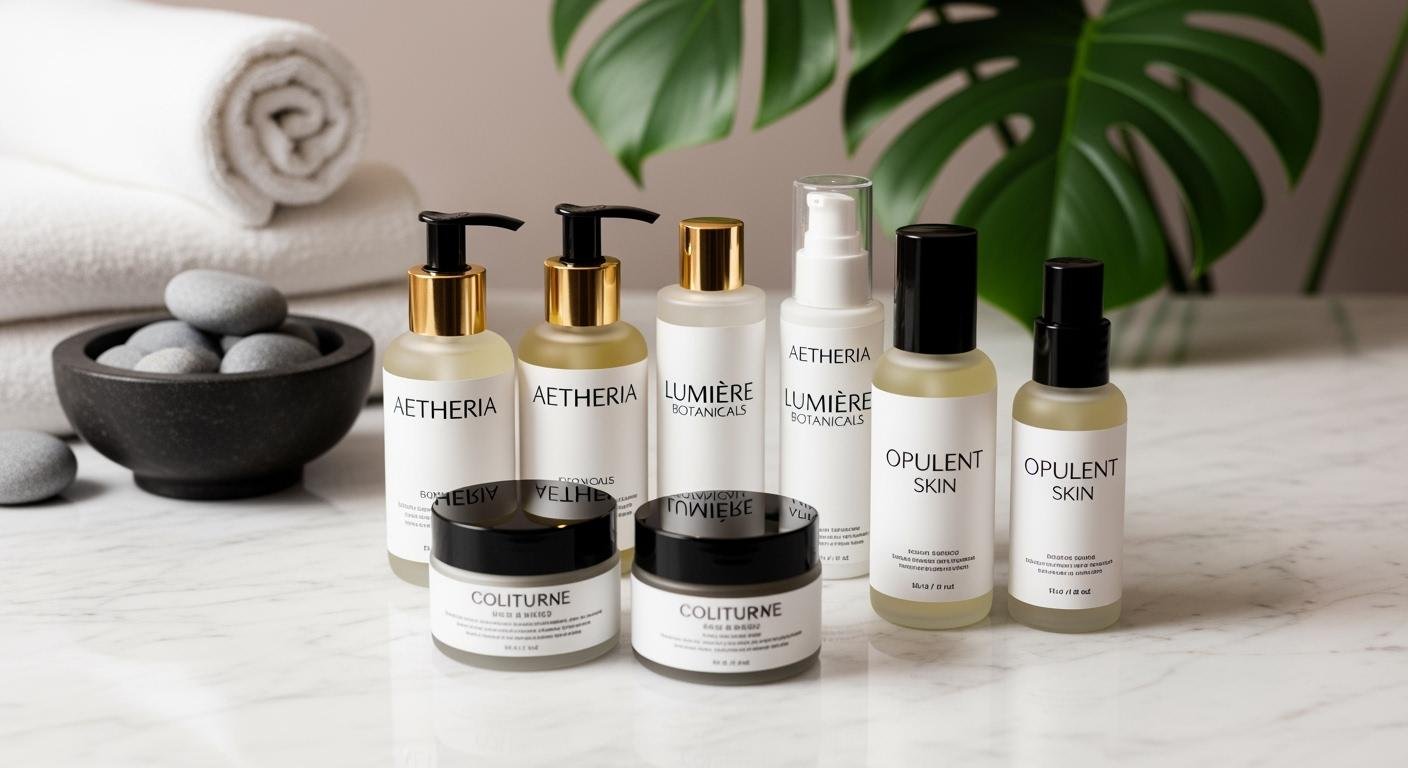
Obtain both references before ordering
Identify the bottle body, closure and dispenser, then identify the holder model and revision. Ask the fixture provider for permitted bottle geometry and use conditions. Ask the packaging supplier for the proposed assembled dimensions. The two documents should describe the same configuration: an empty body dimension is not necessarily the maximum envelope of the closed pack.
Where the holder belongs to the salon, obtain a physical example or an agreed dimensional record. Do not design from a low-resolution photograph alone. A visible circular opening may have an internal lip, a tapered section or a retaining feature that changes the fit. Record who owns the holder specification and who will approve the combined arrangement.
Keep this review separate from wall installation or load-bearing approval. The responsible fixture provider and site operator must determine installation suitability. A bottle-fit trial cannot establish that a wall, adhesive, bracket or fixing is safe for the intended service.
Map insertion and removal
Record whether the bottle enters from above, slides sideways or requires removal of a retaining part. Test the intended complete pack, including its pump and overcap where applicable. Watch for contact with the collar, nozzle and printed region. A bottle that rests comfortably in position may still be difficult to remove when it is partly filled.
Check the hand space needed during replacement. The operator should not have to press the actuator unintentionally or grip a delicate printed area to release the pack. If a fixture requires the pump to be removed, record that operation and ask whether it is permitted for the selected pack. Do not make opening or refilling instructions up to accommodate a holder.
Use samples representing the final body and decoration. A new coating or label can change the surface contact and removal behaviour. For a tight fixture, review the actual dimensional variation with the suppliers rather than accepting one hand-selected sample as proof that every unit will fit.
Check dispensing in the retained position
Observe the complete press-and-release motion and the operator’s access to the nozzle. Make sure neighbouring bottles do not interfere with the intended hand position. The holder may constrain the direction in which a bottle can face; approve the outlet and front label orientation together rather than rotating the bottle after the stock specification is frozen.
Record what happens as the pack empties. A full bottle and a nearly empty bottle can be handled differently, so include both conditions in the relevant trial. If the bottle shifts or the operator must support it separately, describe that observation. Let the responsible team determine whether it is acceptable instead of calling all holder movement a defect.
Dispensing qualification still belongs to the actual formula and pump assembly. The pump-matching guide addresses that selection. A satisfactory fit does not establish output, priming or formula compatibility.
Locate contact and cleaning regions
Inspect where the fixture touches the bottle and whether the contact hides product identification or traps visible residue. Ask the salon operator to state its intended exterior cleaning method and the fixture provider to confirm how the holder is maintained. Do not substitute an arbitrary cleaning chemical or promise universal resistance.
Use the final decorated assembly in any agreed contact assessment. Record changes at the supported region, not just at a visible logo on the front. A contact mark should be photographed with its location and sample identity. Separate an appearance decision from any investigation into the fixture’s pressure or geometry.
Review access to remove the bottle for the permitted maintenance process. A fixture designed to prevent casual removal may need a different service procedure from an open rack. The packaging specification should state the agreed supplied configuration, not imply that every user can disassemble it freely.
Make replacement stock unambiguous
Wholesalers need a stock code tied to the holder-approved bottle, not only the fill volume. Include the body revision, pump height, nozzle direction and required decoration or label position. Mark whether a replacement is a complete closed pack or an empty component set that will go to a filler.
Do not substitute a similarly sized bottle automatically when stock runs low. A new shoulder, base or collar may change how it enters the holder. Ask the approval owner to review any substitute and preserve the original reference. A documented fit approval helps sales staff distinguish an approved replacement from a candidate still awaiting a trial.
Use a concise interface record
- Bottle body, dispenser and holder references.
- Assembled dimensions and dimensional evidence source.
- Insertion, removal and permitted service operations.
- Outlet access, label orientation and adjacent-pack clearance.
- Contact regions and applicable maintenance review.
- Replacement stock code and change-review owner.
Keep the combined sample or its identified photographs with the production approval record. Use the lotion bottle checklist for the broader container brief.
Plan the bottle order separately
Oulete’s plastic lotion bottles and plastic airless bottles start at 5,000 pieces. Glass packaging and cosmetic tubes start at 10,000 pieces. Special tooling and decoration need a separate quotation. Send the fixture reference and required trial arrangement when you request bottle samples. Confirm who supplies and approves the holder; do not combine that unconfirmed service into the bottle offer.