


Solid perfume containers need approval with the balm inside, not just an empty-shell inspection. A package may look suitable on a desk yet become difficult to close after filling, mark the product during removal or transfer oily residue to the exterior during pocket carry. Separate these observations instead of calling every change a material failure.
Quick Answer
Test solid perfume containers with the actual wax-and-fragrance formula, the proposed filling temperature and the finished closure. Inspect cooling, product removal, contact surfaces and carry-related residue. Agree realistic conditioning and transport checks with the formulation and filling teams. A metal or plastic shell does not prevent the formula from softening or prove universal fragrance compatibility.
Document how the product reaches the container
Ask the filler whether the balm is poured into the final pack, filled into a separate pan or inserted as a prepared product. Record the proposed temperature, cooling sequence and handling time. Each route exposes the container and closure to different conditions, so a room-temperature sample is not sufficient for a heated process.
Review the complete product-contact construction: body, insert, liner, coating and any adhesive near the fill. Obtain the specified material grades rather than relying on a name such as premium metal. Identify which parts are decorative and which remain in contact with the balm.
Observe cooling and first opening
Run a controlled filling trial with representative components. Inspect the container before filling, after cooling and after closure assembly. Record distortion, fill surface appearance, product contraction and residue around threads or sliding edges. Keep temperature and timing linked to each sample so results can be interpreted.
Check the first opening after the intended hold period. If the balm sticks to the lid or an insert lifts out, preserve the assembly and investigate the contact path. Do not change the formula and shell simultaneously; that makes the cause harder to establish. Any process adjustment should be reviewed by the filler and formulation team.
Match access to the actual application method
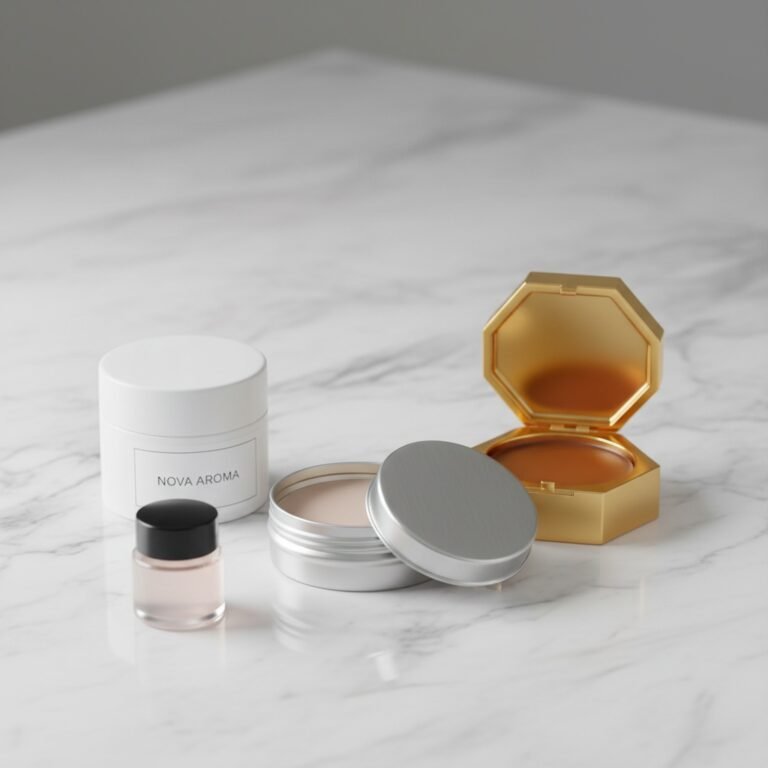
A shallow open tin, a jar and a compact present different access geometry. Evaluate how users reach the product without scraping an edge or pressing against the lid. For a removable pan, check its installed height and retention. For a slider, inspect whether movement crosses a product-bearing surface.
Review the expected end of use as well as a new pack. Ask whether the remaining balm can be reached without disassembly or damage. Make refill statements only for a designed, approved replacement arrangement; a removable lid alone does not make a refill system.
Run a defined carry assessment
- Choose conditioning based on the intended distribution and use environment.
- Test closed, filled assemblies in relevant orientations.
- Inspect exterior residue separately from product texture changes.
- Check opening effort and sliding or thread cleanliness after conditioning.
- Record any movement of liners, pans or decoration.
The goal is to understand a specified pack and formula, not to promise that solid perfume never leaks. If the formula softens, investigate whether it reaches closure interfaces and whether the planned instructions and distribution conditions remain appropriate. Neither a material melting point nor a catalog heat-resistance label establishes finished-pack suitability.
Agree a release record before ordering
Include the approved formula version, container drawing, contact materials, fill method, conditioning protocol and observed acceptance criteria. Keep a sealed reference and a used reference if appearance or closure cleanliness changes during normal handling. Confirm which party owns each test and how deviations will be assessed.
The sample approval checklist provides a broader record structure. Send the solid perfume project brief to Oulete to confirm model availability and customization scope.
Build a filled-sample comparison matrix
Label every trial assembly with the formula revision, container reference and filling run. Retain an unfilled component alongside a filled reference so the team can distinguish an existing surface feature from a change introduced during processing. The filler should define the actual process settings; the buyer’s record should capture them rather than supply a guessed hot-fill temperature.
| Stage | Inspect | Keep in the record |
|---|---|---|
| Before filling | Contact surfaces and closure fit | Component and liner identity |
| After cooling | Fill surface, rim residue and distortion | Process sequence and sample history |
| First opening | Lid contact and insert movement | Hold period and opening method |
| Carry assessment | Exterior residue and closure operation | Orientation and agreed conditioning |
Keep changes in balm texture separate from changes in the pack. Both may matter, but combining them into one pass/fail note makes corrective work harder. Record the observed location and condition before deciding whether the formula, filling method or component needs review.
Investigate residue at the closure
For example, a filled slider may open cleanly after cooling but show residue along its travel path after a carry trial. This is an illustrative problem, not a reported factory result. Retain that sample, compare its fill height with the agreed reference and identify where the moving lid contacts the product.
Ask the development and filling teams which single adjustment should be evaluated next. A revised fill level, pan position or shell geometry should receive a new sample identity. Do not describe the issue as solved until the relevant filled and conditioned trial has been repeated.
Handover the approved filling arrangement
The purchase specification should show the delivered container state and which parts the filler installs. Include the approved pan or liner, closure-cleanliness check and rejected-sample handling. If the container arrives with an insert already fitted, make that arrangement explicit so it is not omitted or duplicated during production.
Retain the accepted reference with the process record and identify who approves a later change. This connects the purchasing choice to the actual filled product rather than leaving a signed empty shell as the only evidence.
FAQ
Does a metal tin stop a balm from melting?
No. Review the actual formula and expected conditions with its development team.
Can one container be approved for every fragrance?
No. Validate each relevant formula and contact-material combination.
Should I approve only an empty sample?
No. Include production-representative filled and closed samples.