


Quick Answer
Choose square dropper bottles when their panel layout and shelf presentation justify the handling and packing requirements. Approve the usable label area, corner clearance, cap alignment, filling-line fit and protective carton with physical samples. A square outline alone does not guarantee lower shipping cost or better formula protection.
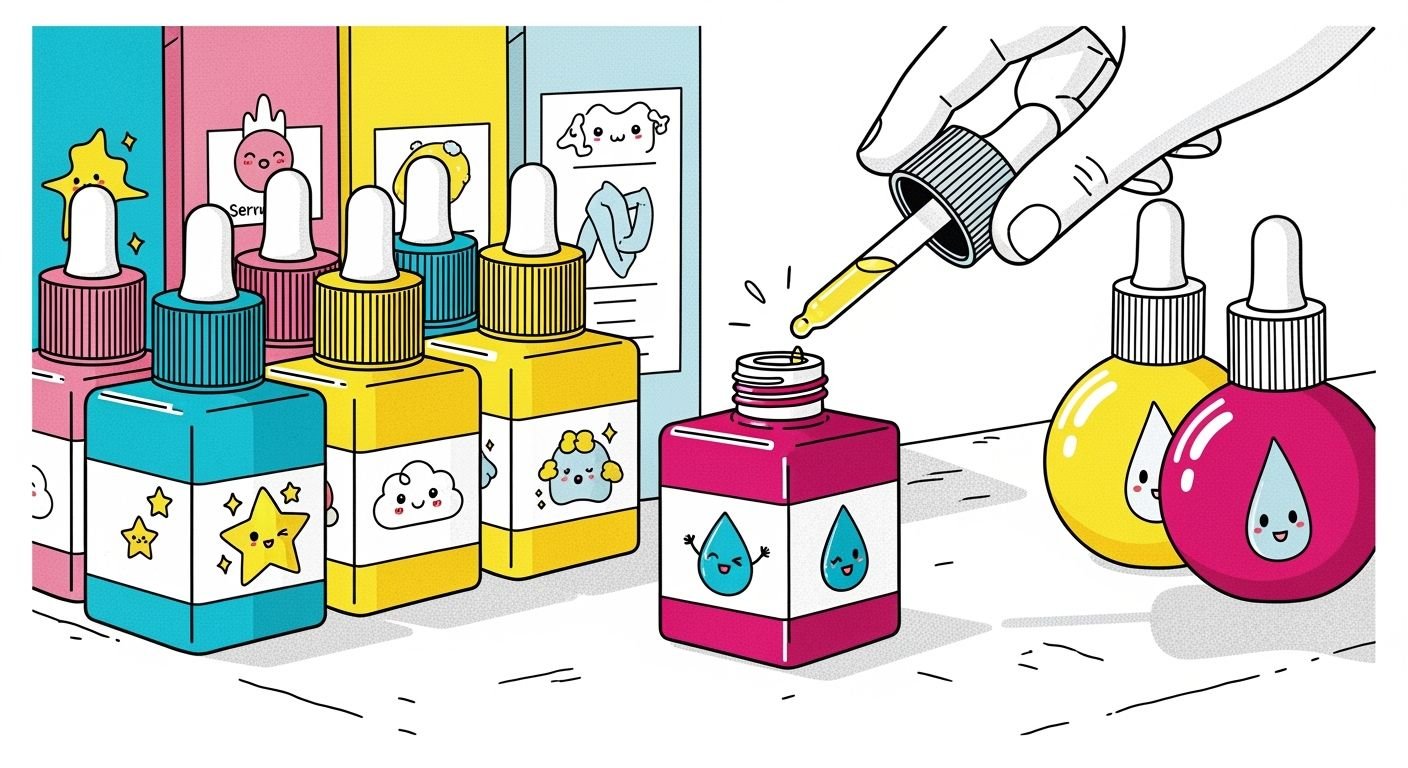
A square serum bottle can organise a visual range, but its flat-looking sides are not automatically usable artwork panels. The geometry needs to work with labels, a dropper closure and the packing process. This guide focuses on shape-related approval, rather than choosing serum capacity or pipette dose.
Measure the usable panel
Request a drawing showing body dimensions, radii, shoulder transitions, base and neck. Define the printable or labelable area on each panel. A label that extends around a corner may lift or distort; a design that fits a flat computer layout may not fit the actual glass or plastic surface.
Place an artwork proof on a physical sample. Inspect text at the panel edges and the relationship between the front face, side panels and back information. Decide which face is the front and how that orientation will be maintained through decoration and packing.
Check closure orientation independently
The bottle body can be square while its threaded closure rotates to a different final position. If the cap has a logo, seam or directional shape, ask whether alignment can be controlled and at what process step. Do not assume tightening the cap will place its mark over the front label.
Inspect cap clearance around the shoulder and access for the user’s grip. Confirm that the dropper assembly fits the specified neck. Body shape does not establish pipette length, sealing compatibility or dispensing suitability; those remain separate assembly and formula decisions.
Trial the filling and decoration line
Ask the filling partner to review a set of samples, not just one. Guide rails, gripping points and indexing may treat square containers differently from round ones. Check how the bottle is orientated for labelling and whether it remains stable at the agreed process conditions.
Confirm inspection access and what happens when a bottle is turned the wrong way. If the artwork differs by face, the packing team needs a defined front orientation. Any tooling or setup changes should be included in the quotation and launch schedule.
Prove carton fit with the complete pack
Measure the assembled height and maximum footprint, including the cap. Create the carton and divider trial around the real sample. Check corner contact, bottle movement and whether the dropper top is carrying loads it was not intended to carry.
A square bottle may appear to use space efficiently, but shipping cost depends on the filled weight, protective materials, carton dimensions and transport conditions. Compare completed packouts rather than inferring a saving from the silhouette. Agree handling or transit assessment with the parties responsible for distribution.
Review handling and display
Have users hold and open the pack with realistic hand positions. Compare grip, balance and access to the dropper bulb. Examine how the bottle sits on a display tray or in a set with other products. Tall designs, wide shoulders and heavy closures can change the result even within one shape family.
Use the dropper bottle range to compare assemblies, then record the selected reference and any shape-specific requirements.
Decision checklist
- Drawing confirms the usable artwork panel and corner limits.
- Decorated sample is legible on all required faces.
- Closure orientation expectations are agreed.
- Filling and labelling teams confirm the handling method.
- Carton trial protects corners and the complete closure.
- Formula and dropper performance checks are separately approved.
Transfer these checks to the approved sample record before ordering.
Frequently Asked Questions
Does square glass protect a serum better than round glass?
Shape alone is not a protection specification. Formula compatibility, glass or resin choice, light exposure and closure performance require their own assessment.
Can artwork wrap around the corners?
Possibly, but the surface, label material and application process must be tested on the actual geometry.
Share the product brief and required sample checks through the packaging enquiry page.