


Quick Answer
For a hair-care trigger sprayer, match the exact bottle neck and seal assembly, then test the actual formula for priming, pattern, grip and restart. Confirm the selected model’s nozzle positions rather than assuming all triggers have spray, stream, foam or a secure off setting. Trigger format alone does not establish formula compatibility or safe application.
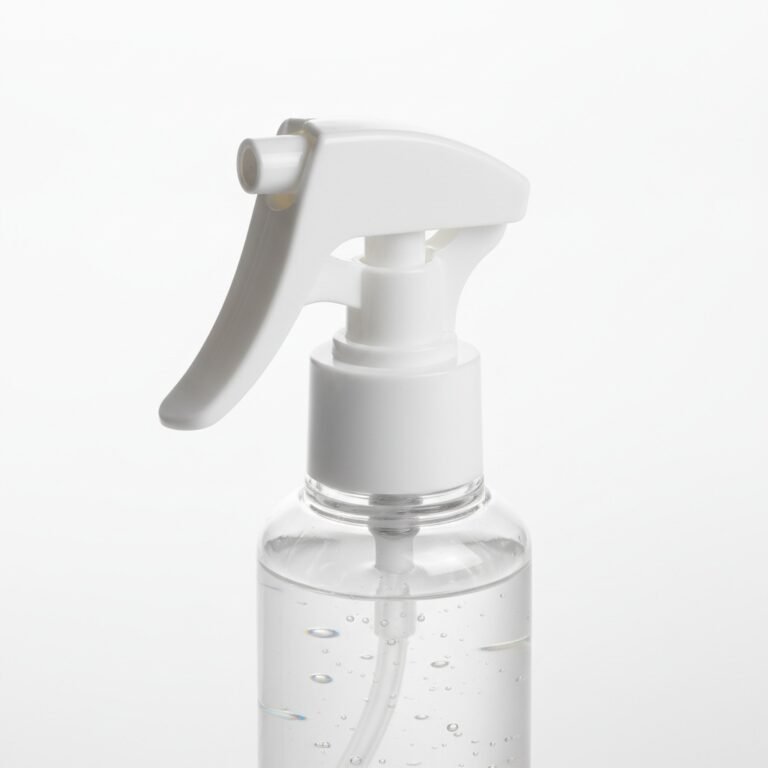
A trigger may be a candidate for a professional hair-care product, but the choice is more specific than a large sprayer. Aptar describes professional hair care as an application opportunity for its trigger portfolio. That example establishes a use category, not approval of a different supplier’s assembly.
Define the intended application
State how the hair-care product is used, by whom and at what intended distance. The brand’s product team should review application instructions and any relevant safety requirements. Do not assume a home-care trigger is appropriate for a cosmetic formula merely because it sprays.
Ask for the exact model and proposed spray experience. Some designs provide different nozzle states; others do not. Identify the actual options and how the user recognises them rather than copying a generic nozzle list into the brief.
Match the complete bottle interface
Confirm the neck drawing, closure reference, gasket and assembly instructions. A nominal diameter alone is not sufficient evidence of fit. Ask the supplier and filling partner to check the exact combination instead of treating similar markings as interchangeable.
Specify dip-tube length against the assembled bottle geometry. Inspect seating and tube position on real samples. Keep the trigger, tube and bottle references together so purchasing does not substitute one part without reviewing the complete fit.
Test priming and spray pattern
Fill samples with the actual formula using the agreed preparation method. Record actuations until stable output, then assess pattern at the intended distance and orientation. Observe jets, intermittent delivery, dribble after release and changes during repeat use.
Use the same actuation method across samples. If output is measured, record the units, formula conditions and procedure; do not treat grams and millilitres as interchangeable. A water demonstration can show basic operation but cannot approve the final product’s spray behaviour.
Evaluate grip and repeated use
Check the assembled filled bottle in the intended hand position. Review trigger reach, actuation effort, bottle balance and whether the user can operate it without unintended changes in angle. A trigger that feels comfortable on an empty bottle may not feel the same when filled.
For salon use, agree a representative repeat-use assessment. Record discomfort or inconsistent actuation without claiming a universal ergonomic benefit. If the intended user group varies, include that variation in the brand’s sample review.
Check restart and nozzle-state communication
After the agreed storage period, observe restart and compare with the initial record. Inspect for nozzle residue and changes in delivery. Document any cleaning or handling before the restart check so the result can be interpreted.
Where an off position exists, assess its intended function and how clearly it is indicated. An off setting should not be presented as child resistance or a transport-leak guarantee without separate evidence. Closed-pack handling and distribution checks remain distinct from spray performance.
Release a model-specific specification
- Intended application and formula are identified.
- Bottle neck, seal, trigger and dip tube are matched.
- Actual nozzle options and user markings are confirmed.
- Priming, pattern and post-spray observations are recorded.
- Grip and restart are assessed with the filled assembly.
- Closed-pack handling has its own approval scope.
Keep the final assembly in the sample approval record.
Use a repeatable trigger trial sheet
Assign a reference to each complete assembly, not just to the trigger. Include the bottle, gasket, tube length, nozzle model and formula batch. Record the fill level and whether the sprayer is new or previously primed. This allows the team to distinguish a change in the dispensing assembly from a change in sample preparation.
| Trial stage | Observation | Useful context |
|---|---|---|
| First use | Actuations before stable delivery | New assembly, formula and starting fill |
| Normal application | Pattern, targeting and dribble | Distance, bottle angle and nozzle position |
| Repeated operation | Consistency and user feedback | Hand position and agreed use sequence |
| Restart | Recovery of the intended pattern | Storage history and any cleaning |
| Lower fill level | Delivery changes during intended use | Remaining fill and operating angle |
Agree project-specific acceptance with the product team before assessing samples. There is no need to invent a universal number of trigger pulls or a generic spray distance. The record should let someone repeat the intended procedure and understand why a sample was accepted or rejected.
Investigate an inconsistent pattern without changing everything
For example, a sample may deliver consistently when upright but intermittently at the application angle. Keep that assembly and repeat the observation under the documented conditions. Review the tube position and intended operating angle with the supplier before assuming that a different nozzle is the answer.
If another tube length or trigger revision is supplied, label it as a separate candidate. Avoid changing the formula, fill level and assembly simultaneously: a better result would not reveal which change helped. Any supplier explanation should remain distinct from the observed trial result until checked.
Turn user feedback into an assembly decision
Ask trial users to describe specific difficulties, such as reaching the lever, keeping the bottle aimed or recognising the selected nozzle state. Record the filled bottle used for the trial. A general preference for one appearance is useful design feedback, but it does not replace the dispensing observations.
Retain an approved filled-assembly reference and a written component list. Purchasing, filling and quality teams should use the same model identity. Where a later substitution is proposed, compare fit, pattern and handling again instead of treating the trigger format as sufficient approval.
Frequently Asked Questions
Can every trigger spray a thick conditioner?
No. Test the actual formula and selected model; the format name does not establish performance.
Does an off position prove transport security?
No. Assess the complete filled and closed pack under the agreed handling conditions.
Share your requirements through the packaging enquiry page.