


Quick Answer
Compare PET and PETG cosmetic containers by the exact resin grade, production process, filled-pack performance and disposal route, not by a universal material ranking. Request comparable samples with the same intended fill, closure and decoration. Neither transparency nor a generic chemical-resistance description establishes suitability for your formula. A switch between materials requires an agreed qualification plan before the new container replaces the approved one.
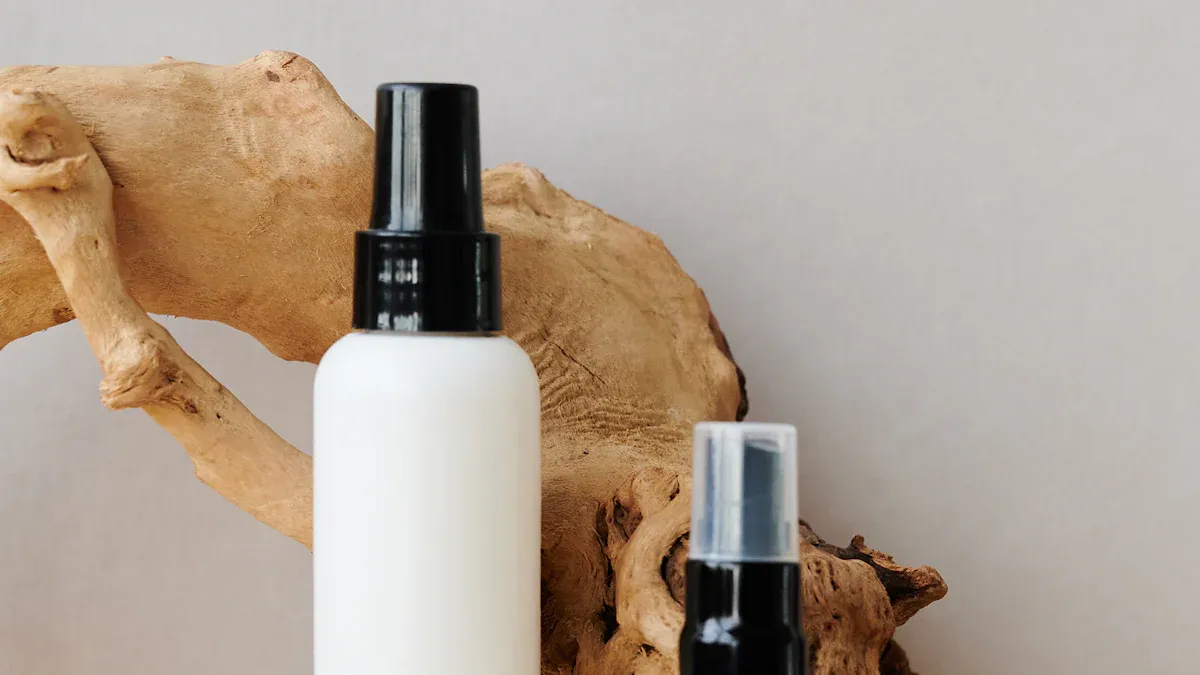
Start With Two Comparable Containers
A supplier may offer a thin-wall PET bottle and a thick-wall PETG jar as alternatives for the same skincare project. Their appearance and price can differ substantially, but this is not a controlled comparison of resin alone. Shape, wall distribution, manufacturing process, closure and decoration all contribute to the result. A heavier sample may feel more substantial without providing better dispensing or product protection.
Define the decision you actually need to make. Are you choosing between existing models, approving a material substitution in an existing design, or developing a new container? Existing models can be compared as complete packs. A substitution requires confirmation that the tool and process can produce the revised material to the approved dimensions. A new design needs its own development and sampling stages.
For an introduction to clear packaging applications, see our PETG cosmetic packaging guide. This comparison focuses on qualifying two specific proposals rather than declaring one polyester the winner.
Identify the Resin Behind the Material Name
PET means polyethylene terephthalate; PETG describes glycol-modified polyester. These labels help identify a material family, but do not define every property of the supplied container. Ask the supplier for the resin manufacturer, grade reference, color or additive specification and whether recycled material is included. Keep that information tied to the sample and quotation.
Do not transfer a datasheet result from another grade to the proposed bottle. Test specimen thickness, conditioning and measurement method matter when interpreting published properties. A value measured on a laboratory specimen is not a drop-test result for a decorated, filled container. Where documentation is unavailable, record the gap and request clarification before making a performance claim.
Eastman’s cosmetics packaging material portfolio illustrates why grade identification matters: it includes several distinct polyester and copolyester offerings. That portfolio is background information, not evidence that an unspecified Oulete sample uses an Eastman resin or has the same performance.
Use a Matched Comparison Sheet
| Comparison item | What to hold constant or identify | What to observe |
|---|---|---|
| Capacity and geometry | Intended fill, bottle drawing and closure intrusion | Headspace, standing stability and usable fill |
| Material | Manufacturer, grade, color and recycled-content basis | Documented differences and approval gaps |
| Dispensing assembly | Matched neck, pump or cap and contact materials | Fit, leakage, priming and output |
| Appearance | Lighting, fill color and decorated sample revision | Haze, distortion, scuffs and artwork readability |
| Distribution | Filled weight and proposed carton protection | Damage, leakage and surface wear after the agreed trial |
| Cost | Complete component scope, decoration and order quantity | Total delivered proposal, not resin price alone |
Where geometry cannot be matched, mark the comparison as a choice between two pack designs. This prevents a product team from attributing a design advantage to the material alone. Retain both drawings and sample identifiers so that the later purchase order can refer to the selected configuration.
Check Appearance With the Actual Fill
Examine the samples empty and filled. A clear container can change how the product color appears, especially around curved shoulders and thick bases. Compare the same formula batch under the same lighting and background. Include the intended label or printed artwork; a bottle that looks attractive undecorated may make small text difficult to read once filled.
Check molded seams, gate areas and visible wall variation against agreed appearance limits. Photograph observations for the supplier, but keep physical reference samples because photographs do not reproduce every reflection or shade. Handle the decorated packs repeatedly to assess scuffing at the grip area and contact points in the carton.
Clear PET or PETG does not automatically provide a suitable light barrier. If the formulation team identifies a light-protection requirement, define how that requirement will be evaluated on the complete package. Tinting, frosting and a thick base are visual features until their protective performance has been established.
Qualify Formula Contact Without a Blanket Ranking
Do not select PETG solely because a draft, catalogue or sales description calls it more resistant to chemicals. Formula composition, concentration, storage conditions and the particular grade influence the outcome. Fragrance, solvents and oils also contact the cap, gasket, dip tube or pump seals, so a bottle-only assessment can miss the vulnerable part.
Have the formulation and packaging teams agree the trial conditions and acceptance criteria. Use the actual formula in production-representative assemblies, with retained controls and identified material lots. Observe changes in the product as well as the container: appearance, odor, mass loss, deformation, cracking, seal behavior and dispensing can all be relevant to the project.
If a sample develops haze or leakage, preserve the failed assembly and its history. Record orientation, fill level, closure application and exposure conditions before assigning a cause. Changing both the resin and closure at once may make the investigation harder. Resolve the difference through a controlled repeat, not an assumption that the other material family must be safer.
Confirm Filling and Handling Conditions
The filler needs the approved container drawing and the supplier’s limits for the actual model. Do not infer a filling-temperature limit from the material acronym. Check conveyance, gripping, closure application and cooling where applicable. A container that meets appearance expectations on a desk still needs to work with the intended line equipment.
For pumps, compare complete assemblies after filling and after the agreed idle periods. Record priming, delivered amount and behavior near the end of the usable fill. If squeeze dispensing is intended, evaluate the actual body design rather than treating every PET or PETG pack as equally squeezable. Review pump and formula matching when selecting the dispenser.
Compare Cost and Disposal Claims Separately
Obtain quotations on a common component and decoration scope. Identify tooling, sampling, rejects, packing and freight assumptions. A resin price per kilogram does not establish the unit cost of the final pack, especially when sample weights and production routes differ. Ask how a material substitution changes the approval schedule and whether it introduces a new minimum order.
For environmental claims, identify the destination market and complete configuration, including labels, color, closures and other attachments. Do not assume PETG is accepted in an ordinary PET collection stream, and do not describe either proposal as biodegradable without specific supporting evidence. A resin code is not a guarantee that a local system will collect and recycle that pack. Keep recycled-content evidence separate from recyclability evidence.
Release the Selected Proposal, Not Just a Material Name
The approval should name the resin grade, drawing revision, decoration, closure assembly, intended fill and agreed test results. Retain an approved physical sample. Record any restriction, such as a formula-specific use or a particular filling condition, and decide who must approve future substitutions.
Use the sample approval checklist to connect these decisions to production. To request alternatives, send a packaging brief with the fill volume, formula summary, closure, appearance target and quantity. Confidential formula details should be exchanged through an appropriate agreed channel.
FAQ
Is PETG always better than PET for cosmetics?
No. Compare the specific grades and complete pack designs against the product requirements. A generic material ranking cannot replace filled-sample approval.
Can an approved PET bottle be replaced with PETG without testing?
Do not assume interchangeability. Ask the supplier to identify processing, dimensional and contact-material differences and agree the qualification needed before substitution.
Does clear packaging protect a light-sensitive formula?
Clarity alone does not establish light protection. Define and verify the complete pack’s protection requirement with the formulation team.
Does a recyclable resin guarantee a recyclable cosmetic pack?
No. Local collection and sorting, color, labels, size and attached components must also be considered before making a claim.