



Quick Answer
A retail cosmetic tester needs its own configuration record, even when it shares the bottle and formula of the saleable product. Identify the dispenser, cap state, display fixture, approved marking and replenishment route. Check the actual filled display assembly before launch. A working retail sample is not automatically the same package as the sealed product a customer buys.
A skincare brand orders enough bottles for its first retail launch, then asks the distributor to put some on the counter as testers. The display team removes caps and adds identification stickers. The bottle may be unchanged, but access, handling and stock control now differ. Those requirements should enter the launch brief before components are ordered.
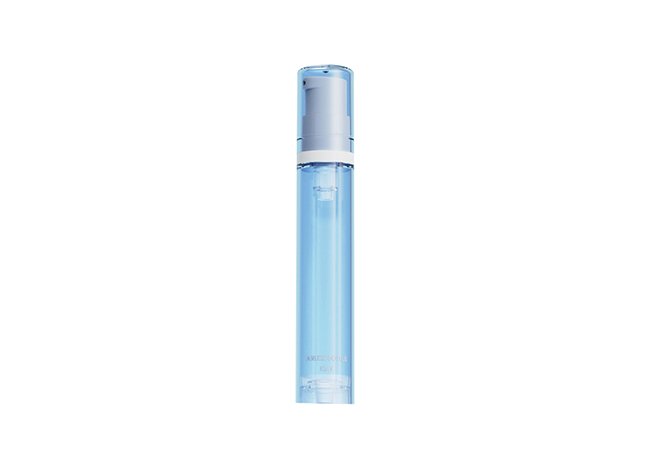
Give the tester a defined identity
List the parts shared with the saleable pack and any differences. A tester may use the same body and dispenser but different decoration, outer packing or cap arrangements. If a different pump is proposed, identify it as a changed component rather than treating it as an equivalent because both fit the bottle.
Assign a controlled tester reference linked to the relevant product and formula version. Keep retailer-facing identity, supplier component codes and the brand’s product reference connected. This helps the wholesaler distinguish a tester shipment from ordinary saleable units without relying on an informal note on the carton.
For airless-format projects, the airless bottle product range is a starting point, not a tester specification. Confirm which assembled version is offered and whether any display-specific parts come from another party.
Define the counter arrangement before approving access
Ask the retail or display team how the bottle sits on the counter: free-standing, held in a recess or attached to a separately supplied fixture. Provide the actual fixture or its controlled geometry for review. A body diameter alone does not describe finger access, actuator travel or space around the outlet.
Check whether a cap, clip or restraint remains present during intended use. Record the normal display state and any separate closed state for transport or overnight handling. Do not force an overcap onto an actuator or remove a supplier-required part to make the display look cleaner.
| Tester requirement | Agree with the responsible team | Evidence to keep |
|---|---|---|
| Displayed assembly | Body, dispenser, fitted parts and cap state | Identified filled sample and component list |
| Fixture interface | Support, access and intended removal | Actual fixture reference and fit observations |
| Identification | Approved tester marking and product association | Artwork and physical label review |
| Filling and packing | Who fills, marks, assembles and ships the units | Supplied-state and responsibility record |
| Replacement stock | Complete testers versus separate spare parts | Order unit, quantity and matching revision |
Review dispensing in the actual fixture
Observe the intended user action with a filled assembly in its display position. Check whether fingers can reach the actuator without lifting the bottle, if that is the intended use. Record fixture contact, movement and outlet obstruction. A dispenser that operates well in a technician’s hand may be inconvenient when constrained by the chosen holder.
Keep formula identity, fill state and sample history with the observations. If repeated counter use is part of the evaluation, the responsible team should define the relevant sequence and acceptance criteria. Do not invent a universal cycle count or treat one successful actuation as approval for every retailer’s use pattern.
Separate packaging operation from the retailer’s hygiene and product-use procedures. The brand and retailer must establish those instructions through their responsible teams. This article does not prescribe shared-user application, sanitisation or refill practices.
Keep tester markings readable and away from moving parts
Agree the wording and identification requirements with the brand and retail partner. State where markings belong and which existing product or lot information must remain readable. A sticker added after filling can conceal a code or interfere with a cap even if its graphic looks clear on a flat proof.
Review the applied marking on the actual bottle and display arrangement. Observe edges, hand contact and whether the fixture obscures the product identity. Keep this physical check separate from approval of the wording itself. The responsible market reviewers should decide what identification or labelling the tester requires.
If testers use different decoration, record that version independently in the order. Do not send the manufacturer an unlabeled alternative graphic and expect the packing team to infer which units belong to the tester allocation.
Decide how replacement reaches the retailer
Specify whether replenishment means a complete filled tester supplied by the brand or filler, an empty packaging assembly, or approved replacement components. These are different supply scopes. Oulete packaging enquiries do not establish a contract-filling or retail refilling service.
Plan how store requests identify the correct product, capacity and version. A visually similar spare pump should not be substituted without the relevant matched-assembly review. Keep tester stock distinct from saleable stock and from development samples whose final configuration has not been approved.
Illustrative launch: the holder blocks the actuator
Imagine the brand approves a bottle in hand, then discovers its counter holder sits too close to the actuator. Users lift or tilt the bottle to dispense. This is a hypothetical launch issue, not an Oulete project result.
The team should review the holder and the complete fitted assembly rather than immediately changing the pump. Any revised fixture or component should receive the affected access and operation checks. Retain the final display sample so later replenishment can be compared with the version actually accepted by the retailer.
Freeze the launch handover
Attach the tester component list, display reference, markings, supplied state and replacement plan to the packaging sample approval record. A tester allocation should be visible in the quantity plan rather than quietly deducted from saleable units after production.
Oulete’s starting MOQ is 5,000 pieces for plastic airless and lotion bottles, and 10,000 for glass containers and cosmetic tubes. These baselines do not establish a separate tester run, mixed-artwork allowance or fixture minimum. Send the retail format, quantities and division of supply through the packaging enquiry page and request an itemised proposal.