



Quick Answer
Do not translate “airless” into a promise that a bottle works at every angle. Ask which configuration was evaluated, how it was first started, how much product remained and what happened after changing orientation. An upright start followed by one inverted press is different from repeated use while inverted.
A brand may want a body-care bottle used sideways, or a retailer may demonstrate a serum with the pack tilted toward a camera. Those requirements deserve their own evaluation. A general explanation of piston movement does not establish that a particular pump and formula can support the intended handling.
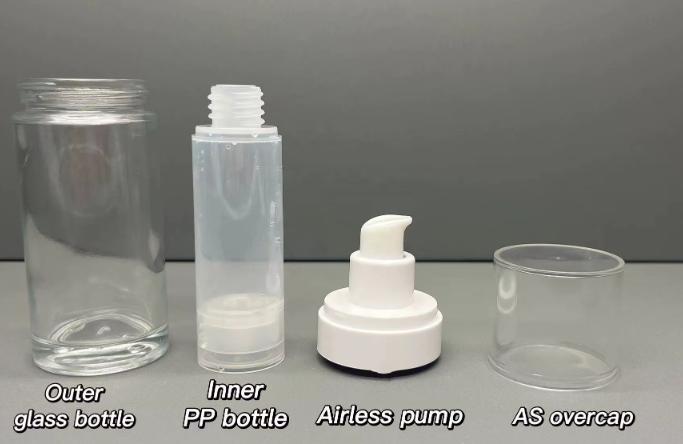
Write the Actual Use Scenario
Describe the task instead of requesting an unrestricted “360-degree bottle.” Does the user briefly tilt the pack, keep it horizontal throughout application, or store it on its side before use? Include how the hand supports the bottle and whether the actuator can be fully pressed in that position.
Separate intended consumer use from unusual handling. A bottle lying in a shipping carton presents a different question from a filled bottle dispensing while horizontal. Neither result replaces transport testing, and an orientation trial is not evidence that a closure will never leak.
Distinguish Starting from Continuing
Record whether the sample was first operated upright, how many attempts preceded delivery and whether it had already dispensed successfully. Product present in a pump can support a short demonstration even when the next refill of the pumping chamber behaves differently. Keep the observation sequence rather than reporting only the best-looking press.
Use separate, identified samples where the agreed method calls for independent starting conditions. Turning the same bottle repeatedly creates a history that may affect later observations. If the team deliberately uses one sample to simulate changing hand positions, label that as a sequence trial rather than independent results.
Include More Than a Full Bottle
A newly filled bottle does not represent every point in its use. Agree which remaining-fill states matter for the product and how those states will be established. Describe whether units reached them by normal dispensing or by another preparation method. These approaches should not be silently combined.
Keep formula identity, filling procedure, conditioning period and assembly version with the orientation record. If a different lotion is substituted because the intended formula is unavailable, classify the work as exploratory. It may help prepare the procedure but cannot close the actual formula’s approval.
Specify the Position Clearly
Use a simple photograph or drawing to define upright, horizontal and inverted positions. Reference the bottle body and outlet direction; “tilted left” can mean different things to different operators. For an intermediate angle, agree how it will be reproduced without claiming a precision that the setup cannot maintain.
Record the transition as well. Note whether the bottle was turned immediately before pressing, left in position for an agreed period, shaken or tapped. Do not introduce tapping as a universal remedy. Any preparation should be approved for the model and remain consistent across samples.
Observe Output and Handling Separately
Record no output, interrupted output, visible bubbles, outlet residue and incomplete actuator travel as separate observations where relevant. The operator may struggle to press a pump in an awkward grip even though the mechanism can deliver when properly supported. That is a usability question, not automatically a formula incompatibility.
If output mass is a decision criterion, use an agreed collection and measurement procedure. Photographs can show an event but should not be used to claim dose accuracy. Define the review criteria before testing rather than choosing a pass threshold after viewing the results.
Keep Recovery in the Record
After returning a sample upright, note whether delivery resumes immediately, requires further attempts or remains interrupted. Preserve the number of attempts and any wait. An issue that disappears after reorientation is still relevant to the intended use; it should not be erased by reporting only the final successful output.
For investigation, retain affected units in their observed state and request model-specific guidance. Opening, resetting or exchanging a pump changes the sample. Keep that work as a separately identified investigation rather than presenting the repaired unit as the original result.
Translate the Result into a Bounded Approval
A useful conclusion names the assembly, formula, preparation and evaluated positions. It does not grant an unqualified all-angle claim to an entire range. Review any proposed on-pack instructions against the actual evidence and the brand’s responsible approval process.
Start with the airless bottle options, add the relevant conditions to your sample approval plan, and allow time for agreed follow-up work in the project schedule. Send the intended handling scenario when requesting samples rather than asking for a blanket orientation guarantee.