


Quick Answer
A custom outer shell around an existing pump needs its own assembled review. Confirm that the shell leaves access to the actuator, clearance at the outlet and room for the intended stroke and cap movement. Retaining a stock dispenser does not approve the new surrounding geometry.
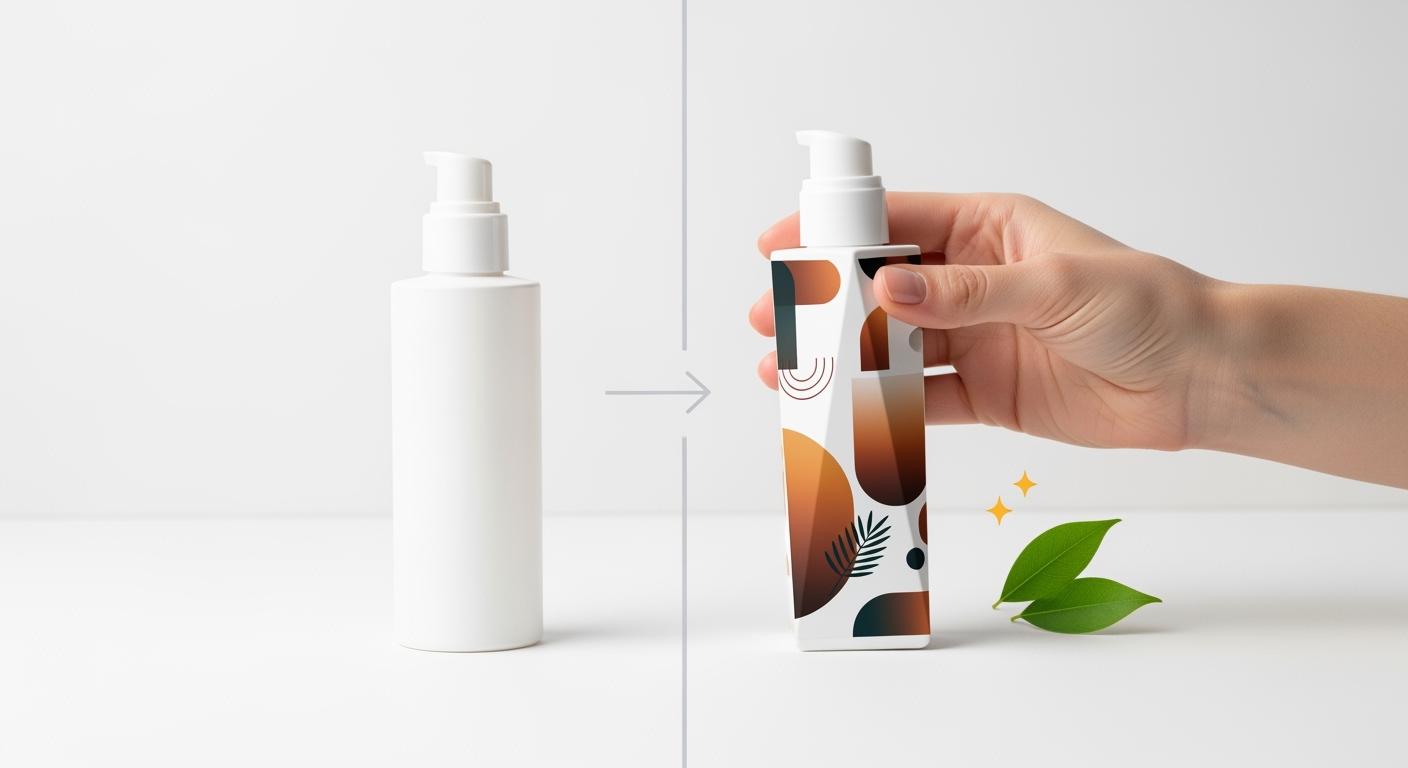
A beauty brand may want a distinctive silhouette without developing an entirely new dispensing mechanism. That can be a useful concept to investigate, but the surrounding shell still changes how a user reaches the pump and how the outlet sits within the pack. This article concentrates on those accessible spaces, not on the broader tooling ownership or development brief.
Identify the exact retained assembly
Record the existing dispenser, container, closure and actuator references. State what the proposal retains and what it replaces. A family name such as lotion pump is not enough to freeze the interface, because another actuator or collar can change the visible envelope.
Obtain the current assembly drawing and representative samples. If the shell concept was designed around a photograph, identify which dimensions remain unconfirmed. Do not allow a visually appealing rendering to become a statement that a specific stock assembly fits.
Map the actuator movement envelope
Show the actuator at rest and through its intended movement using the supplier’s actual assembly information. Identify where the finger approaches and where the actuator can move. The shell should be reviewed against that envelope, not simply against the actuator’s resting outline.
Ask the engineering team to define the relevant clearances. Avoid adding arbitrary numbers to a sketch without understanding the mechanism and manufacturing variation. If the shell includes a raised rim, decorative bridge or top loop, review whether that feature changes access at any part of the stroke.
Keep outlet clearance separate from finger clearance
A finger may reach the actuator while the outlet remains partly hidden behind the shell. Locate the outlet in each relevant position and inspect the intended product path. Record contact, collection of residue or obstruction observed during the agreed filled-sample trial.
Do not use a successful dry press to approve dispensing. The actual formula and pump configuration matter. Have the responsible formulation and filling teams define the product trial, and keep the shell geometry identified with the results. A changed actuator can require another clearance review even if the shell stays the same.
| Space to review | Question | Sample reference |
|---|---|---|
| Finger approach | Can the intended action reach the actuator? | Assembled handling model |
| Stroke envelope | Does any surrounding feature contact the moving part? | Identified mechanism and shell |
| Outlet area | Is the intended dispensing path obstructed? | Relevant filled-product trial |
| Overcap path | Can the cap be removed and replaced as intended? | Complete cap and shell assembly |
Check the cap as a separate moving component
Review how the overcap clears the shell during removal and replacement. A cap may fit when fully seated but interfere as it travels past a decorative feature. Identify grip areas and observe whether the user must press the actuator unintentionally to handle the cap.
Keep cap retention and contents sealing separate. An attractive outer cover does not prove the inner assembly seals the product. Where a shell makes a closure inaccessible, ask how the filler assembles and checks that closure before the presentation parts are fitted.
Review assembly access with the filler
Show the filler which parts arrive together and which are fitted after filling. A custom shell can conceal the area used for supporting, closing or inspecting the inner container. Ask the filler to review access with the actual proposed sequence rather than assuming its existing line can accept the new shape.
Record any fixture or handling change needed. If a prototype uses temporary fasteners or a simplified attachment, state that limitation. A convincing appearance model should not be described as evidence that the production shell will assemble reliably.
Compare shell revisions without changing the baseline silently
Suppose an initial shell restricts the finger approach and the next version lowers a rim. Keep both versions labelled beside the same retained dispenser reference. Record whether the adjustment improves access and whether it changes cap fit, appearance or decoration space.
If the supplier also changes the actuator, separate that change from the shell revision. Otherwise reviewers cannot tell whether the improved result comes from the revised shell or the new pump. Update the part list before accepting a combined revision.
Agree what the prototype can demonstrate
An appearance model may help assess silhouette and hand placement. A fit model may address a defined clearance. Neither automatically represents the final production material, surface or attachment. Ask the supplier to identify each prototype’s purpose and limitations before the team signs it.
Production-intent samples should resolve the remaining interfaces with the actual component construction. Include relevant handling and packing observations. Do not describe the completed design as universally ergonomic, leak-proof or compatible with all formulas based on one favourable demonstration.
Freeze the accessible spaces in the release record
Retain the shell drawing revision, dispenser reference, cap reference and marked areas for stroke, outlet and assembly access. Record unresolved conditions and who must close them. This lets purchasing identify whether a later alternative component affects the spaces already approved.
Oulete’s plastic airless and plastic lotion bottles start at 5,000 pieces; glass packaging and cosmetic soft tubes start at 10,000 pieces. A newly developed shell has its own quoted tooling and production scope. Those starting quantities do not promise that a custom concept is available or that tooling is included.
Review the custom tooling management guide, compare existing packaging formats, and share the retained assembly and proposed shell through the project enquiry page.
Frequently Asked Questions
Does retaining a stock pump make the custom shell risk-free?
No. Review access, movement, outlet clearance and assembly interfaces in the new configuration.
Can a shell mock-up approve product dispensing?
Only if it represents the relevant configuration and is assessed in the agreed product trial. An appearance model alone cannot do so.