



Quick Answer
Treat “glass-look” as an appearance description until the supplier identifies the actual material. If a quotation says “glass polymer,” ask what that term means for the named component. Do not infer weight, breakage behaviour, formula suitability or recycling instructions from a clear photograph or a premium-looking sample.
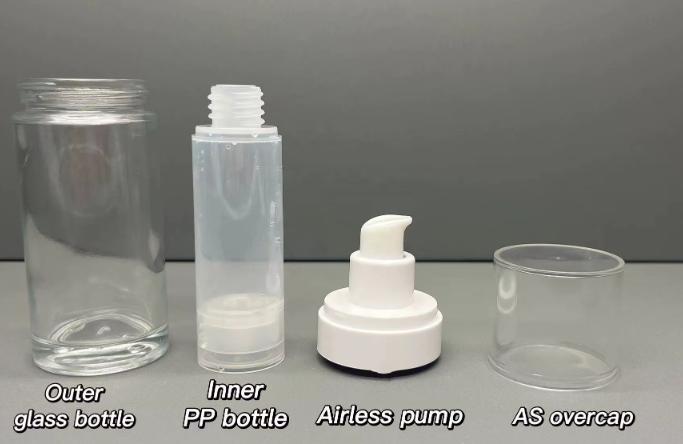
A buyer comparing clear bottles may receive ordinary glass, a clear plastic model or an assembly with a decorative outer shell. Similar photographs can conceal materially different products. Resolve the construction before the design team, filler and wholesaler adopt different assumptions about the same offer.
Ask for the Supplier’s Plain Material Description
Quote the ambiguous phrase back to the supplier and ask for a component-specific explanation. Is it a marketing expression, a trade name, a coating description or a defined material? Request the ordinary material designation alongside any proprietary name so the responsible technical reviewer can interpret it.
Do not silently correct the phrase to the material you expect. If a supplier uses “glass-like” for a polymer, replacing it with “glass bottle” changes the product description. Keep the original wording and the clarification together until the quotation and specification have been aligned.
Map the Construction, Not Just the Outer Wall
Identify the part that holds the formula, the visible outer body, the closure and dispenser components. Ask whether any liner, insert or separate inner vessel is included. The material visible in a product photograph may not be the material touching the formula.
For a multi-part assembly, ask which components are supplied assembled and which remain separate for the filler. Avoid treating the package as one material simply because the catalogue uses one headline. A buyer needs enough detail to compare the actual saleable assembly.
Check Weight and Dimensions on the Identified Model
If hand feel matters, request an actual sample and a stated mass basis. Clarify whether a quoted weight describes the empty body, the complete empty assembly or another scope. Do not compare a filled reference bottle with an empty candidate and attribute the difference solely to material.
Use the same discipline for dimensions. A thick-looking wall in a photograph does not establish usable capacity or available decoration area. Ask for the model-specific drawing or measurements needed by the filler and artwork team before adapting an existing design.
Do Not Carry Over Glass Assumptions
When a glass-look plastic option replaces a glass concept, review the questions that depended on the original material. These may include handling, protection in transit, decoration, product contact and the intended disposal information. The change deserves a documented review rather than a cosmetic description edit.
Do not promise that the substitute is shatterproof, chemically inert or suitable for all formulas. Ask the supplier what evidence is available for the actual configuration and have the responsible team plan the necessary evaluation. A material name is not a finished-product safety determination.
Review the Decoration Route Separately
Identify whether the visual effect comes from the base material, a coating, a sleeve or another treatment. Ask for representative finished samples rather than assuming the undecorated appearance will remain unchanged after printing or colouring.
Record which surface receives decoration and how the reference will be approved. A glossy clear shell and an actual glass bottle may need different production discussions, but the buyer should not invent process limits from appearance alone. Request a proposal for the selected model and artwork.
Keep Commercial Comparisons Like for Like
Compare the full assembly, finish, quantity and delivery scope. A glass-look option should not be labelled cheaper or more premium in general without the actual offers. Include any required sample, tooling or decoration work so a low body-only price does not distort the decision.
Oulete’s starting quantity is 10,000 for glass packaging and 5,000 for plastic airless or lotion bottles. Confirm which category the selected model actually belongs to and obtain its specific commercial conditions. Do not choose a lower quantity basis by relying on an ambiguous catalogue name.
Correct the Sales Description Before Release
Once the material is resolved, update the quotation, sample label and customer-facing description consistently. Keep appearance language as appearance language and verified material information as material information. Have environmental or safety wording reviewed separately rather than automatically copying claims associated with glass.
Compare dropper bottle options and airless assemblies, then capture the chosen construction in the sample approval record. Send the exact model and material question before building a product launch around a glass-look photograph.