


Quick Answer
Approve a hot-stamped logo on the actual bottle, at its intended size and location. Check enclosed gaps, isolated strokes and curved edges against a labelled proof. A clean flat artwork file is not evidence that every small detail transfers cleanly onto the selected surface.
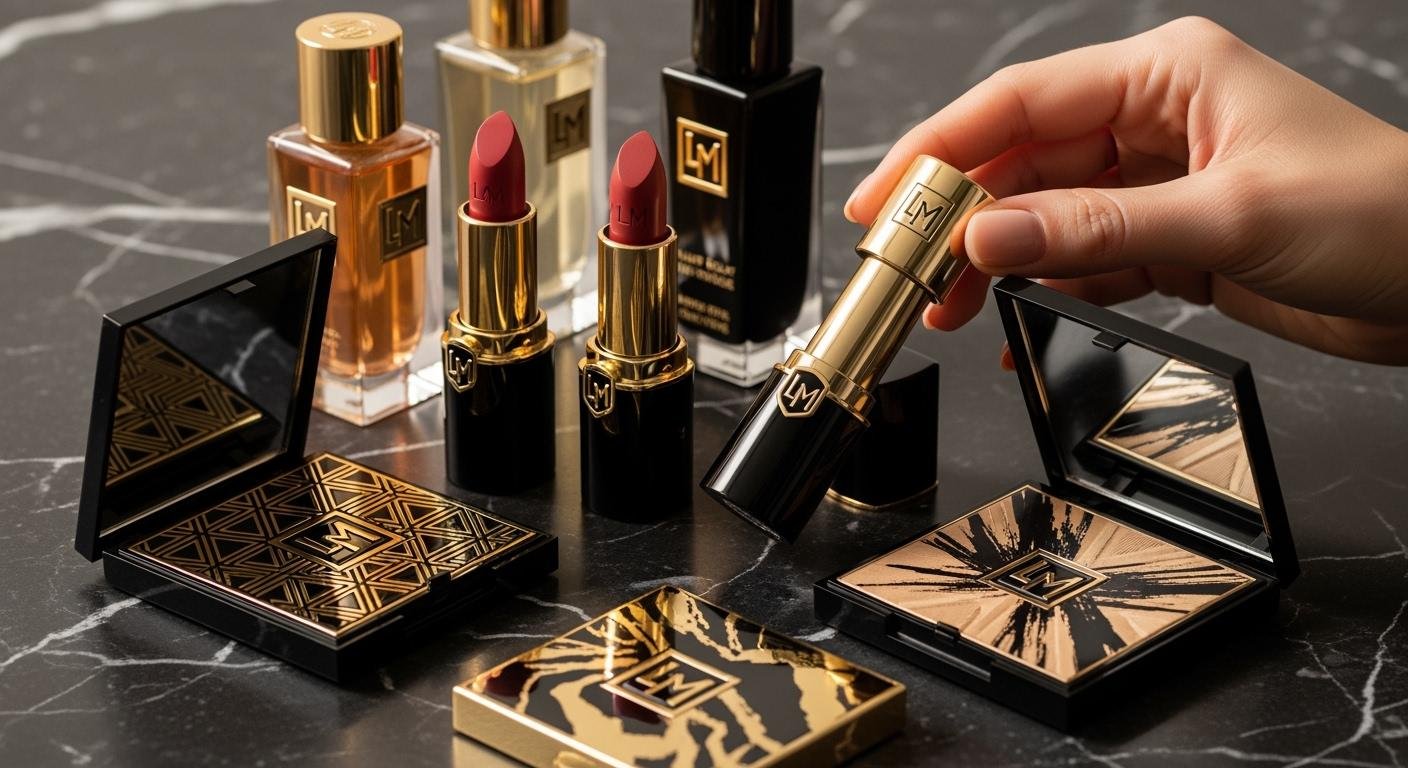
A foil logo can look sharp on a large screen while small spaces merge on a production sample. For a cosmetic brand, the question is whether its identity remains readable. For a filler or distributor, the question is which delivered mark is acceptable. This guide concentrates on small artwork features and their physical proof, rather than choosing between metallic decoration processes.
Map the features that need individual review
Mark enclosed counters inside letters, narrow gaps between strokes, small punctuation and detached logo elements. Give each feature a reference number on an enlarged drawing. Keep the enlargement separate from an actual-size print so reviewers do not approve readability only at a magnified scale.
Identify which details are essential to the brand and which could be simplified if the decorated trial does not reproduce them. Do not let a decorator remove a dot, join two strokes or thicken a letter without an artwork revision. An apparently minor adjustment can change the recognised logo.
Ask for the proof on the proposed surface build
Record the bottle reference, material, colour, coating and intended decoration position. The sample should represent the surface that will be stamped, not an unrelated flat plaque. If the current proof is a development substitute, label the differences and identify the later sample that must close them.
A successful mark on one coating does not automatically approve the same artwork on another. Keep the proposed foil and underlying surface identified with the decorated sample. The broader metallic surface construction guide covers the separate issue of coverage and layer descriptions.
Read gaps and edges without confusing reflections
Inspect the sample under an agreed viewing arrangement. Rotate the bottle to distinguish a reflective highlight from a missing segment. Record both the normal viewing impression and any closer examination used to describe the feature. A photograph taken at one angle may exaggerate or hide a gap.
For an enclosed letter, describe whether the opening remains visible, partly closes or fully bridges. For an edge, distinguish extra foil beyond the drawing from an uneven or interrupted boundary. Avoid a single note such as poor print: it does not tell the decorator which part of the mark needs attention.
| Feature | Observation to record | Reference to retain |
|---|---|---|
| Enclosed letter opening | Open, partly bridged or closed | Actual-size proof and marked close view |
| Detached small element | Present, displaced or incomplete | Approved artwork version |
| Fine outer edge | Excess transfer or missing boundary | Agreed appearance reference |
| Curved-side detail | Continuity and position around the curve | Views of the complete marked area |
Separate detail reproduction from logo positioning
A correctly positioned logo can still have filled gaps; a crisp logo can still sit too high. Record these as separate decisions. Define the location relative to an identifiable bottle feature and keep that positioning reference with the artwork. Do not judge placement from an unscaled mock-up alone.
Where the design extends around a curve, inspect the full marked area rather than only the front. Ask the decorator to explain any proposed change in usable decoration area. The brand should approve a smaller logo or relocated detail explicitly, not discover the adjustment in the delivered batch.
Use paired revisions when testing a simplification
If the first trial bridges a narrow gap, retain that sample beside the revised proof. Identify the exact change: enlarged opening, increased spacing, removed fine line or another agreed adjustment. Compare the versions on the same bottle construction where possible, so a surface change does not obscure what the artwork revision achieved.
Review at normal display distance as well as in a close inspection. A modification that transfers more cleanly may alter the visual weight of the mark. Give the brand owner a clear choice between identified versions instead of circulating unnamed photographs that later become competing approvals.
Define the appearance decision before production
Agree how the approved sample and any defect references will be used during inspection. A perfect digital outline is not a practical delivered-part reference, but this does not mean every deviation is acceptable. Record which details require rejection or review and who can authorise a departure.
Keep cosmetic appearance checks separate from handling durability checks. Clear gaps on a fresh sample do not prove resistance to rubbing, product splash or packing contact. Include those exposures in the project review where relevant, using agreed methods rather than an unsupported universal pass threshold.
Hand the proof to purchasing and receiving
The release packet should contain the bottle reference, artwork version, foil identification, surface build, location drawing and signed physical proof. Include marked photographs that explain the sensitive features, but do not replace the retained sample with photographs alone. Record any unresolved development substitution.
Receiving staff should be able to identify the same mark without interpreting a designer’s email history. If several bottle sizes share a logo, record the approved size and placement for each. A clean proof on the larger bottle does not automatically release the smaller version.
Plan the order with the actual packaging format
Oulete’s glass packaging and cosmetic soft tubes start at 10,000 pieces; plastic airless and plastic lotion bottles start at 5,000 pieces. Decoration, tooling and variant allocation require project confirmation. Do not treat those quantities as a universal minimum for every closure or standalone decorating service.
Use the logo decoration overview for the method decision, and the sample approval checklist for the wider release. Send the actual-size artwork and marked bottle location through the packaging enquiry page.
Frequently Asked Questions
Is there one minimum gap width for every bottle?
No. Ask the proposed decorator to review the artwork on the actual surface and confirm it through an identified trial.
Can the supplier enlarge a small letter opening?
Propose it as a documented artwork revision. Obtain the brand’s approval before using the changed mark in production.