


Quick Answer
To fill airless pump bottles for a skincare launch, first identify the exact pack structure and obtain the supplier’s filling and closure specifications. Validate the formula, establish the approved fill weight and headspace, control entrapped air, assemble the closure with specified settings, and test priming, dose consistency and leakage. There is no universal filling method, fill level or priming count for every airless bottle.
This guide is for brands working with a cosmetic manufacturer or filling partner. It addresses first production filling, not instructions for opening and reusing a consumer’s empty pack. For that distinction, see whether airless pump bottles can be refilled.
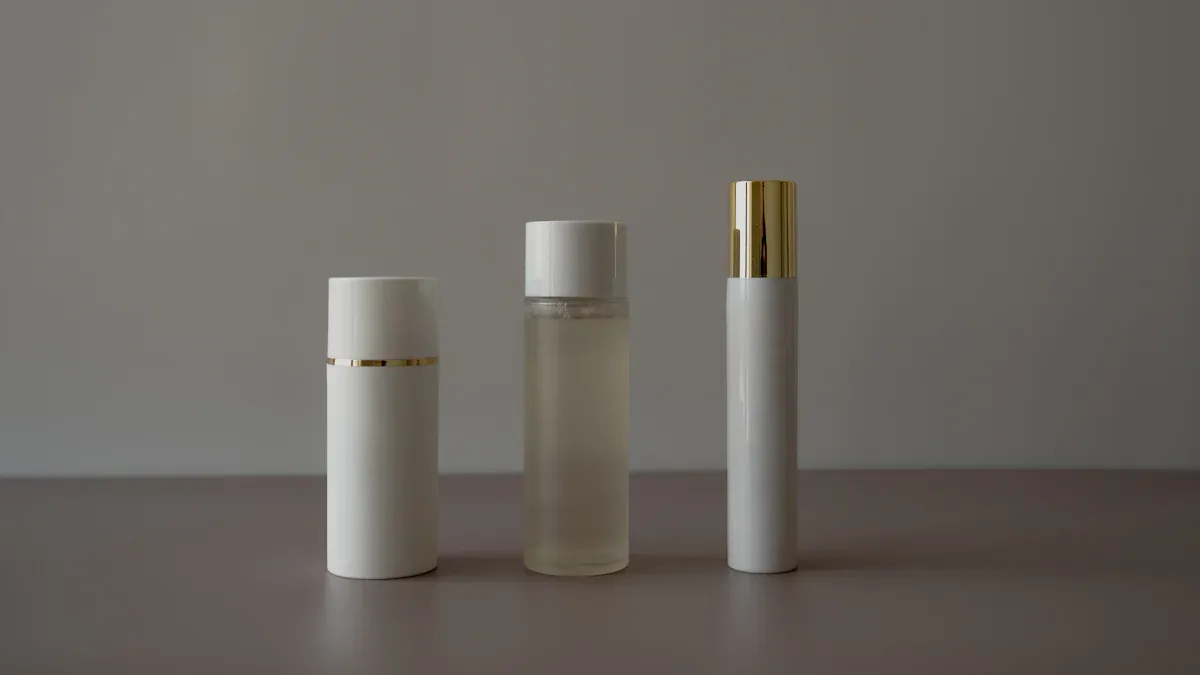
1. Confirm the Bottle Structure Before Planning the Line
Ask for the component drawing, filling instructions and assembly sequence for the exact bottle and pump combination. Some piston systems are filled from the top before the pump is fitted; other configurations require a different filling or assembly arrangement. A pouch-based system must be handled according to its own instructions.
For example, Aptar’s Nano technical leaflet specifies a top-filled piston design and atmospheric filling. Its Stella leaflet describes a top-fill snap-on system and model-specific filling arrangements. Use these as examples of why supplier documentation matters, not instructions for a different bottle.
- Identify the filling opening and components supplied preassembled.
- Confirm whether the closure is screw-on, snap-on or another design.
- Check how the pack is supported during filling and closure installation.
- Obtain any restrictions on filling temperature and equipment contact.
2. Validate the Actual Formula
A pump that works with a sample lotion may perform differently with your production formula. Viscosity, flow behavior and product-contact compatibility all matter. Provide the filler and packaging supplier with the intended formula and operating conditions, rather than selecting a bottle from appearance or nominal capacity alone.
Run compatibility and dispensing trials using the complete pack, including seals and pump components. Agree on the target dose, storage conditions and acceptance criteria. Formula stability and microbiological suitability remain part of the product manufacturer’s validation; airless packaging does not remove that responsibility.
3. Prepare Packaging Under the Approved Production Process
Inspect incoming bottles and pumps for damage, contamination and component mix-ups. Keep product-contact parts protected during storage and handling. The manufacturer should define any necessary cleaning or preparation process and demonstrate that it is suitable for the packaging and formula.
Do not assume that every new pack should be washed, steamed or treated with a household disinfectant. Unapproved cleaning can leave water or residues, distort components, or affect coatings and seals. The correct preparation is the validated process for that production system.
4. Set Fill Weight, Headspace and Air Control
Nominal bottle capacity is not a direction to fill up to the rim. Establish the target fill weight using the formula’s density, the pack’s usable capacity, closure displacement and supplier guidance. Define acceptable tolerances and verify the amount on the line.
Choose the filling nozzle and speed to limit foaming and entrapped air. Highly viscous products may require different equipment settings from fluid serums. If deaeration is needed, have the formula manufacturer validate it. Do not solve a production issue by repeatedly striking the bottle or manually forcing the internal piston.
5. Assemble the Closure With Controlled Settings
Keep the sealing surfaces clean and follow the specified assembly sequence. A screw closure requires an approved torque range; a snap-on closure may require a dedicated fixture and controlled application force. More force is not automatically a better seal.
Check that the pump sits correctly, the components are fully engaged and the pack is not deformed. Record the settings used during the successful trial so the production team can reproduce them.
6. Test Dispensing and Release the Batch
| Check | What to record |
|---|---|
| Fill quantity | Target weight, tolerance and measured samples. |
| Priming | Actuations before normal delivery under agreed conditions. |
| Dose consistency | Delivered amount across the agreed test sequence. |
| Leakage and assembly | Closure condition and results under defined handling or transport tests. |
| Product evacuation | Usable delivery and residual product using the approved test method. |
Agree on the sampling plan and pass criteria before production. Do not claim that an airless bottle delivers every last drop without testing the actual formula and pack. Keep approved samples, component references, filling settings and inspection results together in the batch record.
Troubleshooting Poor Priming
If a trial pack fails to dispense, isolate it and investigate fill quantity, air pockets, formula flow, assembly and component condition. Compare it with an approved control sample. Follow supplier guidance rather than inserting a paper clip through the base, blocking the outlet or heating the filled pack. Such interventions can damage the mechanism and obscure the original cause.
Frequently Asked Questions
How much headspace should be left?
There is no universal percentage. Obtain the fill specification for the exact pack and validate it with your formula and filling equipment.
How many times should the pump be pressed to prime it?
The acceptable priming count is model- and formula-specific. Establish it in trials and use it as an inspection criterion.
Can an ordinary filled bottle become a refillable pack?
Not simply by removing the pump. A refillable system needs a supported replacement or refilling method and validation for its intended reuse.
What should a brand send with a sample request?
Share the formula type, target capacity, viscosity information, desired dose, closure preference and proposed filling process. Discuss the actual product with both the packaging supplier and filler.
Prepare a Production-Ready Packaging Brief
Compare airless bottle options, then define the formula and filling requirements before committing to decoration or a bulk order. Request samples and a quote with those details so package selection and filling-line trials can be evaluated together.